
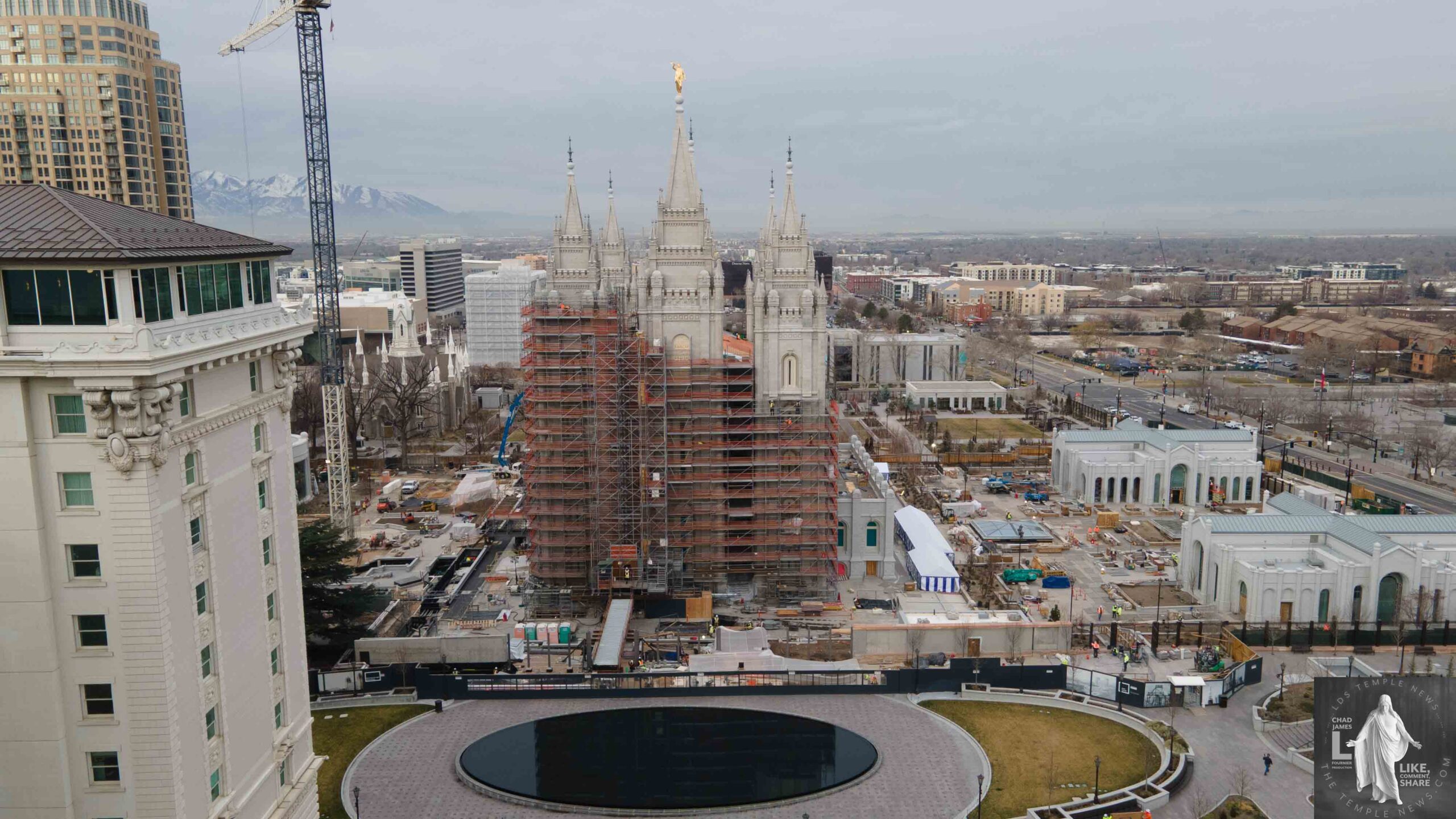
Salt Lake Temple Renovation: Key Details on HVAC, Roof, Exterior, and Windows
HVAC (Air Conditioning and Heating) Renovations
During the extensive 2019–2025 renovation, the Salt Lake Temple’s mechanical systems saw significant upgrades to improve climate control, energy efficiency, and reliability:
- HVAC System Replacement: The original mechanical heating and cooling systems, which were aging and less efficient, were completely replaced with modern, high-efficiency HVAC units. These new systems incorporate advanced air filtration, variable speed fans, and smart controls to maintain optimal temperature and humidity levels, essential for preserving the historic interior and artwork.
- Energy Efficiency & Sustainability: The new HVAC systems include energy-saving features such as programmable thermostats, zone controls, and better insulation, reducing overall energy consumption and operational costs.
Why Was the Roof Removed?
The roof of the Salt Lake Temple was not entirely removed but underwent major reinforcement and repairs for seismic safety and long-term preservation:
- Roof Reinforcement and Repairs: The original roof structure, including the iconic gold spires, was carefully reinforced to withstand seismic activity. As part of this process, some elements—such as support beams and roofing materials—were temporarily removed, replaced, or reinforced with steel trusses to improve structural integrity.
- Spire and Roof Restoration: The parabolic roof and spires were restored with modern materials designed to preserve their original appearance while adding seismic resistance. The removal of certain roofing components was necessary to allow access for reinforcement work and ensure the structure’s durability.
Exterior Renovations
The outside of the Salt Lake Temple saw several key improvements:
- Cleaning and Restoration: The stone façade, typically Utah granite, was professionally cleaned, and any damaged stones were repaired or replaced to restore its original appearance.
- Gate and Ground Improvements: The gates, landscaping, and pathways around the temple were updated for better aesthetics and visitor access, including landscaping with drought-tolerant plants and modern lighting.
- Lighting Enhancements: Exterior lighting was upgraded with energy-efficient LED fixtures, highlighting architectural features and providing better nighttime illumination.
Windows and Glass Treatments
- Replacement of Stained Glass Windows: Some of the original stained glass windows were carefully removed, restored, and reinstalled to preserve their historic craftsmanship and beauty.
- Were the Windows Replaced by Regular Windows?
No, the original stained glass windows were not replaced with plain or modern windows — they were restored to match their original appearance. Non-historic or damaged glass was replaced with compatible materials that maintained the aesthetic integrity. The goal was to preserve the temple’s historic windows, not to modernize them with non-stained glass alternatives.
Summary:
- The HVAC systems were fully replaced with modern, energy-efficient units, improving climate control and sustainability.
- The roof, particularly the spires, was reinforced, repaired, and carefully restored for seismic resistance, rather than removed entirely.
- The exterior surface underwent cleaning, stone repair, landscaping, and upgraded lighting to enhance beauty and durability.
- The original stained glass windows were carefully restored and reinstalled, preserving the temple’s historic character, with no replacement by plain windows.