
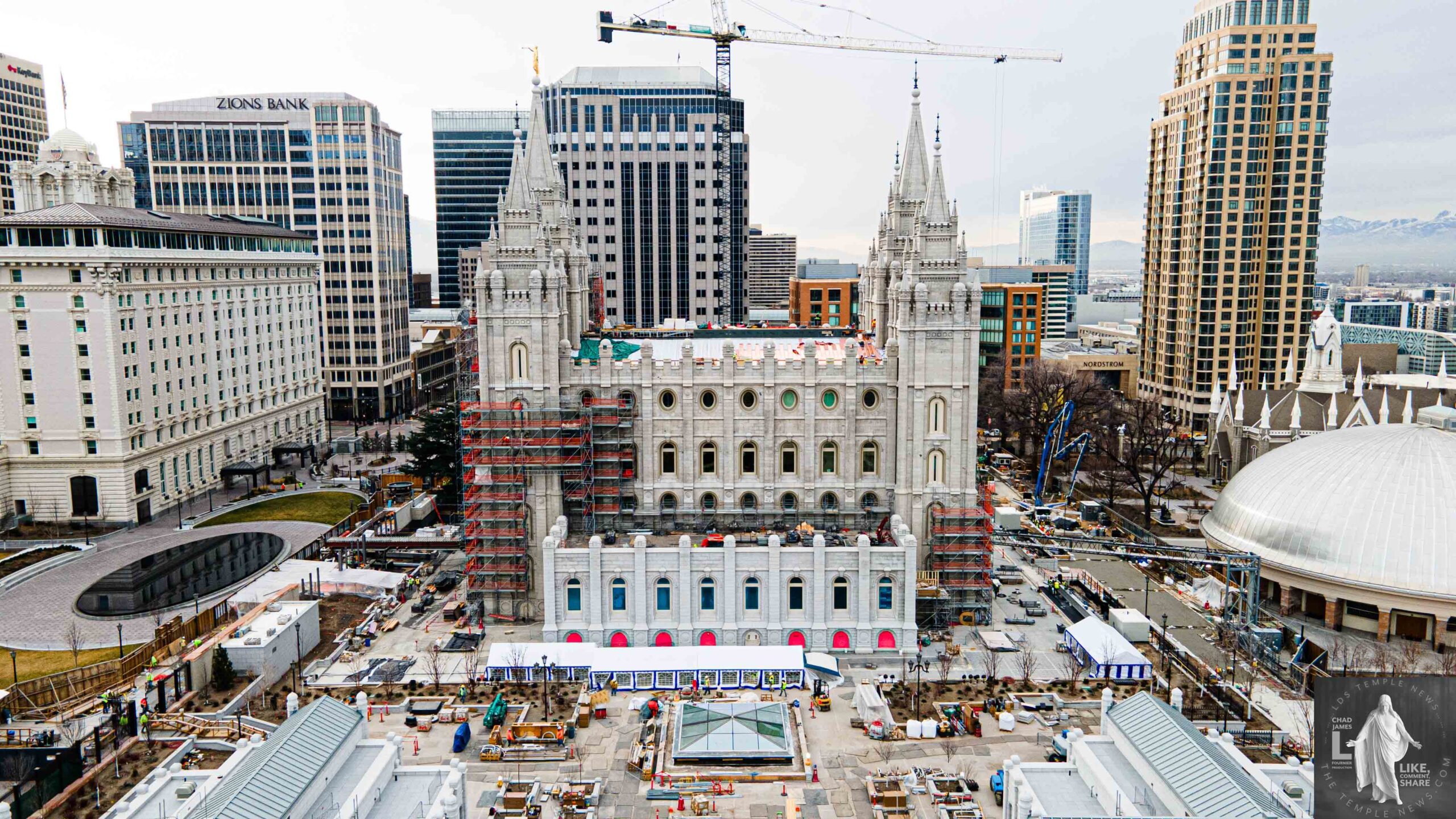
The renovation of the Salt Lake Temple from late 2019 through 2025 cost approximately $125 million USD. This significant investment financed by the Church of Jesus Christ of Latter-day Saints was dedicated to seismic safety improvements, interior restoration, structural reinforcement, and modernization.
Which floors were renovated (2019–2025)?
- The main sacred interiors—celestial room, sealing rooms, and assembly halls—underwent careful restoration, including the repair and reinstallation of original murals, stained-glass windows, and ornate woodwork from the late 19th century.
- The mezzanine levels and connecting corridors saw upgrades for fire safety, lighting, and accessibility, while preserving their historic architecture.
- The underground levels received an expansion—adding approximately 9 new sealing rooms (from 13 to 22), a second baptistry, and administrative spaces, constructed specifically for this project.
- The roof and spires were reinforced, though not as “floors,” but these elements are critical to the temple’s structure.
What was preserved?
- Original murals and religious artwork, carefully documented and temporarily removed for seismic work, are slated for reinstallation after preservation.
- Historic stained-glass windows, moldings, and fine woodwork from 1893 were restored and kept.
- Iconic fixtures such as the cast-iron oxen at the baptismal font, ornate chandeliers, and stone spiral staircases were meticulously repaired and preserved.
- Interior finishes reflecting Victorian craftsmanship, including dark woods and period-appropriate fixtures, were carefully restored to maintain the temple’s historic ambiance.
What was removed and not meant to return?
- Murals and artwork temporarily removed for seismic reinforcement are being preserved for future reinstallation.
- Outdated mechanical, electrical, and plumbing systems—such as old wiring and HVAC units—were removed and replaced with modern, energy-efficient systems.
- Non-historic or conflicting interior fixtures and finishes were taken out and replaced with compatible, historically sensitive materials.
What modern technology was added?
- Seismic resilience: Nearly 100 advanced base isolators now allow the entire structure to sway up to five feet safely during earthquakes.
- Foundation reinforcement: Steel pilings and 150-foot deep granite coring stabilize the building for the future.
- Energy efficiency: State-of-the-art HVAC, LED lighting with smart controls, and upgraded electrical wiring significantly reduce energy use.
- Safety features: Modern fire detection, alarm systems, surveillance cameras, and access control meet current safety standards.
- Accessibility: New elevators, ramps, and signage comply with ADA requirements.
- Multimedia systems: Upgraded sound, projection, and broadcasting equipment support services, meetings, and digital presentations in multiple languages.
Approximate number of workers involved:
While precise figures aren’t publicly released, projects of this scope typically involve 200 to 400 skilled workers working over more than five years— including masons, engineers, electricians, artisans, safety personnel, and managers.
This comprehensive renovation ensured the Salt Lake Temple remains a resilient, beautiful, and spiritually inspiring landmark for generations to come.