
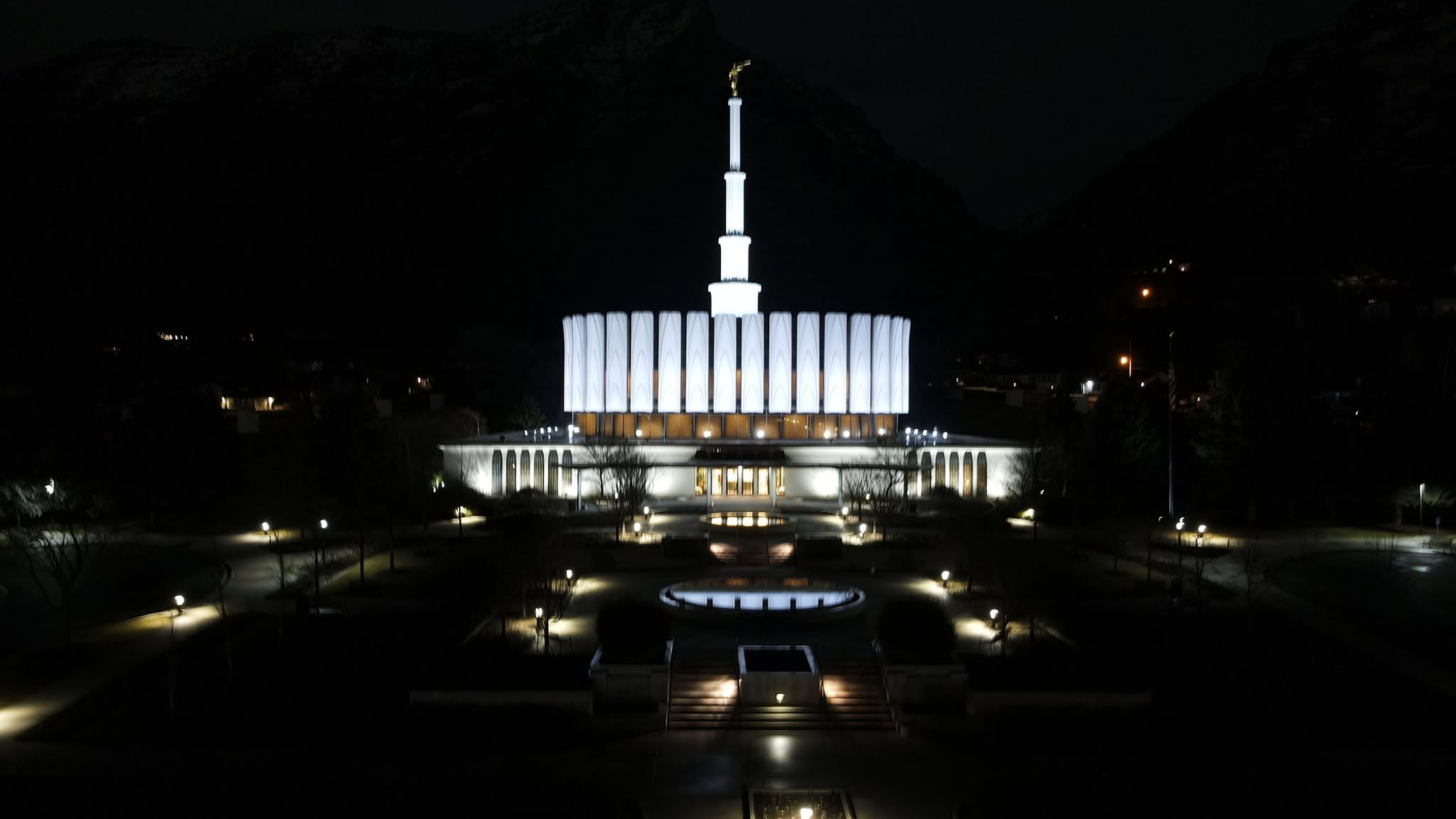
LDS Temple News captures Provo Utah Temple’s narrative through photography
The Provo Utah Temple, the 15th dedicated Temple in operation, is a remarkable site with a rich history and architectural beauty. With an address of 2200 N Temple Dr, Provo, UT 84604, this Temple holds a special place in the hearts of many.
Historical Significance
Announced publicly on August 14, 1969, during the General Conference by the Prophet, the Provo Utah Temple began its journey with a groundbreaking and site dedication on September 15, 1969, led by Apostle Hugh B. Brown. Notably, this event occurred just one week after the Ogden Temple’s groundbreaking, marking a unique moment in the history of these two Temples. Constructed concurrently, they featured similar designs until the Ogden Utah Temple underwent an architectural renovation in the early 2010s.
Architectural Features
Spanning 15.4 acres, the Provo Utah Temple showcases a stunning exterior finish made of Bianco Sardo granite sourced from Sardinia, Italy. One of its prominent features is the single attached central spire topped with a gold-leafed Angel Moroni statue, symbolizing divine guidance.
Prior to its demolition, the Provo Utah Temple boasted significant interior and exterior details. The art glass used featured bronze-colored glass panels complemented by gold anodized aluminum grills. The interior design famously reflected mid-1970s Church aesthetics, with framed oil paintings and high-quality prints that celebrated the life of Christ and depicted serene landscapes.
Interior Artwork Highlights
- Scriptural Landscapes: Featuring framed paintings of scenes from the Holy Land.
- Doctrinal Portraits: Classical depictions of Jesus Christ adorning waiting areas and instruction rooms.
- Local Flora and Vistas: Impressionistic artwork capturing the beauty of Utah’s natural scenery.
The Temple’s light fixtures, made of brass and crystal chandeliers, added elegance to the interior, while the heavy wood doors, crafted from rich walnut or mahogany, showcased ornate custom bronze doorknob plates.
Outdoor Features
The Temple was situated near Provo’s east bench, offering breathtaking views of the surrounding mountains. The beautifully landscaped grounds included a cascading water feature along with a variety of flowers, shrubs, and trees. Key nearby landmarks include the Provo Missionary Training Center, where numerous missionaries prepare for service, and the Brigham Young University campus, which neighbored the Temple to the southwest.
Future Developments
In his remarks during the October 2021 General Conference, President Russell M. Nelson announced the Provo Utah Temple would be closed for reconstruction following the dedication of the Orem Utah Temple. The closure is scheduled for February 24, 2024. This new iteration will be named the Provo Utah Rock Canyon Temple and marks a significant next chapter in the Temple’s narrative.
The Provo Utah Temple was dedicated in 1972 and officially renamed in 1999. Notably, it was the first Temple in Provo, the first in Utah County, and the 15th in Utah overall.
Noteworthy Connections
The Provo Utah Temple was the third reconstructed temple to relocate from its original footprint, previously followed by the Apia Samoa Temple and the Anchorage Alaska Temple (currently under construction). Additionally, it is significant to mention that the Provo Utah Temple and the Provo City Center Temple, dedicated in 2016, mark the second pair of temples built within the same city, following the Jordan River Utah Temple and Oquirrh Mountain Utah Temple in South Jordan, Utah.
As the Provo Utah Temple transitions into its next phase, it carries with it a legacy filled with beauty, community, and faith that has shaped its place in the hearts of many.