
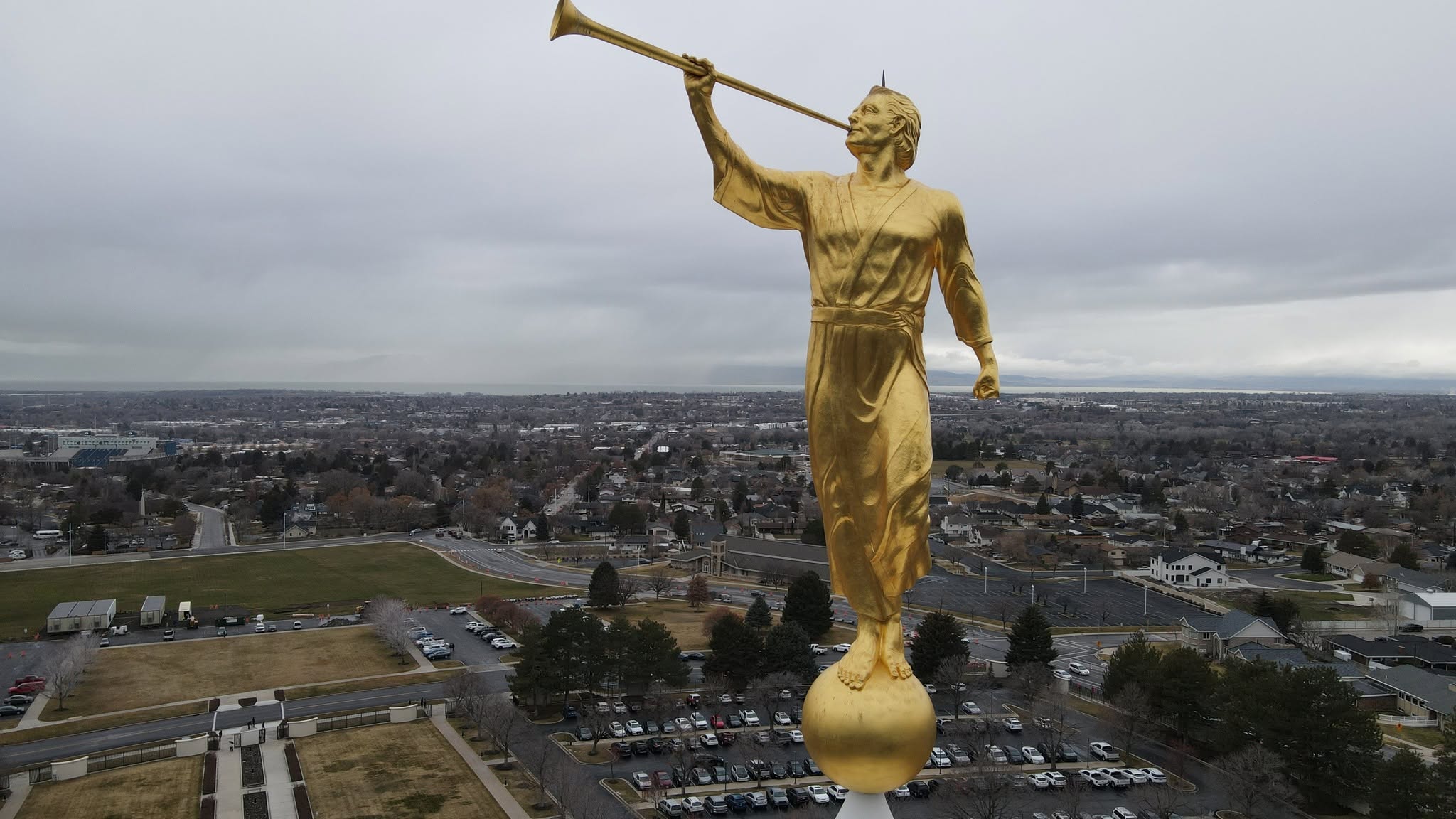
Provo Utah Temple architectural features a single attached central spire with a Gold-leafed Angel Moroni Statue.
The Provo Utah Temple holds a significant place in the hearts of many. As the 15th dedicated Temple in operation, it has played an essential role in the life of the area since its announcement.
History and Events
The Provo Utah Temple was announced to the public on August 14, 1969, by the Prophet during the General Conference. Groundbreaking and site dedication took place on September 15, 1969, officiated by Apostle Hugh B. Brown. Notably, this groundbreaking ceremony occurred just one week after the Ogden Temple’s ceremony, representing a unique moment in the construction of Temples, as both were built simultaneously and shared nearly identical designs until the Ogden Temple underwent renovations in the early 2010s.
A public open house ran from January 10, 1972, to January 29, 1972, attracting an impressive 246,000 attendees. The Temple was dedicated by either the Apostle or Prophet, who stated, “(insert quote).”
Architectural Features
Exterior Design
Covering 15.4 acres, the exterior of the Provo Utah Temple is finished with Bianco Sardo granite from Sardinia, Italy. A single attached central spire features a Gold-leafed Angel Moroni Statue that adds to the striking appearance. The exterior design includes bronze-colored glass panels paired with gold anodized aluminum grills for its windows, creating a unique visual appeal.
Interior Design
Before its reconstruction, the Temple featured six instruction rooms, 12 sealing rooms, and one baptistry, occupying 128,325 square feet across four stories. The height reached an impressive 265.6 feet, located at an elevation of 4,876.1 feet.
Interior design elements included brass and crystal chandeliers as light fixtures. The interior doors were crafted from dark, heavy woods such as walnut or mahogany, highlighting the ornate custom bronze doorknob plates. The striking exterior doors were designed in similar heavy wood to convey strength and elegance.
The art program reflected mid-1970s aesthetics, avoiding floor-to-ceiling murals in favor of framed oil paintings and high-quality prints focusing on the life of Christ and local beauty. Framed landscape paintings depicted scenes from the Holy Land, aiming to connect individuals to the mortal ministry of Jesus Christ. The interior art also featured local flora and vistas, enhancing the visual experience.
Future of the Provo Utah Temple
During the Sunday Afternoon Session of the October 2021 General Conference, President Russell M. Nelson announced imminent changes for the Provo Utah Temple. Following the dedication of the Orem Utah Temple, the Provo Utah Temple is set for demolition and reconstruction, with closure anticipated on February 24, 2024.
The new Temple will be named the Provo Utah Rock Canyon Temple, indicating a shift in both design and location. It will be relocated west of the original foundation on a flatter slope.
Interestingly, the Provo Utah Temple and the Provo City Center Temple, dedicated in 2016, are notable for being the second set of Temples built in the same city, following earlier pairs in South Jordan, Utah.
As this celebrated Temple makes way for a new chapter, its legacy remains etched in the memory of many who have experienced its unique environment over the years. Constructed adjacent to Brigham Young University, the Provo Utah Temple will continue to play a pivotal role in the community landscape.