
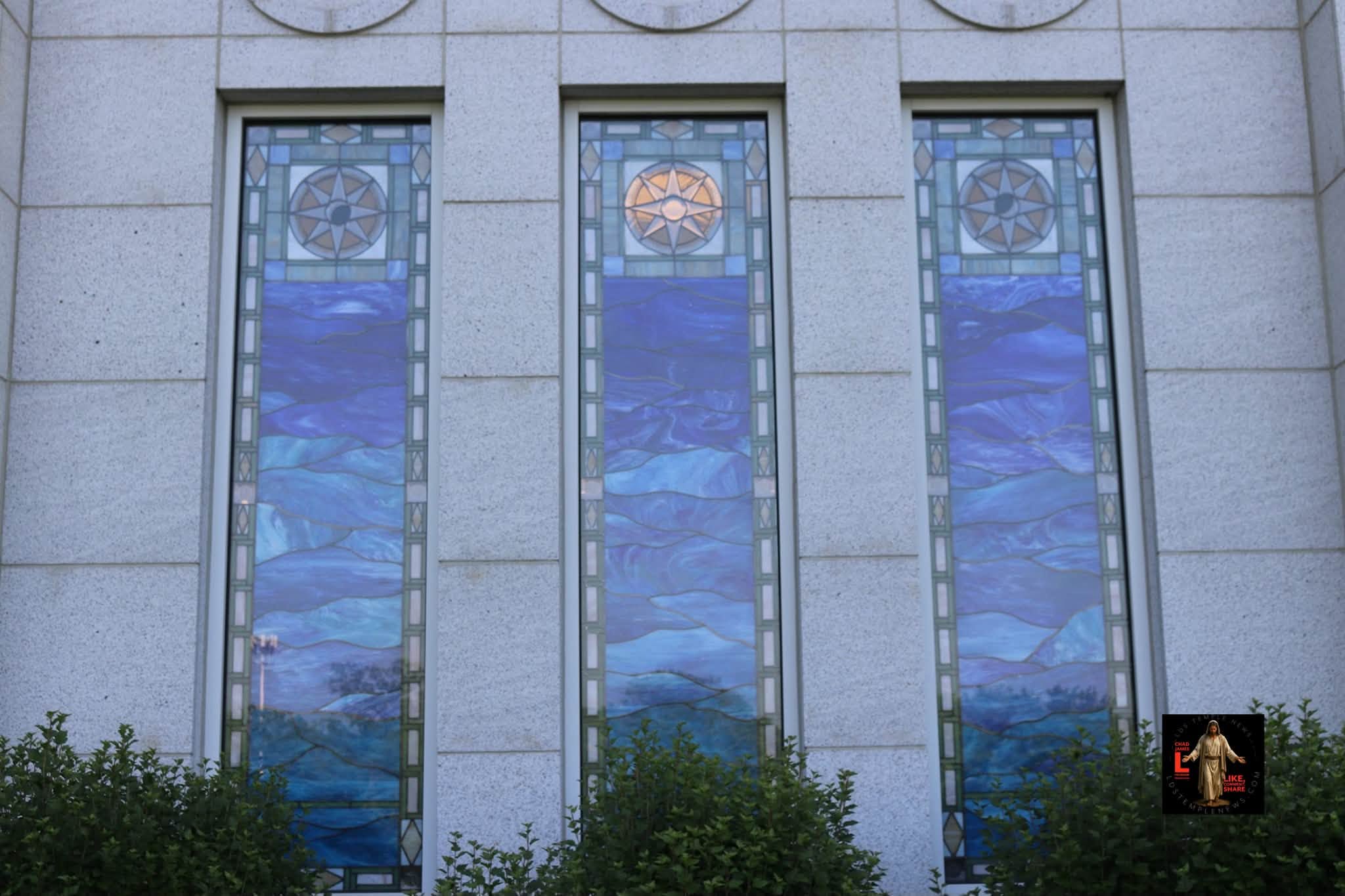
Winter Quarters Nebraska Temple Art Glass
The Winter Quarters Nebraska Temple, the 104th dedicated Temple in operation, stands at 8283 N 34th St, Omaha, Nebraska. This remarkable building traces its roots back to an announcement made on June 14, 1999, by the Prophet Gordon B. Hinckley. The significance of the site is deepened by its connection to previous events in the history of the Church.
Groundbreaking and Dedication
On November 28, 1999, the groundbreaking and site dedication for the Winter Quarters Nebraska Temple took place, led by Hugh W. Pinnock. Following the construction phase, a public open house was organized from March 30, 2001, to April 14, 2001, allowing the public to experience the beauty and significance of the Temple. The dedication occurred on April 22, 2001, officiated by Prophet Gordon B. Hinckley.
Architectural Highlights
Covering an area of 1.92 acres, the Winter Quarters Nebraska Temple includes notable architectural features. Its exterior is finished in Bethel white granite, culminating in a single attached end spire topped with a gold-leafed Angel Moroni Statue. Inside, the Temple spans a total of 16,000 square feet and rises to a height of 86 feet, with its two stories housing two instruction rooms, two sealing rooms, and one baptistry.
Art and Design Elements
The interior and exterior boast art glass that conveys rich stories and themes from pioneer history. The stained glass windows depict monumental moments from the westward trek, including the poignant representation of a couple departing from a winter grave. Intriguingly, the baptistry windows feature log cabin quilt patterns, an homage to the love shared by pioneers. Elements such as the River of Life and flora representing the states crossed by early pioneers contribute to the overall narrative embodied by the Temple.
The Legacy of Artistic Contributions
The Winter Quarters Nebraska Temple has been adorned with art from several renowned artists. Walter Rane, known for his biblical scenes, created a prominent mural for the nearby visitors’ center, while C.C.A. Christensen’s historical work “Winter Quarters” provides a glimpse into the pioneering spirit of the time. Tom Holdman contributed 18 exquisite stained-glass windows depicting scenes related to the Temple’s rich history.
Interior Features
The interior of the Winter Quarters Nebraska Temple includes elegant light fixtures made of brass with crystal elements, adding to the overall aesthetic. Solid cherry doors, cast bronze hardware, and elaborate bronze exterior doors create an inviting atmosphere, while the railings around the baptismal font are crafted from both bronze and etched glass.
Historical Significance
As the first Temple in Omaha, Douglas County, and the state of Nebraska, the Winter Quarters Nebraska Temple stands among three temples built in historically significant locations for the early Church. The other two are the Palmyra New York Temple and the Nauvoo Illinois Temple. During its dedicatory services, Elder Hugh W. Pinnock emphasized the significance of this site, connecting it to the broader narrative of resilience and faith experienced by early Church members.
Community Recognition
Local leaders, including Omaha Mayor Hal Daub, expressed enthusiasm about the Temple and its implications for the area. They noted the significance of the historical context, with the Temple representing both a tribute to the past and a beacon for the future.
Conclusion
The Winter Quarters Nebraska Temple stands as a testament to the perseverance and dedication of early Church members. Its rich history, coupled with stunning architectural and artistic elements, marks it as a vital part of the local landscape, offering a place for reflection and connection to the past.