
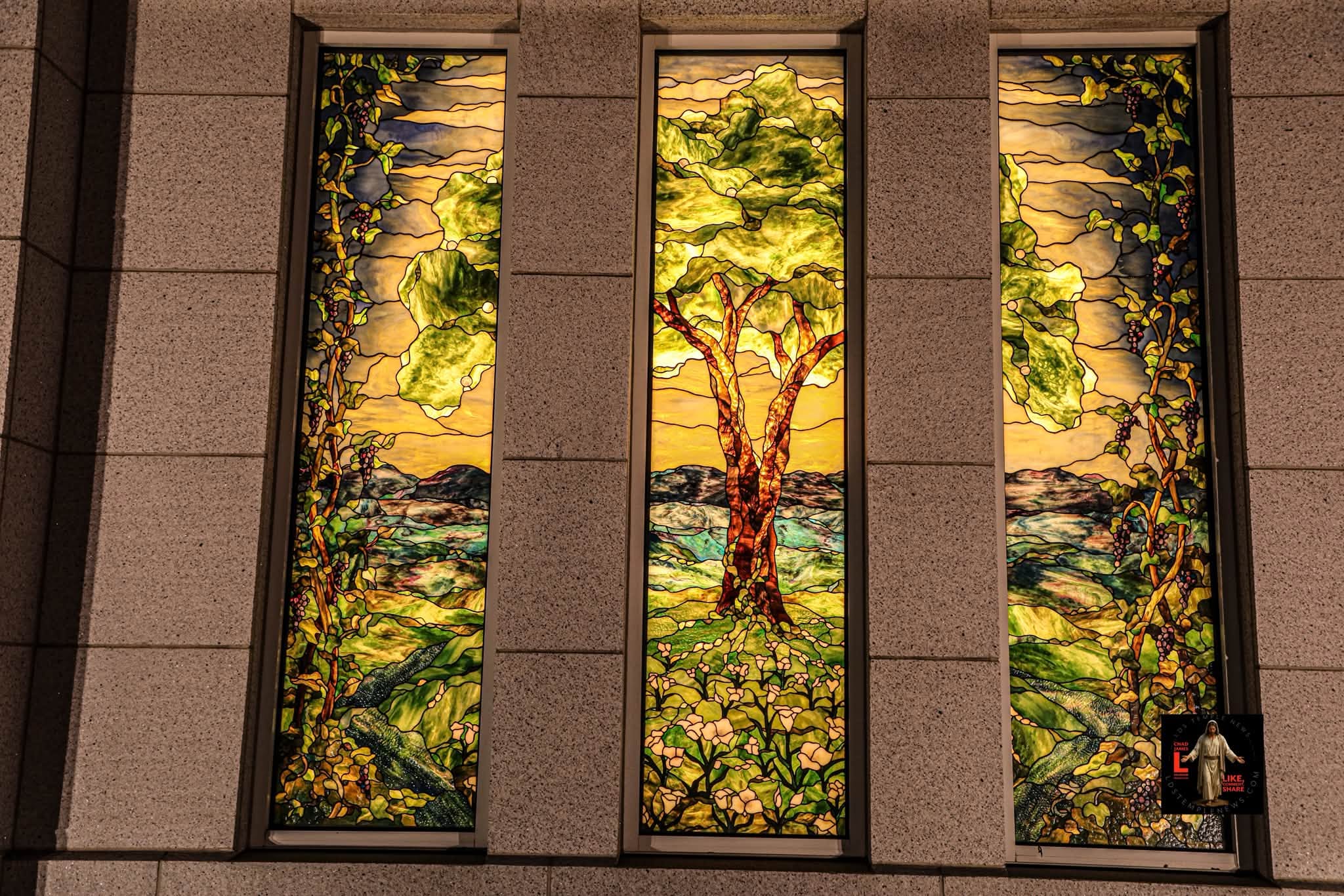
Art Glass of the Winter Quarters Nebraska Temple Presented by LDS Temple News
The Winter Quarters Nebraska Temple, the 104th dedicated Temple, holds a special place in the hearts of many. Located at 8283 N 34th St, Omaha, Nebraska, this Temple was announced to the public on June 14, 1999, by the Prophet Gordon B. Hinckley. The site witnessed its groundbreaking and dedication on November 28, 1999, led by Elder Hugh W. Pinnock.
Historical Context and Dedication
Following a public open house from March 30 to April 14, 2001, the Temple was dedicated on April 22, 2001, by Prophet Gordon B. Hinckley. Spanning 1.92 acres, this two-story building has an impressive exterior finish of Bethel white granite, complemented by a single attached end spire topped with a Gold-leafed Angel Moroni Statue.
Architectural Features
At 16,000 square feet and standing 86 feet tall, the Winter Quarters Nebraska Temple is a marvelous blend of architectural beauty and historical significance. The interior houses two instruction rooms, two sealing rooms, and a baptistry, designed to enhance the spiritual experiences of those who enter.
The Temple’s exterior and interior art glass highlight key historical narratives and artistic representations. The stained glass windows depict epic stories from pioneer history, such as William Clayton writing “Come, Come, Ye Saints,” and poignant imagery like a couple walking away from a winter grave. Symbolic geometric patterns, including log cabin quilt patterns and diamond shapes, pay tribute to the Omaha Indian tribe and pioneer traditions.
Artistic Contributions
The collection of art paintings within the Temple features renowned artists like Walter Rane, who created a prominent mural for the Winter Quarters Visitors’ Center, and historic artist C.C.A. Christensen, known for the artwork titled “Winter Quarters.” Additionally, Tom Holdman crafted 18 exquisite stained-glass windows that showcase scenes significant to the early Church.
Interior Design Elements
The Temple’s interior design features light fixtures made of brass and crystal elements. Doors are made of solid cherry with durable cast bronze hardware, while exterior doors are crafted from bronze. The baptismal font is surrounded by railings made from bronze and etched glass.
A Brotherly Connection
Interestingly, the Winter Quarters Nebraska Temple is a sister building to the Snowflake Arizona Temple, and it shares a core design with the Quetzaltenango Guatemala Temple, featuring some exterior modifications. This Temple also stands as one of three built in historically significant areas for early Church history, alongside the Palmyra New York Temple and the Nauvoo Illinois Temple.
Cultural Impact and Community Reception
Elder Hugh W. Pinnock highlighted the site’s historical significance, referencing nearby locations like Council Bluffs and Mt. Pisgah, which played vital roles in the journey of early Church members. He eloquently stated that the groundbreaking at Winter Quarters is a culmination of events leading to the establishment of a Temple in a location rich with history.
Omaha Mayor Hal Daub expressed optimism regarding the implications of the Temple for the local area, noting its potential to enhance community spirit and connections. He recognized the historical significance of the location and its transformation into a space of upliftment.
Conclusion: Legacy of the Winter Quarters Nebraska Temple
The Winter Quarters Nebraska Temple stands not only as a place of reflection and devotion but also as a testament to resilience and hope for many. Located in a region marked by rich history, it serves as an important addition to the spiritual landscape of Nebraska, blending the past with a promise for the future.