
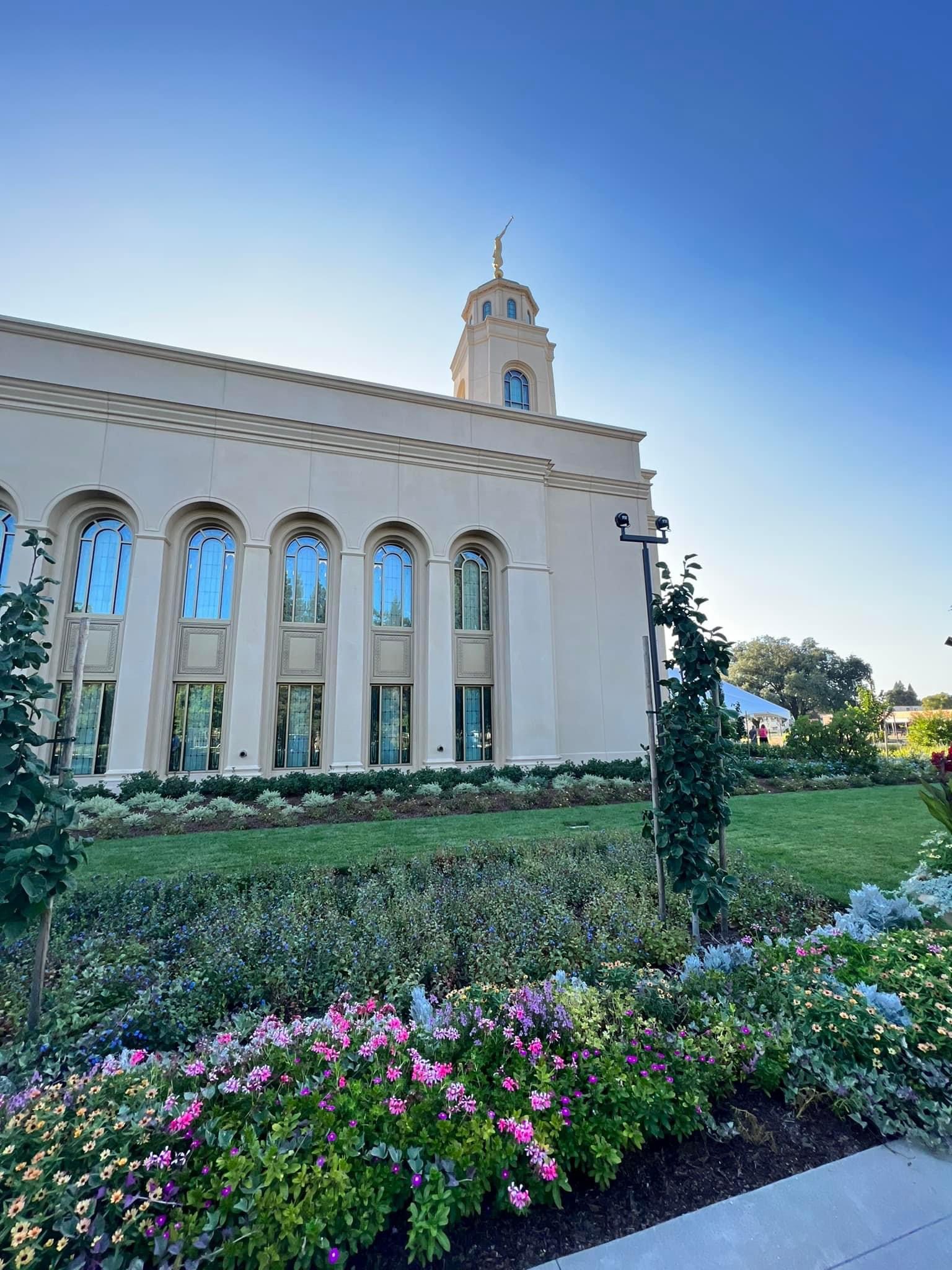
LDS Temple News Presents Feather River California Temple a House of the Lord
The Feather River California Temple is the 184th dedicated temple in operation. Located at 1470 Butte House Road, Yuba City, California 95993, it was originally announced as a temple planned for Yuba City. It is the first temple built in Sutter County and the eighth temple built in California.
Announcement and California context
President Russell M. Nelson announced the Feather River California Temple to the public on October 7, 2018, during General Conference. At the time, it was expected to become California’s eighth temple, joining the:
- Los Angeles California Temple, dedicated in 1956
- Oakland California Temple, dedicated in 1964
- San Diego California Temple, dedicated in 1993
- Fresno California Temple, dedicated in 2000
- Redlands California Temple, dedicated in 2003
- Newport Beach California Temple, dedicated in 2005
- Sacramento California Temple, dedicated in 2006
At the time of the announcement, California was home to more than 760,000 Church members organized into nearly 1,300 congregations. A rendering of the Feather River California Temple was released on September 26, 2019.
Groundbreaking, open house, and dedication
The groundbreaking and grounds dedication are dated July 18, 2020. The account of the small groundbreaking event also describes it as taking place on Saturday, June 18, 2020. Those dates conflict: June 18, 2020, was a Thursday, so the ceremony date should be checked against an official record.
Area Seventy Paul H. Watkins presided at the small groundbreaking event. Attendance was limited because of COVID-19 social-distancing guidelines. In his dedicatory prayer for the grounds, Elder Watkins said:
“As the temple foundation is poured, and the walls are placed, and the roof is formed, let us all revitalize our foundational faith in apostles and prophets with Jesus Christ being our chief cornerstone.”
The public open house took place from August 19 through September 9, 2023. Apostle Ulisses Soares dedicated the temple on October 8, 2023. In remarks associated with the dedication, Elder Soares expressed this central message:
“The temple is the house of the Lord, a place where we can feel His presence and receive His blessings.”
Size, form, and materials
The temple stands on 9.24 acres and contains 41,665 square feet. It is a two-story House of the Lord, 135 feet tall, at an elevation of 60 feet. Its exterior finish is cream precast concrete panels. The architecture includes a single attached end spire topped with a gold-leafed Angel Moroni statue.
Inside are four instruction rooms, three sealing rooms, and one baptistry.
Art glass and landscape
Art glass appears in all the temple windows. The arched windows on the second level and those in the ordinance spaces depict almond blossoms, connecting the design to the area’s agricultural industry. The blossoms celebrate natural beauty and the rewards of hard work. Their natural colors appear against a background that fades from yellow to blue.
The landscape plan draws inspiration from the Sacramento Valley’s Mediterranean climate, regional history, and biodiversity. It preserves several mature native oak, redwood, and hackberry trees already on the grounds. A notable feature is a group of 100-year-old olive trees transplanted from a local orchard. They are arranged in groves in front of and behind the temple.
Grounds and exterior details Feather River California Temple
A six-foot-tall steel picket fence encloses the temple grounds. It is powder-coated in bronze to coordinate with the other metal fixtures. Precast concrete pillars mark the gated entrances.
Interior finishes and design details
Carpets, stone, and decorative paint
The general carpet pattern draws from early Christian architecture. Its green color recalls the area’s rice fields and local farming livelihoods. The carved carpet design incorporates almond flowers to coordinate with the art glass. Other rug designs bring to mind open fields of local wildflowers and the California poppy, the state flower.
The stone flooring includes Crema Beige marble from Iran, Emperador Light from Turkey, Inca Gold from Pakistan, Verde Lichen from Iran, Rojo Alicante from Spain, and Vanilla from Turkey. The colors were selected to coordinate with the fabrics and reflect local flora. The stone pattern throughout the temple references other buildings in the area, while the pattern around the baptistry is drawn from the art-glass designs.
Decorative paint is used simply along the patron path. In the ordinance areas, it abstracts local flora and its underlying geometry. The paint accents the architecture at key points and connections, pointing to the natural beauty of the area and the principles that contribute to it.
Lighting, millwork, and furnishings
The interior lights are brass, with crystal added in the ordinance spaces. Each fixture has a shallow bowl. In the ordinance rooms, the bowl’s shallow curve contrasts with the vaulted ceiling, bringing together two complementary elements that complete a circle.
Decorative millwork appears on the altars, recommend desk, baptismal font, and doors leading into ordinance spaces. Its modified quatrefoil pattern draws on early Christian architecture and abstracts the shape of a four-leaf clover.
The font railing abstracts tall reeds that grow along the edges of bodies of water. Its form also recalls the rice plant, which is grown extensively in the area.
Doors, wallcoverings, and ceilings
The doors are made of cherry wood, reflecting the importance of cherries as an agricultural product in the area. Their hardware is brass and features arches, a reed-and-ribbon motif, and abstract forms of flora.
Simple textured wallcoverings appear throughout the interior. A leaf pattern in the bride’s room connects with the art glass and rug designs. It is based on early Christian representations of the olive branch.
Vaulted ceilings in the temple’s ordinance spaces refer to early Christian and local historical architecture. Together, the materials and decorative details connect the Feather River California Temple’s design with the region’s agriculture, plants, history, and landscape.
LDS Temple News Presents Feather River California Temple