
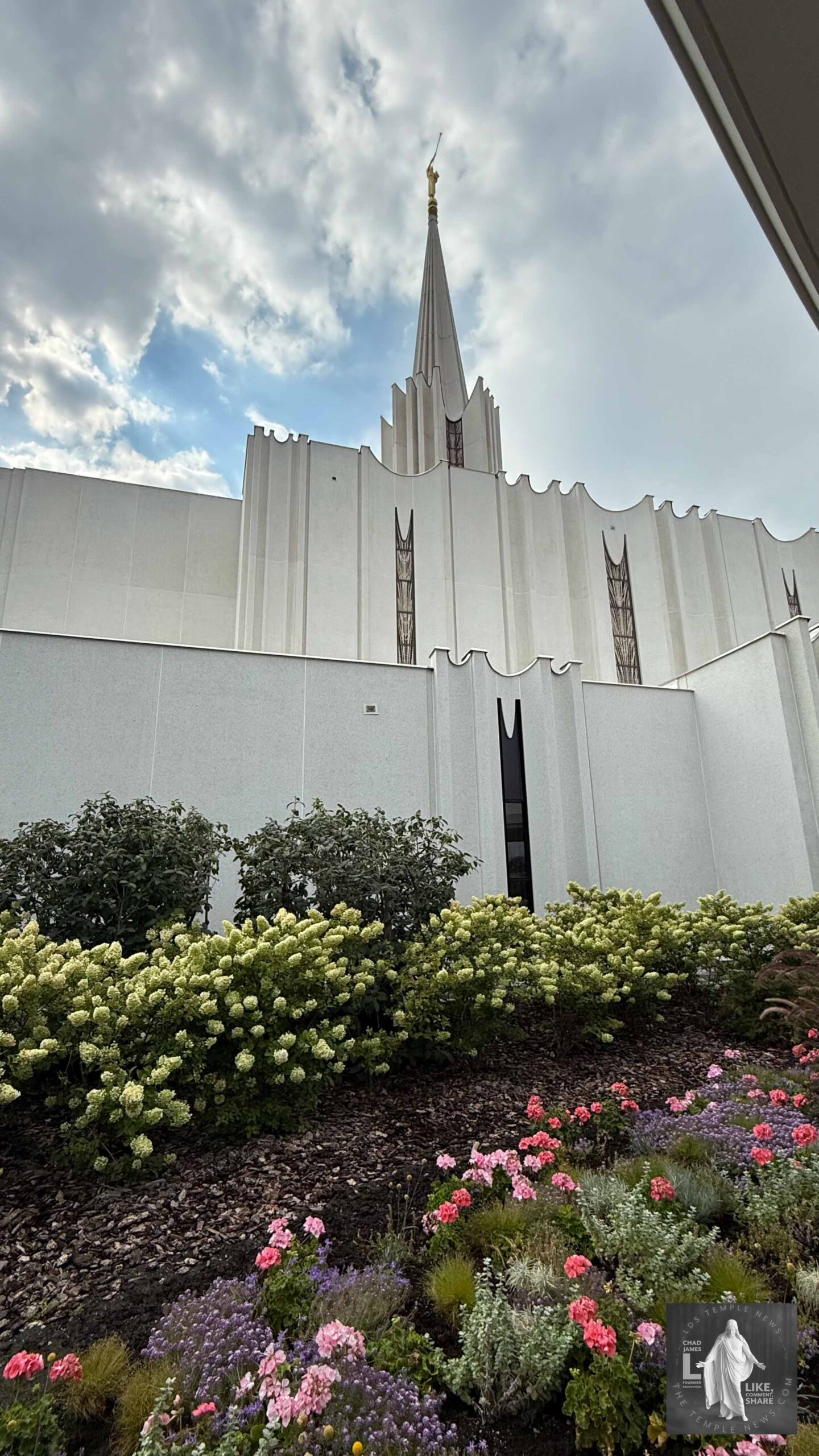
Jordan River Utah Temple media by LDS Temple News
The Jordan River Utah Temple, the 20th dedicated House of the Lord in operation, stands as a remarkable example of architectural beauty and community significance. Located at 10200 S Temple Drive in South Jordan, Utah, the temple has a rich history and plays an important role within the faith.
Historical Timeline
Announcement and Groundbreaking
The announcement for the Jordan River Utah Temple was made on February 3, 1978, marking the beginning of a significant chapter in the area’s history. The groundbreaking and dedication of the House of the Lord took place on June 9, 1979, conducted by Prophet Spencer W. Kimball.
Grand Openings and Dedication
The temple opened to the public for the first time during an open house from September 29, 1981, to October 31, 1981. Shortly thereafter, it was dedicated from November 16 to November 20 of the same year by Apostle Marion G. Romney.
Years later, the House of the Lord underwent extensive renovations starting February 15, 2016, leading to a second public open house from March 17 to April 28, 2018. This led to its rededication on May 20, 2018, by Apostle Henry B. Eyring.
Architectural Features
Design and Structure
The Jordan River Utah Temple spans 148,236 square feet and rises to a height of 219 feet. It is built on 15 acres of land, making it one of the larger temples in the region. The exterior finish is composed of cast stone mixed with white marble chips, giving it a distinctive look. The central spire is crowned with a gold-leafed painted Angel Moroni Statue, symbolic of significant faith elements.
Interior Layout
Inside the House of the Lord, there are six instruction rooms, sixteen sealing rooms, and one baptistry. The arrangements are designed to facilitate meaningful experiences and provide various spaces for different functions. Notably, this temple is one of only four temples that feature six instruction rooms, along with the Ogden Utah Temple, Provo Utah Rock Canyon Temple, and Washington D.C. Temple.
Renovation and Modernization
The renovations carried out on the Jordan River Utah Temple were extensive yet respectful of its original design. Interior walls were selectively removed to remodel key areas like the Celestial Room and the initiatory areas. Updated mechanical and electrical systems have replaced older equipment, enhancing functionality while maintaining aesthetic appeal.
Community Impact
Funding and Support
The construction and ongoing maintenance of the Jordan River Utah Temple were funded entirely by monetary donations from local members. Even the land on which the House of the Lord sits was gifted to the Church, reflecting the dedication and support from the local community.
A Unique Standing
The Jordan River Utah Temple holds a special place in the history of the Salt Lake Valley as the second temple built there and the second temple constructed in Utah County. It is distinguished as well for being one of the first pairs of temples built in the same city, alongside the Oquirrh Mountain Utah Temple, which opened in 2009.
This House of the Lord was originally named the Jordan River Temple, but it was renamed in 1999, further sealing its identity within the fabric of the community and the faith.
Through its beautiful architecture, community support, and rich history, the Jordan River Utah Temple remains a cornerstone of spiritual significance and architectural wonder in South Jordan, Utah.