
LDS Temple News Kirtland Temple
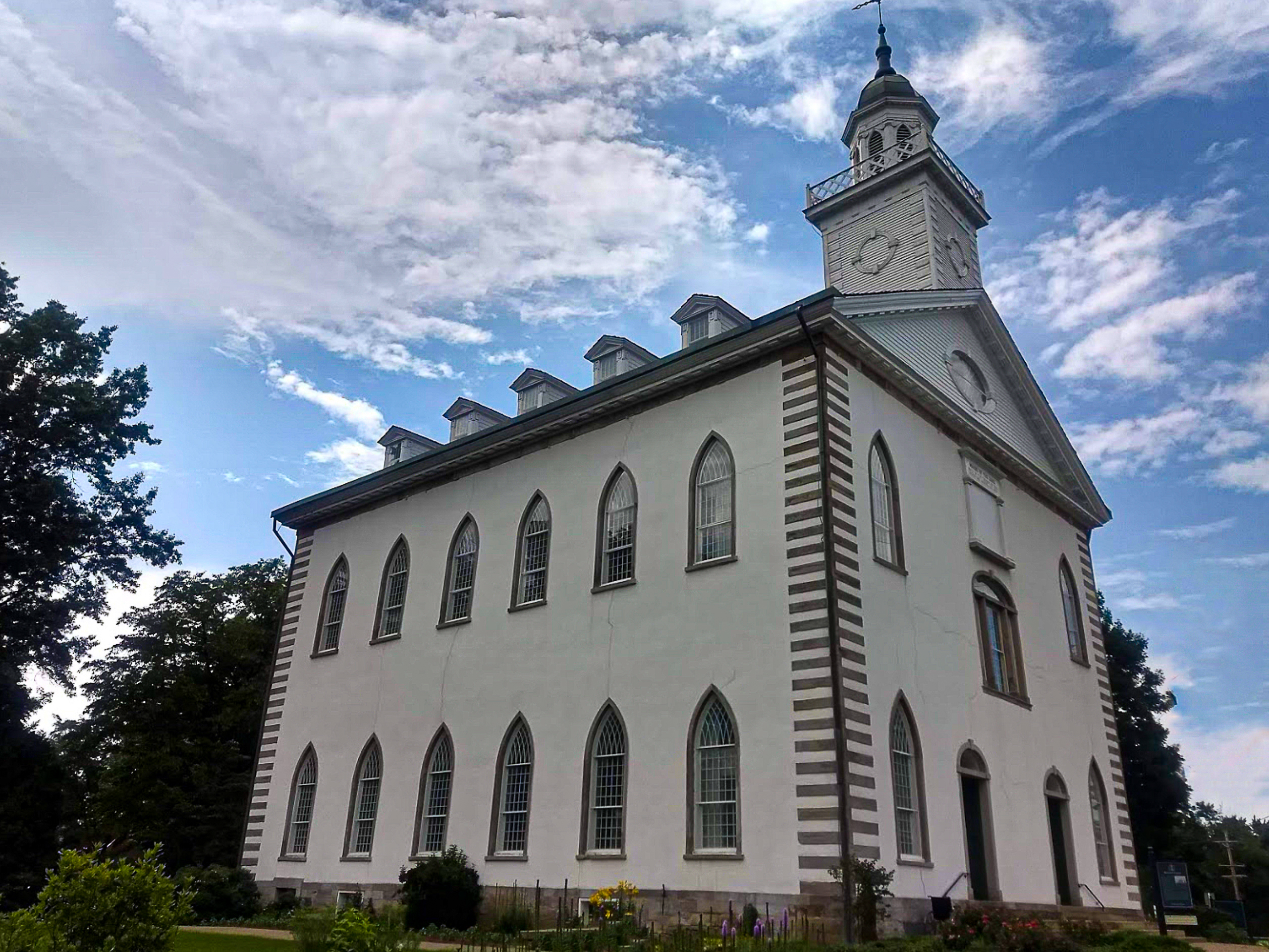
The Kirtland Temple, located at 9020 Chillicothe Road in Kirtland, Ohio, proudly stands on a bluff overlooking the picturesque Chagrin Valley, approximately 25 miles east of Cleveland. Recognized as a significant historical property, it serves as a remarkable representation of early Latter Day Saint history.
Historical Background
The journey to the establishment of the Kirtland Temple began with divine instruction on December 27 and 28, 1832, prompting early Latter Day Saints to construct a house dedicated to God as indicated in Doctrine and Covenants 88:119. The official announcement for the Kirtland Temple occurred shortly thereafter, on December 27, 1832.
Construction commenced on June 6, 1833, during a tumultuous time marked by threats from mobs and vandalism, leading to the site being guarded at night. A cornerstone-laying ceremony took place on July 23, 1833, under the leadership of Prophet Joseph Smith and Apostles Sidney Rigdon and Frederick G. Williams. As work progressed, Church members established a sawmill on Stoney Brook to speed up construction efforts.
Dedication and Divine Manifestations
The Kirtland Temple was dedicated on March 27, 1836, a notable day attended by approximately 1,000 participants, during which extraordinary occurrences unfolded. Joseph Smith noted a powerful atmosphere filled with heavenly manifestations. He described the moment when Brother George A. Smith prophesied, leading to a sound similar to a rushing wind, filling the Temple and moving participants to elevated states of spiritual awareness. The detailed account of this event can be found in Section 109 of the Doctrine and Covenants. Remarkably, the dedication spanned seven hours, marking it as a significant event in the early history of the Latter Day Saints.
On April 3, 1836, during the Jewish Passover, Joseph Smith and Oliver Cowdery experienced a pivotal moment when the Lord appeared, accepting His house. The records in Doctrine and Covenants Section 110 reveal the restoration of divine keys through ancient prophets, enhancing the significance of the Kirtland Temple in the broader narrative of Latter Day Saint theology.
Transition Over Time
For two years following its dedication, the Kirtland Temple saw various uses, including private gatherings and educational activities. By the end of the 1830s, many members had moved away, and the Temple’s roles evolved over time, even serving as a public school for many years.
In 1880, the Community of Christ, formerly known as the Reorganized Church of Jesus Christ of Latter Day Saints, reacquired the Kirtland Temple and devoted 144 years to its careful stewardship. It was only in 2024 that ownership transferred to The Church of Jesus Christ of Latter-day Saints, leading to a temporary closure for renovations before reopening for informational tours.
Architectural Features
The Kirtland Temple encompasses an area of 15,000 square feet and rises to a height of 110.5 feet, built on 5.8 acres. Its architectural design exhibits a blend of Federal, Greek Revival, and Gothic Revival styles, featuring a prominent steeple and cupola with an original finial preserved in the Visitor Center.
The exterior is adorned with sandstone stucco and plaster, while its interior reflects a simple style typical of 19th-century New England meetinghouses. Emphasizing natural light, the interior features two large assembly rooms equipped with unique two-way pulpits and movable pews, eschewing traditional art paintings or murals in favor of historical symbols.
Conclusion
With its rich history and architectural significance, the Kirtland Temple serves as an enduring representation of the early Latter Day Saints’ commitment to their faith. The building stands not only as a reminder of past events but also as a continuation of a legacy that has influenced many throughout the years. Through its preservation and restoration, the Kirtland Temple remains a crucial part of the historical narrative and cultural heritage of the community.
Key Highlights
- Location: 9020 Chillicothe Road, Kirtland, Ohio
- Established: December 27, 1832
- Dedicated: March 27, 1836
- Ownership Transition: March 5, 2024
- Architectural Style: Federal, Greek Revival, Gothic Revival
- Size: 15,000 square feet, 110.5 feet tall
- Features: Two large assembly rooms, historical symbols, natural lighting