
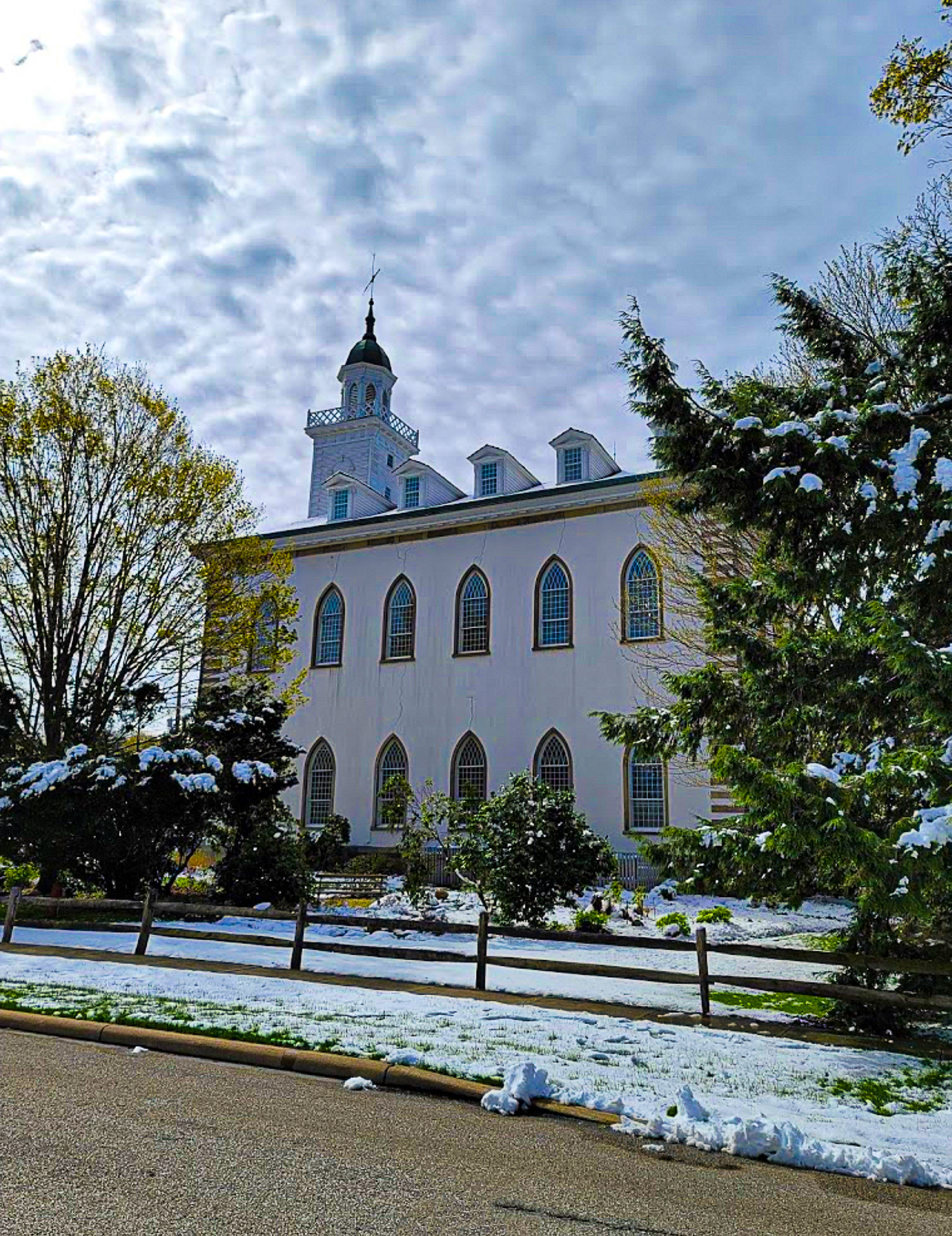
Visit the Kirtland Temple by LDS Temple News
Nestled on a bluff in northeastern Ohio, about 25 miles east of Cleveland, the Kirtland Temple stands at 9020 Chillicothe Road, Kirtland, Ohio 44094. With breathtaking views of the Chagrin Valley, this remarkable edifice holds a rich narrative that intertwines the early history of The Church of Jesus Christ of Latter-day Saints.
Foundational Beginnings
The inception of the Kirtland Temple is rooted in divine instruction, as revealed to the Saints on December 27 and 28, 1832, and January 3, 1833. The directive was to establish a house of God, as recorded in Doctrine and Covenants 88:119. By June 1, 1833, the early Saints faced chastisement for their delay in construction, prompting the revelation of the temple’s design detailed in Doctrine and Covenants 95. Construction officially began on June 6, 1833, under tension, as the site was guarded against threats from hostile mobs.
On July 23, 1833, a significant event occurred when Prophet Joseph Smith, Apostle Sidney Rigdon, and Apostle Frederick G. Williams presided over the cornerstone-laying ceremony. To facilitate the construction, a sawmill was built by the Saints in the fall of that same year.
Dedication and Divine Manifestations
The Kirtland Temple was dedicated on March 27, 1836, in a service attended by approximately 1,000 people. This dedication is a hallmark event, characterized by profound heavenly manifestations. Joseph Smith documented the day with vivid detail, recounting the phenomena of visions and prophecies among the attendees. He noted a noise reminiscent of a powerful wind that filled the space, resulting in a deeply spiritual experience for all present. The temple was dedicated over the course of seven hours.
On Easter Sunday, April 3, 1836, during the Jewish Passover, the Lord appeared to Joseph Smith and Oliver Cowdery, accepting this house. This encounter is chronicled in Doctrine and Covenants Section 110, where significant priesthood keys were restored through three ancient prophets. Although the ordinances received were partial, they laid the groundwork for future practices that would occur in Nauvoo.
Transition and Restoration
Following the dedication, the Kirtland Temple saw many changes in its use. Within two years, many Saints had left Kirtland, and the temple served various roles, including that of a public school for an extended period.
In 1880, stewardship of the temple was reestablished by the Community of Christ, known then as the Reorganized Church of Jesus Christ of Latter Day Saints. They restored the building as closely as possible to its original condition, maintaining it for 144 years. In March 2024, ownership transitioned to The Church of Jesus Christ of Latter-day Saints, with preparations for public tours set for March 25, 2024.
Architectural Features and Historic Recognition
The Kirtland Temple covers an area of 15,000 square feet, rising to 110.5 feet at its pinnacle, and sits at an elevation of 765 feet. Constructed with a blend of Federal, Greek Revival, and Gothic Revival styles, it features a striking steeple and cupola, along with distinctive olive green twin entry doors framed by elegant stone quoins. The original architectural finial that adorned the cupola is now displayed inside the visitor center.
The simplicity of the interior reflects the 19th-century New England meetinghouse style, offering natural light through historical oil lamps and genuine windows crafted by early builders, including the renowned Brigham Young. The design, received through revelation, consists of separate areas for instruction and assembly, with unique pulpits and movable pews that echo early Latter-day Saint culture.
As a notable part of American religious history, the Kirtland Temple was added to the National Register of Historic Places in 1969 and designated a National Historic Landmark in 1977. It exists on 5.8 acres, symbolizing the early aspirations and experiences of the Saints.
Conclusion
The Kirtland Temple is more than just a building; it stands as a testament to the faith and perseverance of early members of the Church. Its rich history, architectural beauty, and spiritual significance continue to resonate beyond the religious sphere, shaping the narrative of the early Latter-day Saints and offering a glimpse into the past for generations to come.