
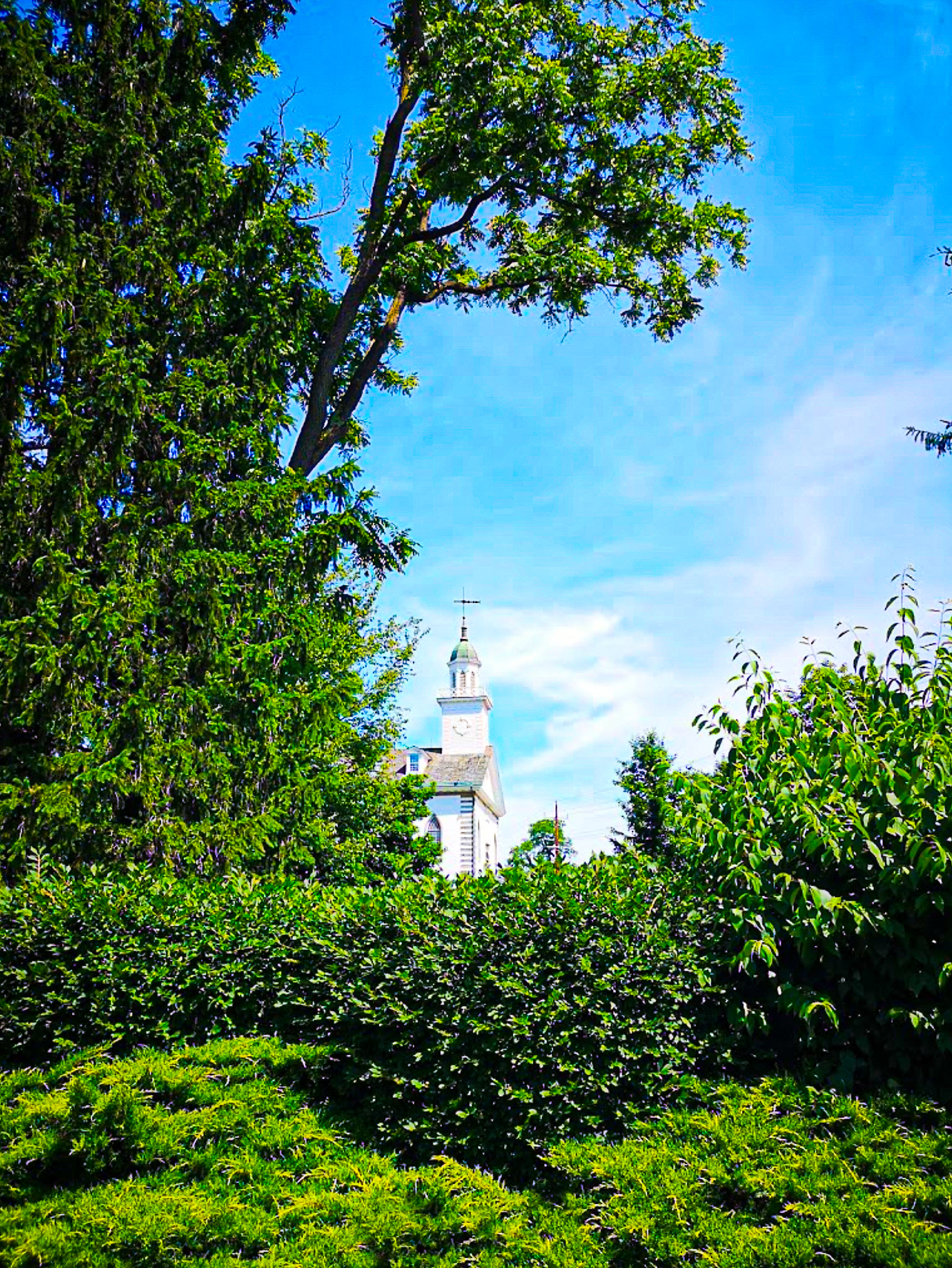
Kirtland Temple Photography by LDS Temple News
The Kirtland Temple, located at 9020 Chillicothe Road, Kirtland, Ohio 44094, is an important site in the history of the Latter Day Saint movement. Standing prominently on a bluff overlooking the Chagrin Valley, this historic property has played a significant role since its inception in the early 19th century.
Origins and Construction
On December 27, 1832, the Lord instructed the early Saints to establish a house of God, as noted in Doctrine and Covenants 88:119. This divine command led to the announcement of the Kirtland Temple, which took place on the same date in 1832. In June 1833, the Lord chastened the Saints for their failure to commence construction and revealed the design of the Kirtland Temple, as recorded in Doctrine and Covenants 95.
Construction began on June 6, 1833, amidst challenges, including protection from hostile groups. On July 23, 1833, a cornerstone-laying event was presided over by prominent leaders, including Prophet Joseph Smith and Apostles Sidney Rigdon and Frederick G. Williams. Throughout the fall of that year, Church members built a sawmill to expedite the construction process.
Dedication and Key Events
The Kirtland Temple was dedicated on March 27, 1836, by Joseph Smith, drawing around 1,000 attendees. The dedication lasted for seven hours and included the notable Hosanna Shout. During this momentous occasion, participants experienced remarkable manifestations, such as visions and the appearance of angels. Joseph Smith vividly described the event, noting a sensation akin to a “rushing mighty wind” filling the space, alongside a marvelous light emanating from the Temple. The full account is chronicled in Section 109 of the Doctrine and Covenants.
On Easter Sunday, April 3, 1836, during Passover, the Lord appeared to Smith and Oliver Cowdery in the Kirtland Temple, affirming its significance. This event is documented in Doctrine and Covenants Section 110, where key priesthood authority was restored through figures such as Moses and Elijah. Though early ordinances took place within its walls, the complete endowment would not be introduced until the Saints moved to Nauvoo.
Later Years and Restoration
After the dedication, the Kirtland Temple served various functions, especially after many Saints left Kirtland. In 1880, the Community of Christ reacquired the Temple, restoring it to its historical condition. For 144 years, it remained in their stewardship. On March 5, 2024, a significant transition occurred when the Temple was transferred to The Church of Jesus Christ of Latter-day Saints, with a reopening set for March 25, 2024.
Architectural Features
The Kirtland Temple is a striking example of various architectural influences, including Federal, Greek Revival, and Gothic Revival styles. With a total area of 15,000 square feet and an elevation of 765 feet, the building features a large steeple and cupola. One of the most notable aspects is the absence of traditional decorative elements, such as paintings and murals. Instead, it emphasizes simple yet elegant design, relying on natural light and utilitarian furnishings, including tiered pulpits and movable pews.
Exterior Details
The exterior showcases sandstone stucco with plaster, complemented by an iconic olive green double-door entry framed by stone quoins. The original finial from the cupola is preserved and displayed in the Kirtland Temple Visitor Center.
Interior Design
Inside, the environment is marked by simplicity, with whitewashed walls and practical oil lamps illuminating the space. The absence of a baptismal font, instruction rooms, or sealing rooms indicates a focused architectural approach tailored to the needs of early Latter Day Saints.
Conclusion
The Kirtland Temple stands as a testament to the early days of the Latter Day Saint movement. As the first Temple constructed in Kirtland and the state of Ohio, it continues to be a vital part of the historical narrative and religious devotion within the tradition. Recognized on the National Register of Historic Places since 1969 and designated as a National Historic Landmark in 1977, the building remains an influential site reflecting a rich legacy of faith and perseverance.