
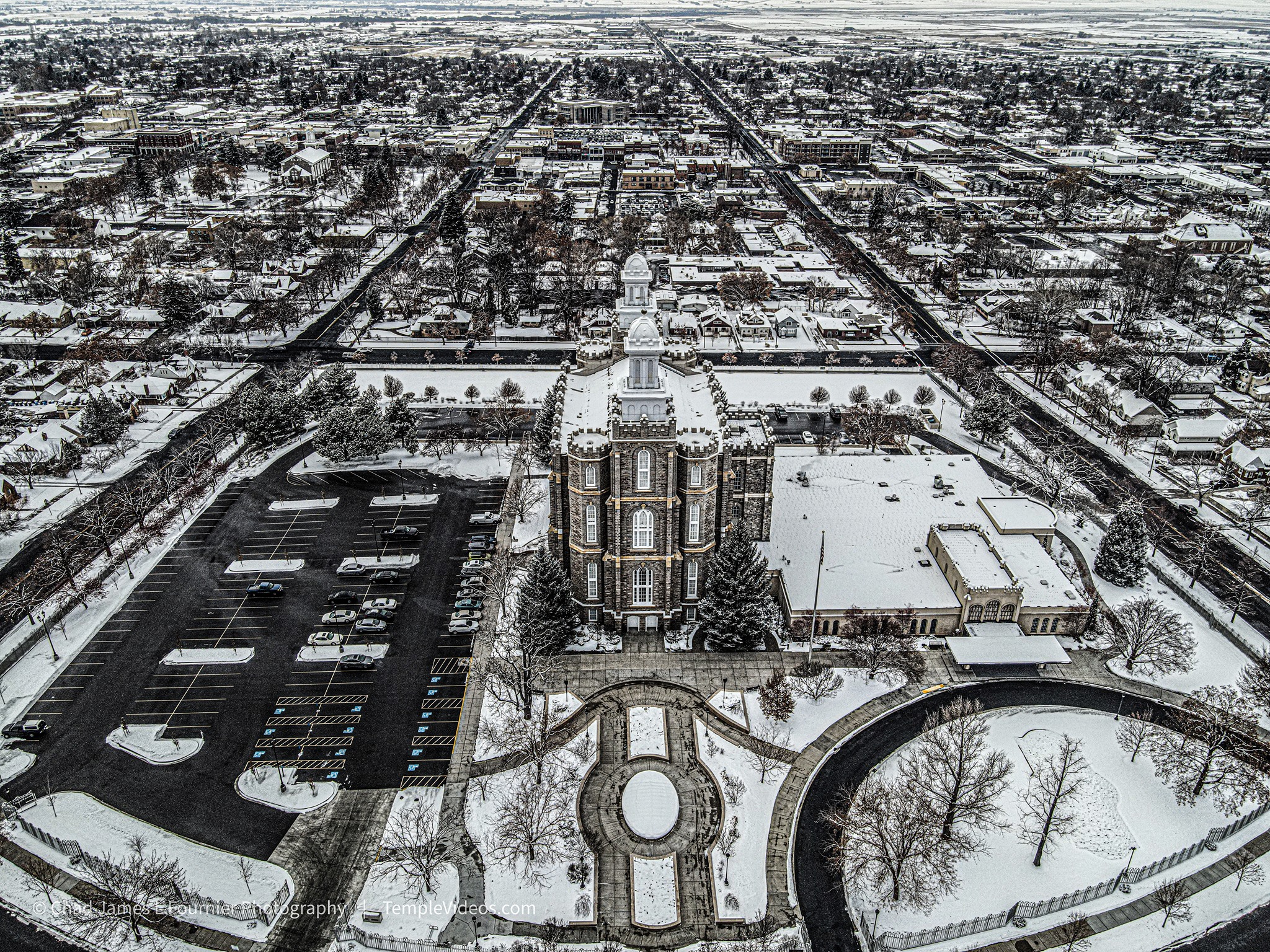
The Logan Utah Temple is a remarkable symbol of faith and community, completed in 1884 as the fourth temple built by The Church of Jesus Christ of Latter-day Saints. Sitting majestically in Logan, Utah, this temple tells a vibrant story of perseverance, unity, and devotion, making it a pivotal landmark in the region’s history.
The inception of the Logan Temple began on October 6, 1876, when church leaders announced its construction, fostering excitement and anticipation among the local community. Groundbreaking occurred on May 18, 1877, just after the dedication of the St. George Temple. Imagine the scene: over 25,000 individuals, a mix of volunteers and hired laborers, came together with a shared purpose. They worked tirelessly, hauling timber from the pristine Logan Canyon Temple Fork and quarrying stone from Green Canyon, often through winter’s chill when farm duties were lighter. This community spirit was vital, as it helped to create not just a building, but a lasting legacy.
One heartwarming aspect of the temple’s construction involved the dedicated women of the area. Facing budget constraints that left little room for buying carpets, they stepped up to craft their own beautiful floor coverings. For two months, these women lovingly hand-made 2,144 square yards of carpet, pouring their creativity and devotion into every stitch, adding a personal touch to this sacred space.
Occupying a thoughtfully chosen 9-acre plot selected by church president Brigham Young, the Logan Temple features four ordinance rooms and 11 sealing rooms, encompassing a grand total floor area of 119,619 square feet. Its architect, Truman O. Angell, drew inspiration from the Salt Lake Temple, incorporating two distinctive towers that enhance its skyline. What makes the Logan Temple truly stand out, however, is its unique Gothic detailing—an artistic choice that sets it apart from many other temples primarily influenced by Renaissance or Byzantine styles.
The temple’s history is not without challenges. In 1917, a significant fire broke out in a closet beneath the grand staircase, destroying its elegant oval stairway that connected several floors. This disaster caused roughly $40,000 in damages and required extensive repairs over three months. Yet, despite this setback, the temple continued to thrive and serve its community.
Modernization efforts that began in 1949 brought essential upgrades, including improved lighting, heating, and air conditioning, making the temple more comfortable for visitors. A more extensive renovation took place in 1977, completely reimagining its interior, which culminated in a rededication ceremony on March 13, 1979, led by church president Spencer W. Kimball.
Recognizing its historical and cultural significance, the Logan Temple was placed on the National Register of Historic Places on November 20, 1975. Today, it stands not only as a place of worship but also as an emblem of the unwavering spirit of a community that came together to create something lasting and beautiful. Visitors can appreciate both its architectural beauty and the inspiring stories behind its construction, making the Logan Utah Temple a truly engaging and meaningful experience for all who come to explore its rich history.