
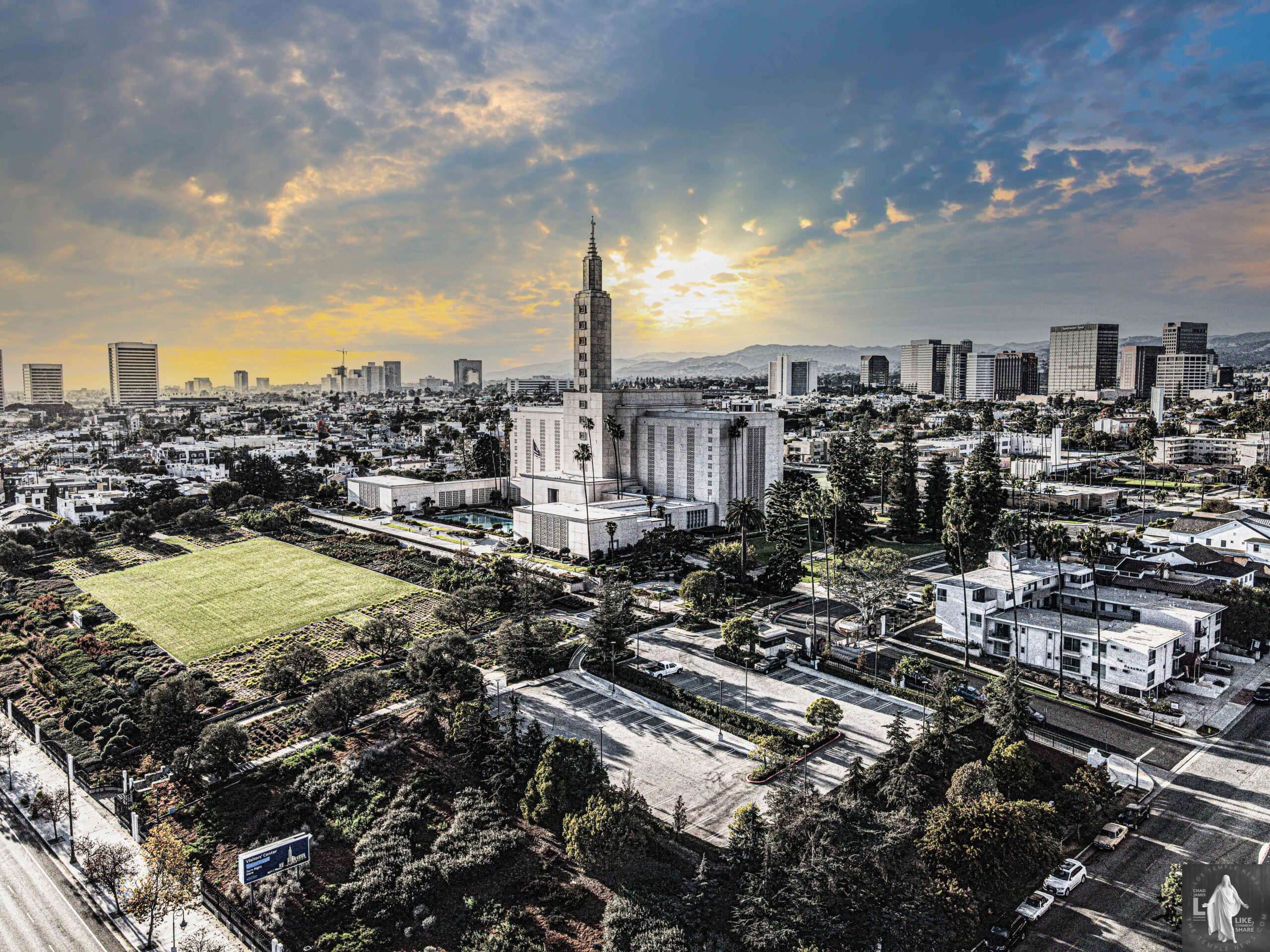
Discovering the Los Angeles California Temple
The Los Angeles California Temple, a notable establishment of The Church of Jesus Christ of Latter-day Saints, has a rich history and significant architectural features that attract attention and admiration.
Los Angeles California Temple Photography by LDS Temple News
The announcement of the Los Angeles California Temple occurred on March 6, 1937, marking the beginning of a significant chapter. As the 10th dedicated Temple of the Church, its construction faced delays due to World War II. This extra time allowed for important alterations to its final layout, ultimately accommodating 300 additional patrons in each temple session.
The groundbreaking and site dedication took place on September 22, 1951, under the direction of Prophet David McKay. During his dedication remarks, President McKay emphasized the importance of this occasion: “This is one of the most memorable dedicatory services, if not, in many respects, the most memorable temple dedicatory service ever held in the Church.” He noted that it was likely the largest gathering for such an event, as most general authorities were in attendance.
The public open house, held from December 19, 1955, to February 18, 1956, saw an impressive turnout of over 632,361 attendees. Following this event, the dedication took place from March 11th to 14th, 1956.
Architectural Features
Covering an impressive 146,000 square feet on 13 acres, the Los Angeles California Temple showcases a blend of materials and styles. The exterior is adorned with Mo-Sai stone, crafted from crushed quartz and white Portland cement sourced from Utah and Nevada, complemented by Rockville granite from Minnesota. This design not only offers beauty but helps prevent vandalism.
On the exterior, a single attached end spire is topped by a gold-leafed Angel Moroni statue, which stands at 15 1/2 feet tall, originally sculpted by Millard Mallin and added to the Temple on October 3, 1954. The Los Angeles California Temple is one of only five temples where the Angel Moroni holds the Gold Plates, alongside the Washington D.C. Temple, Jordan River Utah Temple, Seattle Washington Temple, and Mexico City Mexico Temple.
Interior Highlights
Inside the Temple, you will find four instruction rooms and ten sealing rooms, accompanied by a baptistry. The total size reaches 190,614 square feet, and the building itself rises to a height of 257 feet, sitting at an elevation of 289 feet above sea level. Notably, the priesthood assembly room can accommodate 2,000 individuals with three pulpits at each end.
The interior is decorated with stunning hand-painted murals in its progressive-style ordinance rooms: Creation Room, Garden Room, World Room, Terrestrial Room, and Celestial Room. Initially, the endowment was presented through live acting, marking it as the last temple designed for this format.
Renovations and Updates
Over the years, the Los Angeles California Temple has seen various updates. In its 25th anniversary year, it underwent a 10-week closure for remodeling and refurbishment, which included the addition of two rooms and audiovisual equipment. In 2003, the temple returned to a progressive-style presentation of the endowment. A significant seismic overhaul took place in 2005, particularly for the baptistry, and the Temple reopened on July 11, 2006, coinciding with the 50th anniversary of its dedication.
The Grounds
Located on Santa Monica Boulevard in Westwood, the grounds of the Los Angeles California Temple are beautifully landscaped, featuring Canary Island pines, palms, olives, rare Chinese ginkgo, and bird-of-paradise trees. The design includes two fountains and a large reflection pool, contributing to an inviting atmosphere.
The grounds also host a visitor center and a family history center, enriching the experience for families and individuals alike. Each December, the landscape transforms into a dazzling sight, adorned with thousands of Christmas lights, showcasing the beauty and spirit of the season.
The Los Angeles California Temple remains a meaningful site for many and a testament to the architectural vision and dedication of those involved in its creation and maintenance.