
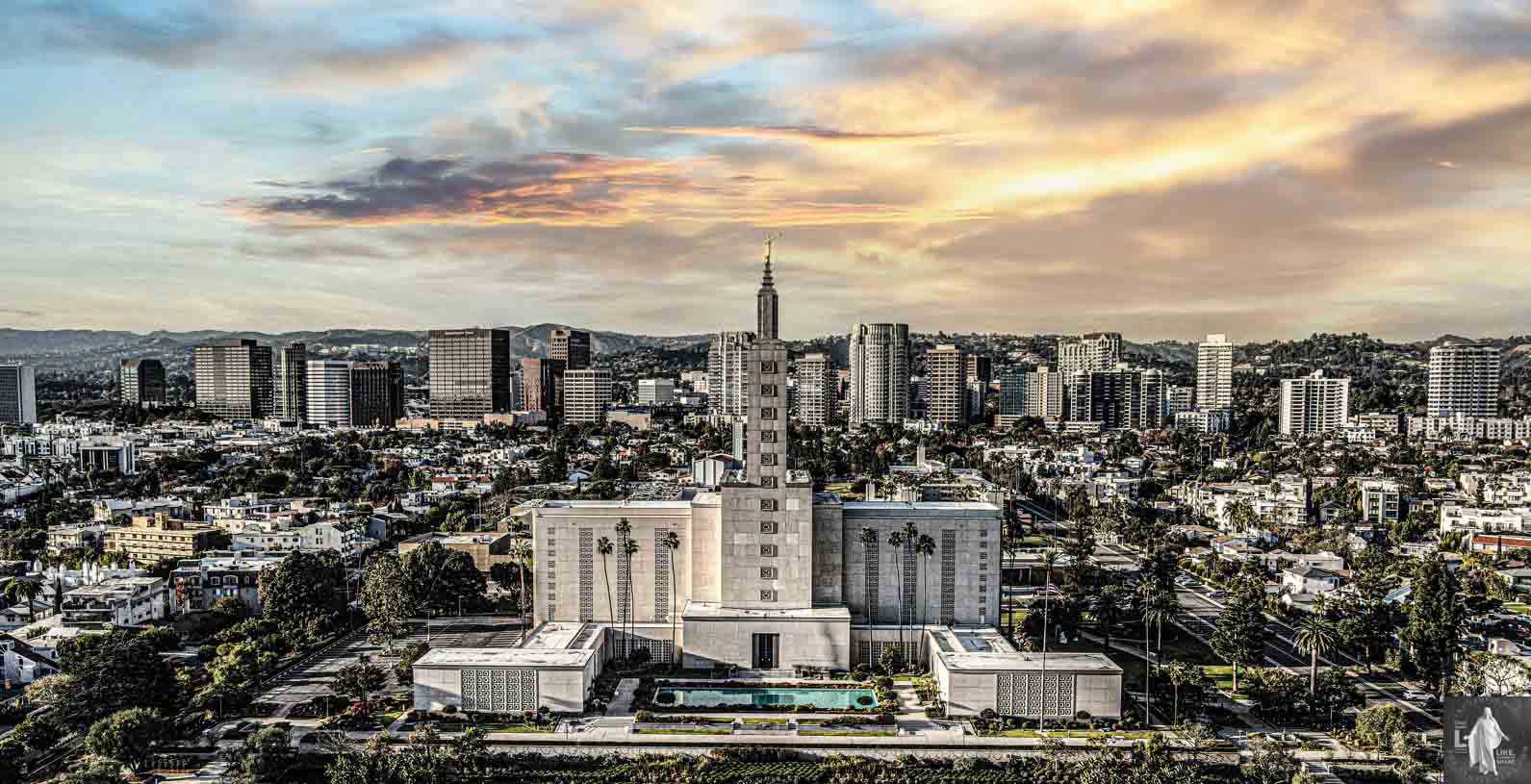
Discovering the Los Angeles California Temple
The Los Angeles California Temple, a significant establishment for The Church of Jesus Christ of Latter-day Saints, has a rich history that dates back to its announcement on March 6, 1937. As the 10th dedicated Temple of the Church, it holds a notable place within the faith.
LDS Temple News Presents Los Angeles California Temple
Construction faced delays due to World War II, which ultimately allowed for alterations that added capacity for an additional 300 patrons per session. The groundbreaking ceremony took place on September 22, 1951, led by Prophet David McKay. During the dedication, President McKay remarked on the unprecedented attendance and significance of the event, which he described as one of the most memorable in the Church’s history.
The Temple officially opened to the public with an open house from December 19, 1955, to February 18, 1956, attracting over 632,000 attendees. It was dedicated by Prophet David McKay between March 11 and 14, 1956.
Architectural Features and Materials
Spanning 13 acres, the Los Angeles California Temple covers 146,000 square feet, with an overall total of 190,614 square feet. Its striking exterior is adorned with Mo-Sai stone facing—a blend of crushed quartz and white Portland cement sourced from Utah and Nevada—while the wainscot is made of Rockville granite from Minnesota. This combination not only contributes to the aesthetic appeal but also aids in graffiti removal.
The Temple features a single attached end spire topped with a 15 ½-foot gold-leafed Angel Moroni statue, crafted by Millard Mallin. Notably, this Temple is one of only five where the Angel Moroni holds the Gold Plates, joining others like the Jordan River Utah Temple and the Washington D.C. Temple.
Interior Layout
Internally, the Temple is designed for efficiency and beauty, featuring four instruction rooms, ten sealing rooms, and one baptistry. The priesthood assembly room can accommodate 2,000 individuals and includes three pulpits.
Beautiful hand-painted murals adorn the walls of various rooms, including the Creation Room and Celestial Room. Originally designed for live presentations, changes in 1981 saw the introduction of audiovisual equipment, allowing sessions to start every half hour. In 2003, the Temple reverted to a progressive-style presentation while upgrading the Terrestrial Room.
Grounds and Surroundings
Located on Santa Monica Boulevard in Westwood, the grounds of the Los Angeles California Temple are meticulously landscaped with a variety of trees, including Canary Island pine and Chinese ginkgo. The grounds feature two fountains and a picturesque reflection pool, enhancing the serene environment.
In December, thousands of Christmas lights illuminate the grounds, offering a festive atmosphere. A family history center is also present, alongside several family-themed statues, encouraging exploration of heritage and genealogy.
Recent Renovations
In 2005, the Temple underwent a significant seismic overhaul, improving safety and ensuring longevity. This renovation, combined with upgrades to the baptistry, culminated in a reopening on July 11, 2006, coinciding with the 50th anniversary of the Temple’s dedication.
The Los Angeles California Temple stands not only as a site of deep significance within the faith but also as a reflection of architectural beauty and community engagement. Through its history and continued evolution, it remains an essential part of the landscape in Los Angeles.