
Louisville Kentucky Temple Temple News
The Louisville Kentucky Temple, marking the 76th dedicated temple in operation, serves as a significant landmark within the area and as a spiritual center. Located at 7118 West Hwy 22, Crestwood, Kentucky 40014, this House of the Lord offers a place for reflection and peace.
Historical Background
The announcement of the Louisville Kentucky Temple took place on March 17, 1999, when the First Presidency communicated with local priesthood leaders through a letter. The groundbreaking and dedication occurred shortly after, on March 29, 1999, led by John K. Carmack. This momentous occasion attracted around 800 attendees, setting the stage for the temple’s future significance.
A public open house followed from March 4 to March 11, 2000, welcoming 21,000 individuals to experience the beauty and tranquility of the House of the Lord. The temple was officially dedicated on March 19, 2000, by Apostle Thomas S. Monson, who would later become a Prophet of The Church of Jesus Christ of Latter-day Saints until his passing. Notably, despite the heavy rain that day, attendees, including a choir, stood outside for hours, eager to participate in the dedication proceedings.
Excerpts from the Dedication Prayer
In his dedicatory prayer, Thomas S. Monson remarked, “May this house stand as an expression of Thy love for Thy children. May the peace of the Lord be here. May there be quiet and reverence. May this be a house of worship wherein Thy holy name and that of Thy Son is spoken in praise unto Thee and unto Him.”
Architectural Highlights
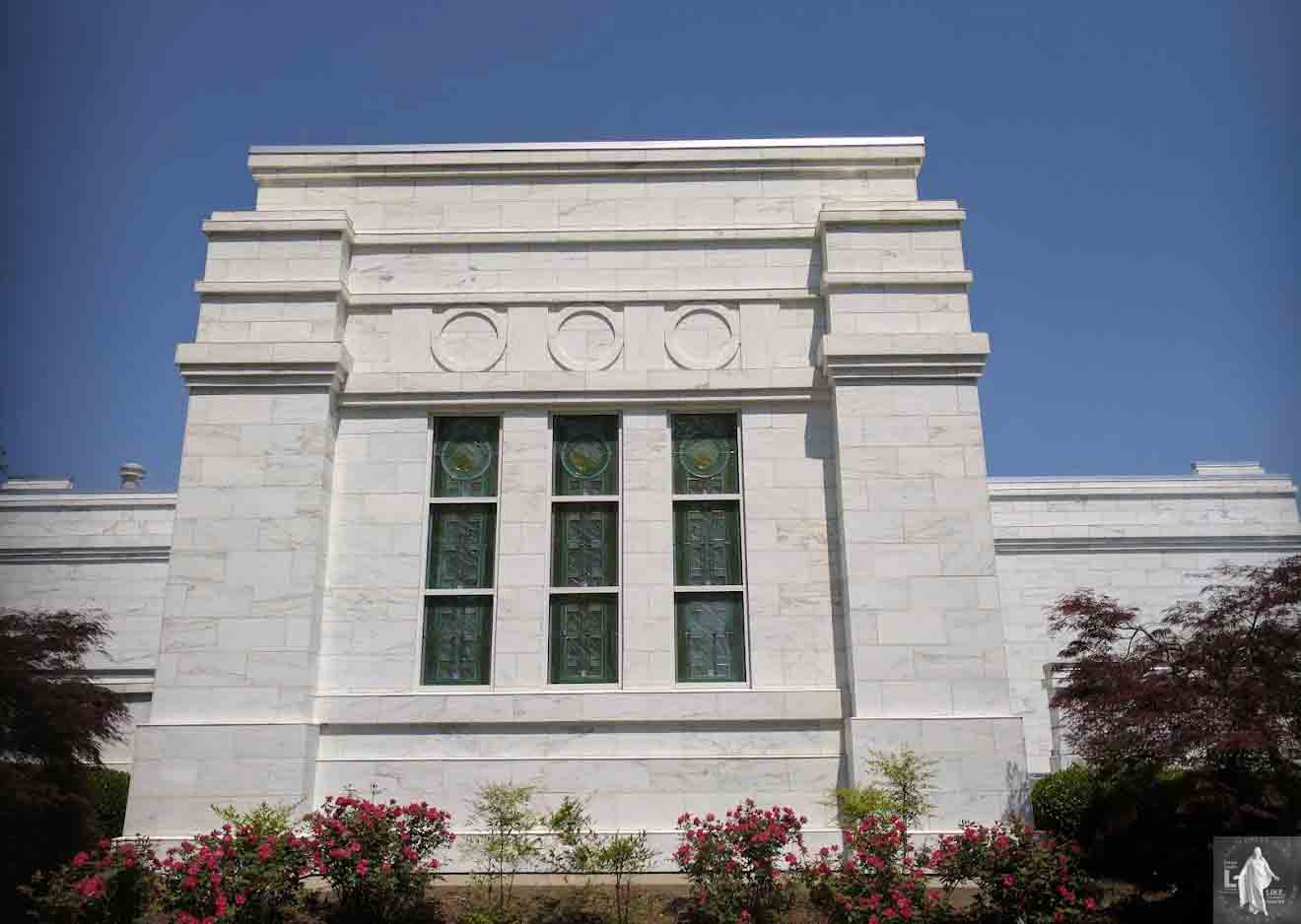
The Louisville Kentucky Temple is situated on 3 acres with a total area of 10,700 square feet and a height of 22 meters, making it a remarkable feature in the landscape of Crestwood. Built as a single-story House of the Lord, it incorporates imperial Danby white marble quarried from Vermont, showcasing fine craftsmanship.
Interior Design Elements
The temple’s architectural details include a single attached end spire adorned with a gold-leafed Angel Moroni statue. The interior features:
- Two instruction rooms
- Two sealing rooms
- One baptistry
Artistic elements include neoclassical art glass circles, allowing natural light to enrich the sacred spaces within. Light fixtures made of bronze and crystal add elegance, complementing the oak interior doors crafted with antiqued bronze hardware. The exterior doors follow suit with a similar design, ensuring cohesion in aesthetics.
Interior Features
At the heart of the House of the Lord is the baptismal font, surrounded by railings that enhance its significance and beauty. These thoughtful design choices create an inviting atmosphere that reflects the mission of the temple.
The Context of Kentucky’s Religious History
The Church of Jesus Christ of Latter-day Saints has a rich history in Kentucky, dating back to its early days. In 1831, Joseph Smith, the church’s first prophet, visited Louisville, likely sharing his message there. Wilford Woodruff, another prominent member and future prophet, served as a missionary in the area between 1835 and 1836.
The church’s early presence saw several small congregations established in the 1830s. Despite initial challenges, church membership in Kentucky grew steadily over the years. By 1900, there were approximately 1,700 members in the state. This number rose significantly by 2009, reaching around 31,000 members.
Conclusion
The Louisville Kentucky Temple stands as a testament to the growth and resilience of The Church of Jesus Christ of Latter-day Saints in Kentucky. With its rich history, stunning architectural features, and serene atmosphere, the House of the Lord continues to inspire those who attend. As it stands now, it serves not only as a place for personal reflection but also as a reminder of the church’s enduring legacy in the region.