
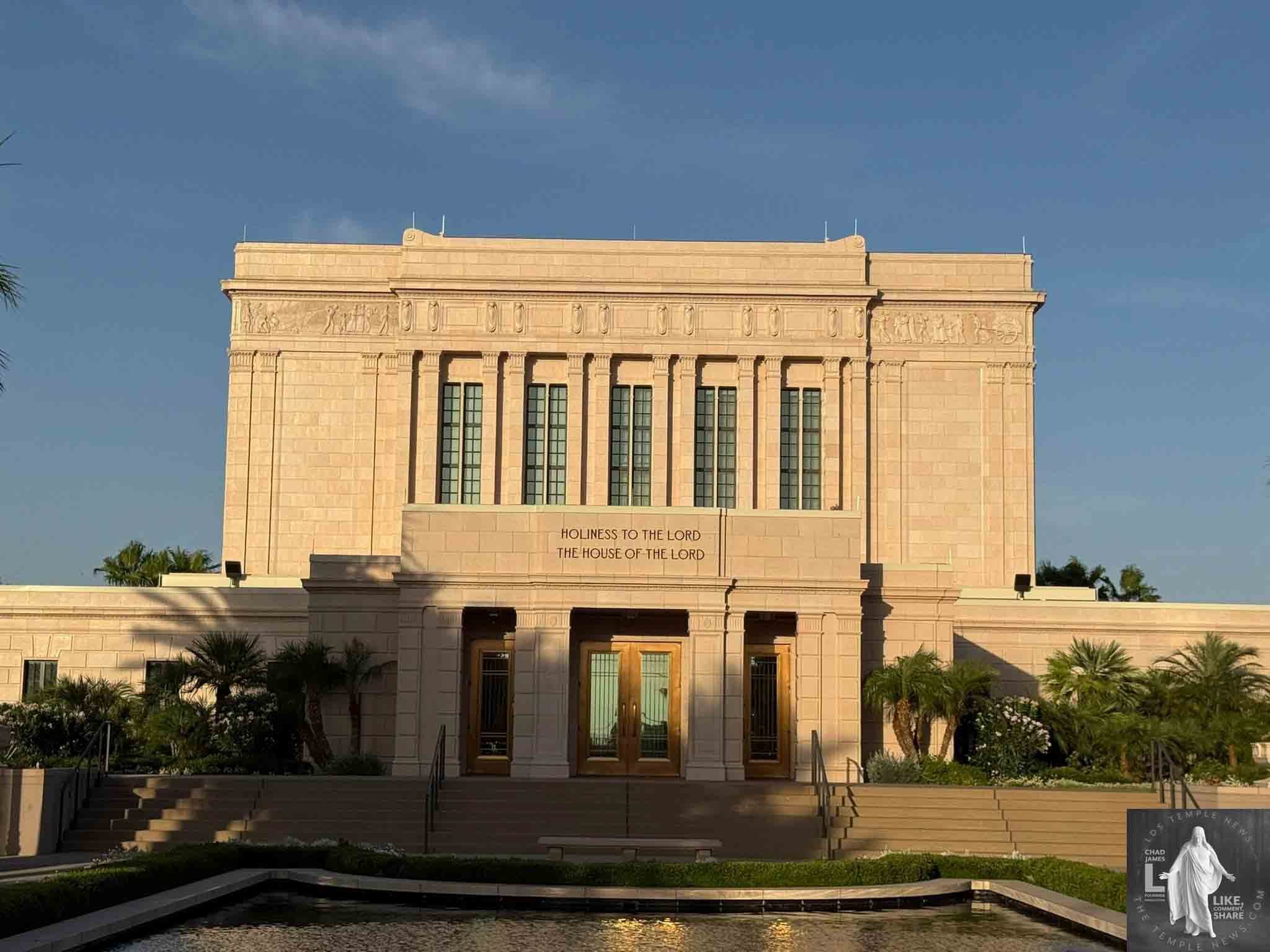
The Mesa Arizona Temple stands as a significant and historic landmark in the heart of Arizona. It was announced on October 3, 2019, but its roots trace back to the early 20th century. The site was dedicated on November 28, 1921, by Heber J. Grant, with the groundbreaking following on April 25, 1922. The formal dedication of the temple took place from October 23 to 26, 1927, also by Heber J. Grant.
After decades of service, the Mesa Arizona Temple underwent a major renovation, closing in early 1974 for extensive remodeling. This remodeling equipped the Creation, Garden, and World Rooms for single-room film presentations of the endowment. During this time, valuable burlap murals were preserved and restored for future generations. The temple’s renovation expanded its capacity, adding dressing rooms and sealing rooms, allowing for greater numbers of patrons to participate in sacred ordinances.
Jumping forward, the temple experienced another significant renovation beginning on May 19, 2018, which concluded in 2021. This renovation included updates to mechanical, electrical, plumbing, and HVAC systems, as well as changes to the building’s interior that maintained its historical character. The exterior also saw improvements, including the preservation of its iconic murals, replacement of windows to match the originals, and landscaping enhancements on the grounds to support public events.
The temple was rededicated on April 15 and 16, 1975, by Spencer W. Kimball after the first open house prior to a rededication was held in late 2021, from October 16 to November 20, culminating in a later rededication on December 12, 2021, conducted by Dallin H. Oaks.
Architecturally, the Mesa Arizona Temple features a flat roof adorned with sculpted friezes. It encompasses four instruction rooms, six sealing rooms, and one baptistery, covering a total area of 75,000 square feet. Standing 53 feet tall at an elevation of 1,240 feet, the temple is built on a 20-acre site, with a concrete exterior reinforced by 130 tons of steel and finished with glazed, egg-shell colored terra cotta tiles.
Beyond its physical attributes, the Mesa Arizona Temple holds several distinctions. It was the first temple built in Arizona and the first to present the endowment in a language other than English. Originally called the Arizona Temple, it has played a significant role in the community, anchoring a historic district that retains its residential character. Complementing the temple, a visitors’ center is available, and the grounds include a cactus garden and large reflection pools.
The temple is also known for its annual events that draw large crowds. Each Easter, it hosts the outdoor pageant “Jesus the Christ,” which is the largest of its kind in the world. During the Christmas season, the grounds are transformed into a beautiful Nativity display with hundreds of thousands of lights, attracting numerous visitors.
Overall, the Mesa Arizona Temple not only serves as a place of worship and community gathering but also stands as a testament to the rich heritage and ongoing evolution of the area. Its architectural beauty, significant history, and community engagement make it an important landmark in Arizona.