
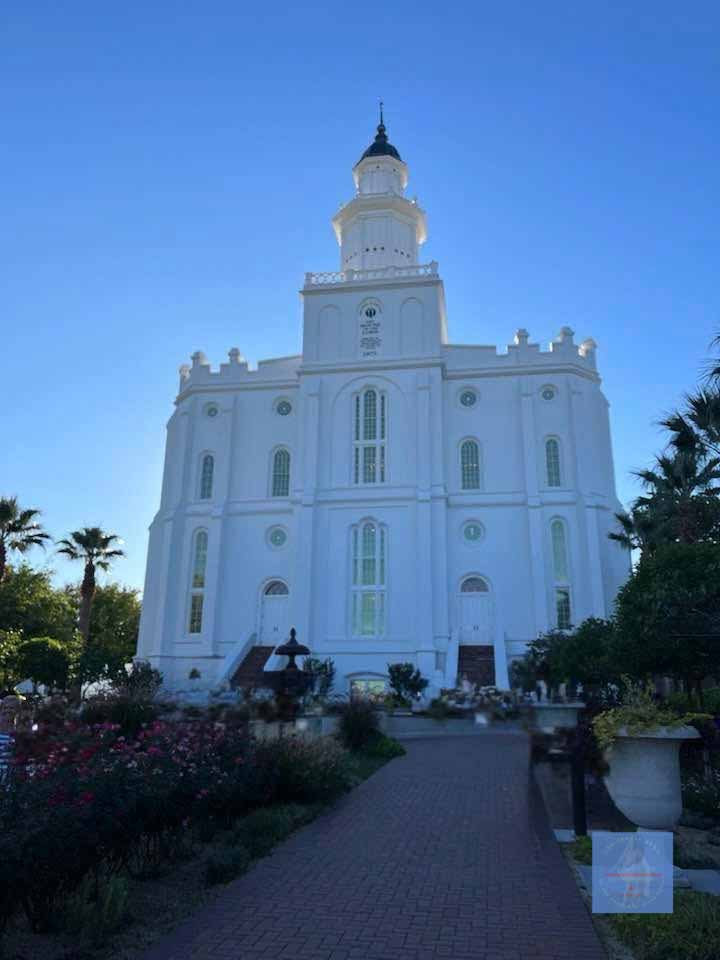
St. George Utah Temple Dedicated by the late Prophet Spencer W. Kimball
St. George Utah Temple Dedicated by the late Prophet Spencer W. Kimball
Nestled in the heart of St. George, Utah, the St. George Utah Temple stands as a significant site with deep historical roots. This post delves into its remarkable story, architectural features, and milestones over the years.
The St. George Utah Temple: A Historical Overview
The journey of the St. George Utah Temple began on January 31, 1871, with its official announcement. Just a few months later, on November 9, 1871, the groundbreaking and site dedication took place, led by Brigham Young, the Second Prophet of The Church of Jesus Christ of Latter-day Saints. The chosen location was somewhat unconventional, situated on swampy ground. To address this challenge, builders utilized volcanic rock, employing an innovative technique that included cannon usage to compact the foundation.
Architectural Features
Occupying 6.5 acres, the St. George Utah Temple is notable for its exterior design. Crafted from native red sandstone quarried to the north of the city and finished with white plaster, the building exhibits a unique blend of natural beauty and craftsmanship. It boasts a single attached end tower, providing a striking silhouette against the backdrop of the Utah landscape.
Dimensions and Facilities
Spanning an impressive 143,969 square feet, the St. George Utah Temple is built to a height of 175 feet. At an elevation of 2,678 feet, it offers an elevated perspective on the surrounding area. Inside, the Temple is equipped with three instruction rooms, several sealing rooms, and one baptistry, ensuring it can serve multiple purposes.
Historical Milestones
- The St. George Utah Temple was initially called the St. George Temple and holds the distinction of being the first built Temple in Utah Territory.
- Remarkably, it is the only Temple completed during Brigham Young’s 30-year tenure as Prophet.
- Following its dedication on January 1, 1877, through a series of three dedicatory prayers, various activities commenced, including baptisms for the dead starting on January 9, and endowments on January 11.
Challenges and Resilience
The Temple has faced its share of challenges. A lightning storm shortly after its dedication severely damaged the original tower. However, a new, taller tower was completed in 1883, restoring its majestic appearance. Moreover, in November 1928, a fire destroyed an annex built in 1883. Despite the devastation, all records and furnishings were salvaged, showcasing the resilience of this historical site.
Unique Events
One of the Temple’s most notable stories involves the appearance of the Founding Fathers of the United States to Wilford Woodruff. They inquired about the completion of their temple work, an event immortalized in a painting titled “That We May be Redeemed” by Harold I. Hopkinson, which adorned the lobby for decades.
Conclusion
The journey of the St. George Utah Temple is filled with unique challenges, remarkable achievements, and a rich history that continues to captivate. Its architectural beauty and significant role in the community reflect its longstanding heritage and the dedication of those who have played a part in its compelling story.