
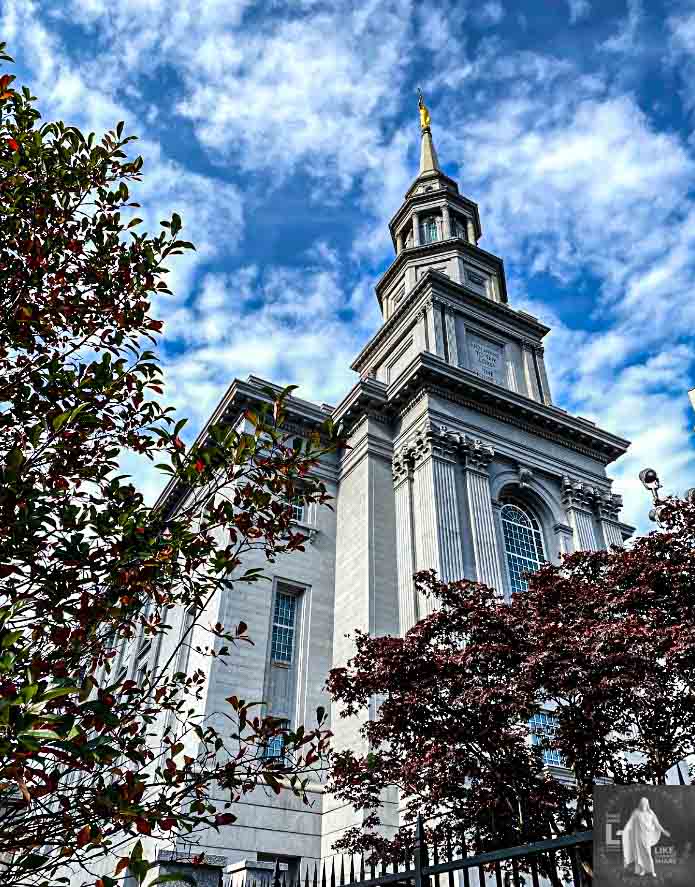
Philadelphia Pennsylvania Temple: A Significant Monument of Faith
The Philadelphia Pennsylvania Temple stands as the 152nd dedicated T emple in operation, located at 1739 Vine St, Philadelphia, Pennsylvania 19103. This important edifice reflects not only the faith of its members but also a rich historical significance in the city where it resides.
Philadelphia Pennsylvania Temple Photography by LDS Temple News
The initial announcement of the Philadelphia Pennsylvania Temple came on October 4, 2008, during a General Conference led by the Prophet. Its groundbreaking and site dedication occurred on September 17, 2011, by Apostle Henry B. Eyring. This date is particularly meaningful; it marks the 224th anniversary of the signing of the Constitution of the United States at Independence Hall in Philadelphia. During this momentous occasion, President Eyring expressed the importance of the work performed within such buildings: “For Latter-day Saints, no building is more sacred than a dedicated T emple of God.” The dedication followed on September 18, 2016, with President Eyring once again presiding, honoring the 240th anniversary of the Declaration of Independence.
Design and Architecture
Covering 1.6 acres, the Philadelphia Pennsylvania Temple features an exterior clad in granite sourced from Maine and fabricated in Canada. The architectural design includes a single attached end spire crowned with a Gold-leafed Angel Moroni Statue, which stands 21 feet and 2 inches tall. This artistic element contributes to the height of the T emple, which reaches 208 feet and 2 inches. Spanning 61,466 square feet, the edifice comprises four levels of beautifully crafted rooms, including two instruction rooms, four sealing rooms, and one baptistry.
Interior Features
The intricate design continues inside the T emple. Notable aspects include:
- Art Glass: The exterior art glass showcases opalescent white with beige and blue accents, while the interior features murals by talented artists. One mural in the instruction room depicts significant sites in American and Church history, including the Susquehanna River.
- Lighting: Much of the lighting is fashioned from antique brass lamps, maintaining a style consistent with the American Georgian period. Crystal-style fixtures illuminate the instruction, celestial, and sealing rooms, adding an elegant touch.
- Flooring: The types of stone used in the flooring are Samah, quarried in Egypt, and Perlato from Italy, along with period cherry wood plank flooring in select areas.
Landscaping and Surroundings
The landscape surrounding the Philadelphia Pennsylvania Temple includes a variety of trees, shrubbery, and flowers native to the eastern United States, ensuring year-round color and texture. The design of the grounds enhances the aesthetic appeal of the area immediately surrounding the T emple.
Notable Comparisons
Curiously, the Angel Moroni statue atop the Philadelphia Pennsylvania Temple faces a statue of William Penn on Philadelphia City Hall, situated half a mile away. This positioning emphasizes a historical connection, as both figures are integral to Pennsylvania’s heritage.
Conclusion
The Philadelphia Pennsylvania Temple stands as a testament to both faith and history. Its dedication and architectural beauty serve not only to inspire those of the faith but also to reflect the rich cultural and historical landscape of Philadelphia. As the first T emple in Philadelphia and Pennsylvania, it holds a unique place in both the hearts of its members and the annals of the city.
Philadelphia Pennsylvania Temple by LDS Temple News