
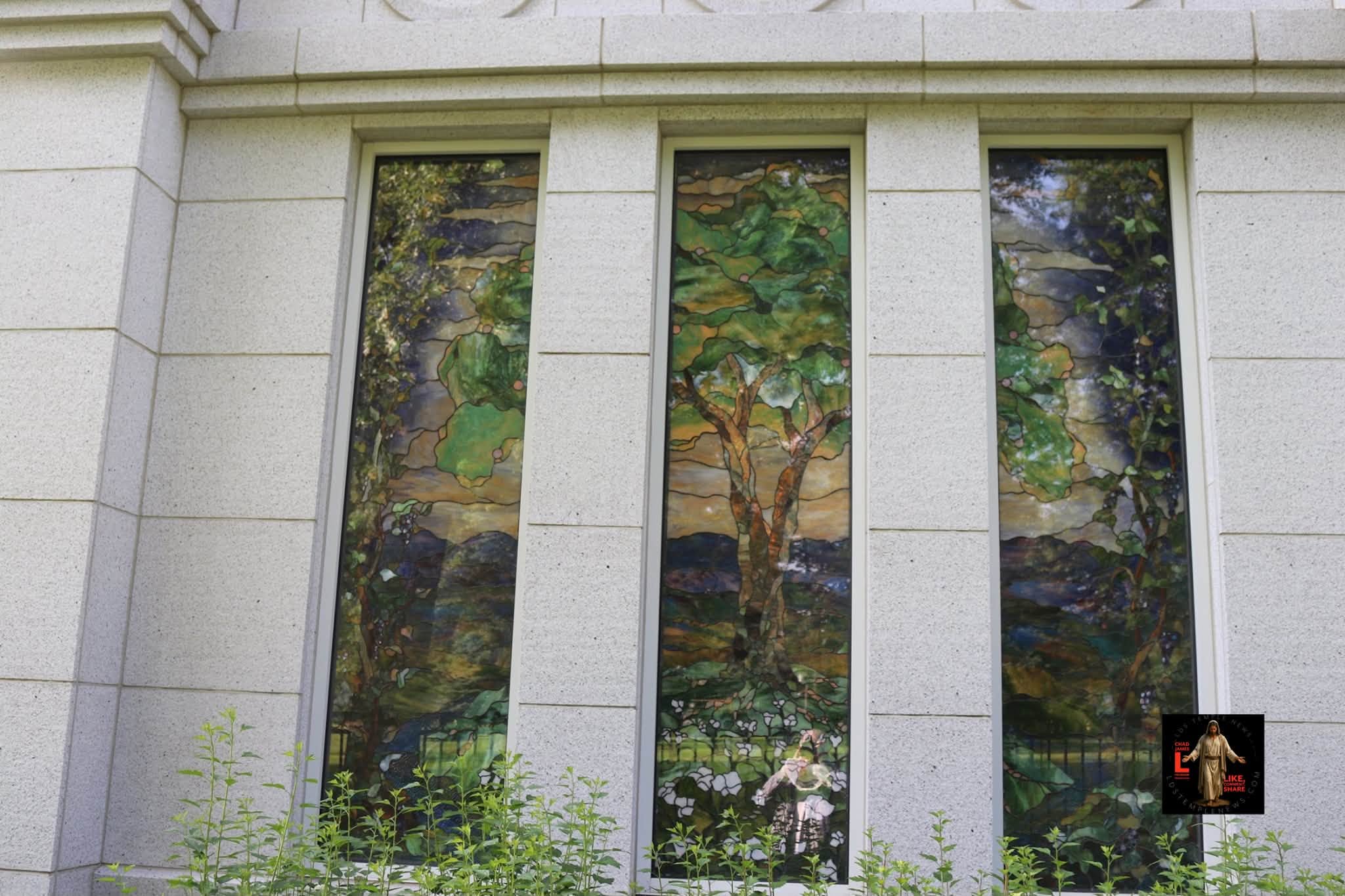
Art Glass in the Winter Quarters Nebraska Temple
The Winter Quarters Nebraska Temple, the 104th dedicated Temple in operation, has become a notable addition to the city of Omaha. Situated at 8283 N 34th St, Omaha, Nebraska 68112, this remarkable building is rich in history and significance.
A Historical Timeline
The Winter Quarters Nebraska Temple was announced to the public on June 14, 1999, Prophet Gordon B. Hinckley. Shortly thereafter, the groundbreaking and site dedication took place on November 28, 1999, led by Hugh W. Pinnock.
An extensive open house ran from March 30, 2001, through April 14, 2001, during which many explored the interior before the Temple was dedicated on April 22, 2001, by Prophet Gordon B. Hinckley. Built on 1.92 acres, the Temple’s exterior showcases bethel white granite, complemented by a striking single attached end spire featuring a gold-leafed Angel Moroni Statue.
Architectural and Interior Features
The Winter Quarters Nebraska Temple spans 16,000 square feet and reaches a height of 86 feet, constructed over two stories. It contains two instruction rooms, two sealing rooms, and a baptistry, making it functional and beautiful.
Unique Artistic Elements
The interior is adorned with light fixtures made of brass and crystal elements, while the doors are crafted from solid cherry, emphasizing the quality of materials used. The bronze exterior doors and railings around the baptismal font, made of etched glass and bronze, further enhance its aesthetic appeal.
Stained Glass and Artistic Contributions
The art glass in the Temple narrates pivotal aspects of pioneer history, illustrated through stained-glass windows displaying scenes like William Clayton penning the hymn “Come, Come, Ye Saints” and poignant depictions of a pioneer couple. Other windows feature patterns honoring the local Omaha Indian tribe and references to significant histories such as the Kirtland Temple.
Notable artists like Walter Rane and C.C.A. Christensen have contributed to the artistic landscape of the Temple. Rane’s work at the nearby visitors’ center highlights biblical narratives while Christensen’s historical pieces reflect the trials and achievements of pioneers.
Significance and Community Impact
The Winter Quarters Nebraska Temple stands as one of three Temples in locations of historical significance for early Church members, alongside the Palmyra New York Temple and Nauvoo Illinois Temple. The dedicatory services were broadcast over the Church’s encrypted satellite system to various stake centers and facilities throughout North America, allowing many to partake in the momentous occasion.
Conclusion
This Temple is not only a place of profound personal significance for many but is also steeped in rich historical context. The Winter Quarters Nebraska Temple serves as a focal point for both spirituality and reflection on the trials faced by pioneers and early Church members, effectively connecting the past with the present. As it continues to stand on this historic sight, it represents the enduring values and narratives of a courageous journey.