
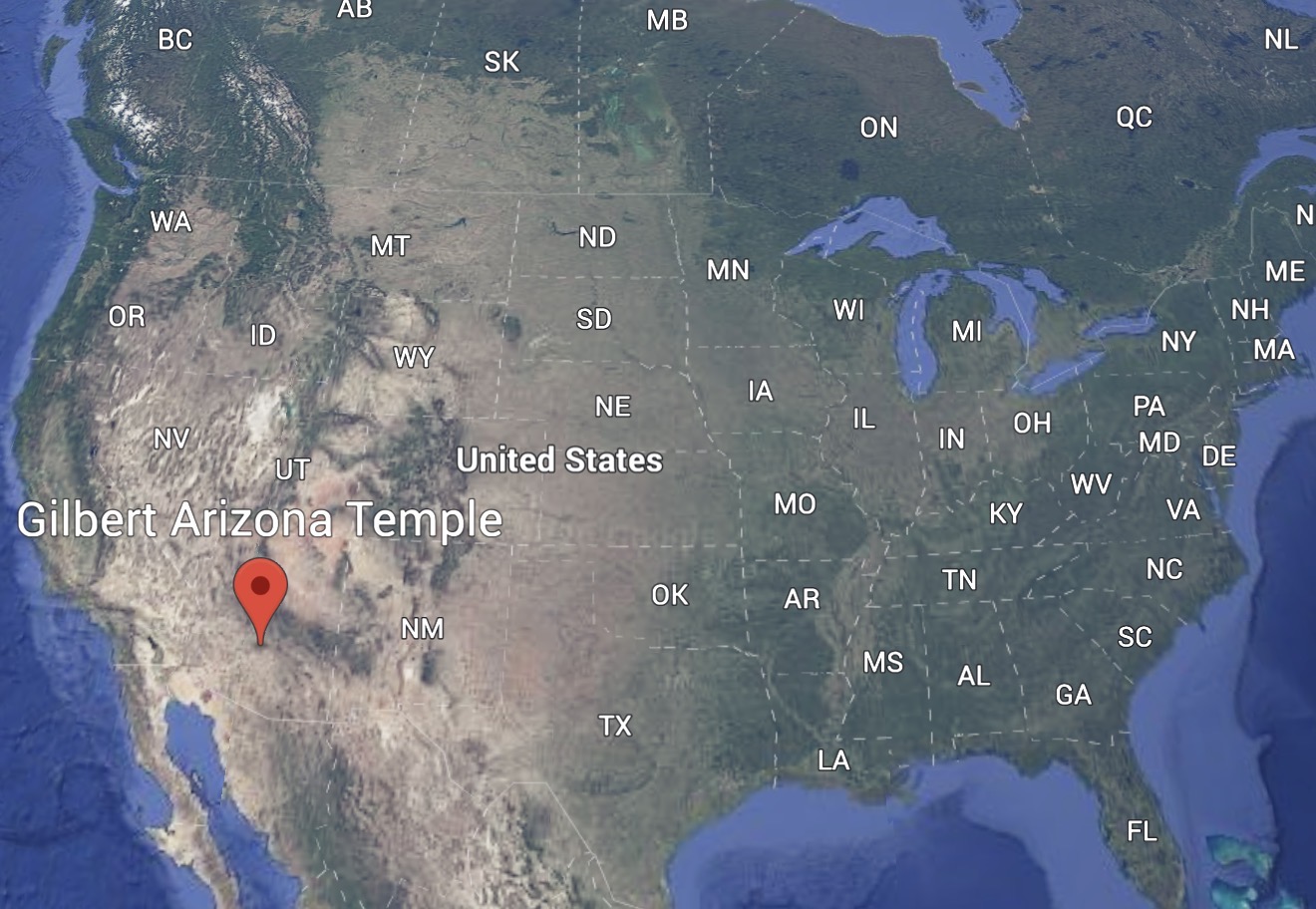
Country View of the Gilbert Arizona Temple
The Gilbert Arizona Temple holds the distinction of being the 142nd dedicated Temple in operation. Nestled in the heart of Gilbert, this sacred space offers a unique combination of architectural beauty and cultural significance.
Location and History
The Gilbert Arizona Temple is located at 3301 S Greenfield Rd, Gilbert, Arizona 85297. The announcement for this Temple came on April 26, 2008, during a General Conference, and it has since captured the interest of many. The groundbreaking and site dedication took place on November 13, 2010, performed by Elder Claudio R.M. Costa.
A public open house was held from January 18 through February 15, 2014, which drew an impressive attendance of 407,020 individuals. The Temple was officially dedicated on March 2, 2014, by the Prophet Thomas S. Monson, with the dedicatory prayer read by Henry B. Eyring.
Architectural Features
The design of the Gilbert Arizona Temple covers 85,326 square feet and was built on an expansive 15.38 acres. It rises to a height of 195 feet, standing proudly at an elevation of 1,269 feet. This five-level Temple is notable for being the first built in the city of Gilbert and the fourth in the state of Arizona, adding to the spiritual landscape of Maricopa County as its third Temple.
Exterior Details
The exterior finish features precast concrete panels, creating a visually engaging facade. A striking single attached end spire is crowned with a Gold-leafed Angel Moroni Statue, which was installed on May 15, 2012. Decorative art leaves adorn the exterior art glass, establishing a cohesive natural theme.
Interior Elements
Inside, the Temple showcases breathtaking, highly detailed art glass, with designs influenced by the native Sonoran Desert landscape, particularly highlighting the agave plant and its flowers.
The art pieces created by talented artists enhance the Temple’s serene atmosphere. Alan Fullmer is famed for his panoramic works like “Glorious Gilbert Arizona Temple,” while Anne Bradham captures impressionistic scenes in soft pastels. Robert A. Boyd contributes with his “Time and All Eternity Series,” illustrating beauty and peace. Additionally, Katauna Davis focuses on the architectural details through precision watercolor works.
The chandeliers and interior light fixtures, crafted by Swarovski Architectural Lighting, incorporate the native agave plant and flower into their design, embodying the essence of the Tree of Life. The interior doors are made of white oak, adorned with bronze hardware, while the exterior doors also feature bronze elements. The railings surrounding the baptismal font are crafted from bronze, further adding to the elegance of the interior.
Conclusion
The Gilbert Arizona Temple is not just a place of deep spiritual meaning but also a canvas for artistic expression and architectural excellence. Its design and features reflect both the local landscape and a commitment to beauty and detail, making it a place of great significance in the region.