
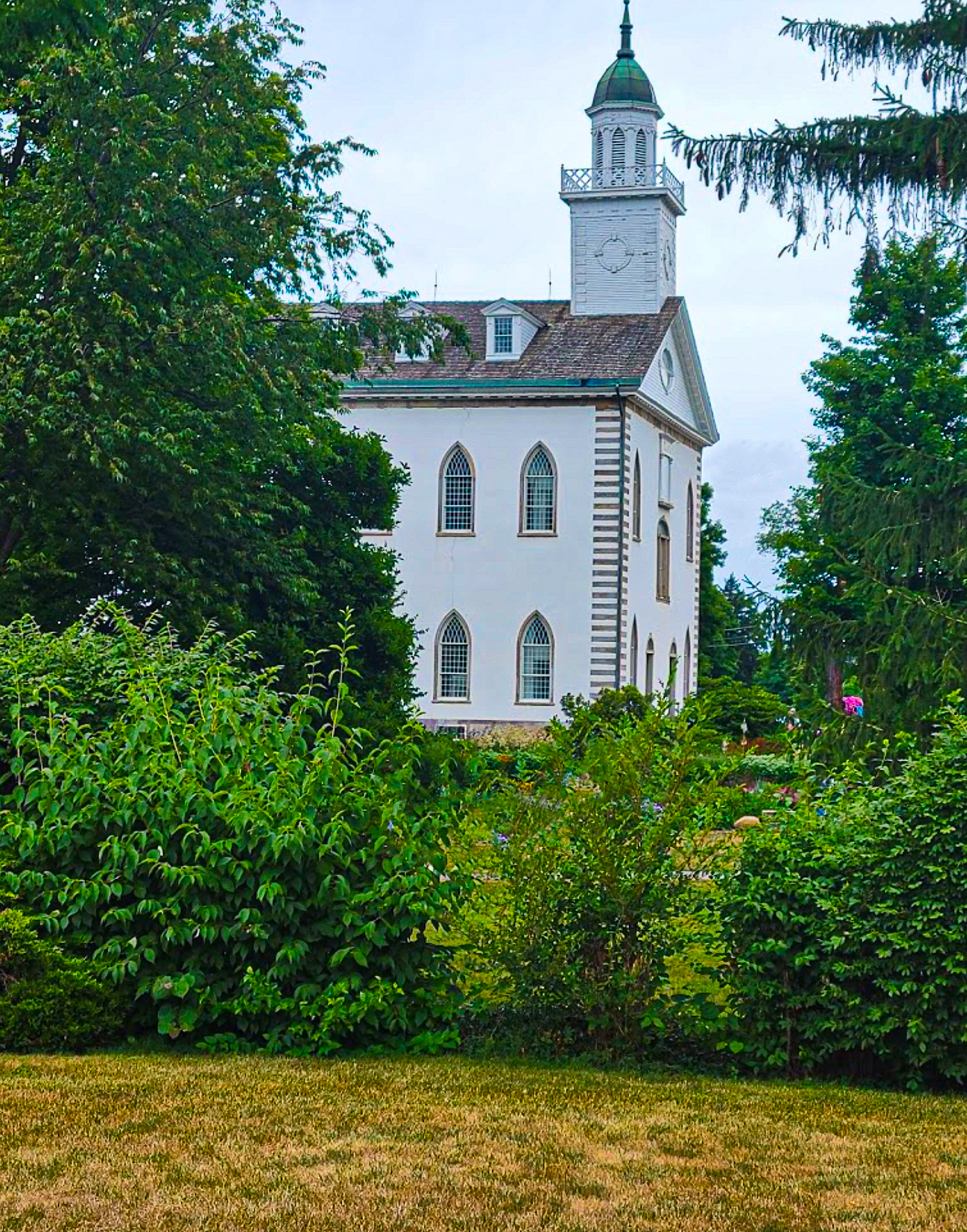
House of the Lord Kirtland Temple by LDS Temple News
The Kirtland Temple stands as a significant site in the history of the Latter Day Saints movement. Located at 9020 Chillicothe Road, Kirtland, Ohio 44094, this impressive edifice overlooks the scenic Chagrin Valley. Its construction began on June 6, 1833, following initial instructions from the Lord to establish a house of God, as recorded in the Doctrine and Covenants 88:119. The public announcement of the Kirtland Temple was made on December 27, 1832, when the Saints were urged to create a revered space.
Early Construction and Design
The design of the Kirtland Temple was revealed to the Saints in June 1833, which included a precautionary measure: the building was guarded at night to prevent damage from hostile forces. The cornerstone-laying ceremony took place on July 23, 1833, led by Prophet Joseph Smith along with Apostles Sidney Rigdon and Frederick G. Williams. As construction progressed, the early Saints made efforts to expedite the work, including the establishment of a sawmill in the Fall of 1833.
Dedication and Historical Significance
The Kirtland Temple was dedicated on March 27, 1836, marking an important milestone in the history of the faith. Approximately 1,000 individuals participated in the dedication, which lasted for seven hours. On that day, those present experienced profound manifestations, described in detail in Section 109 of the Doctrine and Covenants. Joseph Smith recorded witnessing angels in attendance, an event that drew the attention of local residents due to the unusual sounds and bright lights emanating from the Temple.
Key Events Following the Dedication
On Easter Sunday, April 3, 1836, during the Jewish Passover, a momentous occasion occurred when the Lord appeared to Joseph Smith and Oliver Cowdery, affirming the establishment of His house. This revelation included the restoration of priesthood keys by ancient prophets, allowing for vital aspects of the faith to continue. The ordinances received here were seen as foundational, yet only a partial endowment; the full endowment would come later in Nauvoo.
Two years after its dedication, many Saints had relocated, and the Kirtland Temple served various purposes, including a space for personal reflection and public activities. Eventually, it was leased as a public school for many years.
Transition of Ownership
In 1880, the Community of Christ, originally the Reorganized Church of Jesus Christ of Latter Day Saints, reestablished ownership and undertook restoration efforts. This stewardship lasted an impressive 144 years. As of March 5, 2024, the ownership transitioned to The Church of Jesus Christ of Latter-day Saints for an agreed amount. The Kirtland Temple will undergo necessary preparations to reopen for tours on March 25, 2024.
Architectural Features
Covering 15,000 square feet and standing at a height of 110.5 feet, the Kirtland Temple exhibits an architectural blend of Federal, Greek Revival, and Gothic Revival styles. Its exterior is finished with sandstone stucco and features a large steeple and cupola. Notably, the original architectural finial now resides inside the Kirtland Temple Visitor Center. The building is set upon 5.8 acres and sits at an elevation of 765 feet.
Unique Design Elements
The Kirtland Temple’s interior is characterized by its simplicity, eschewing traditional art for a focus on architectural elements. The main spaces consist of two large wooden assembly rooms equipped with two-way pulpits and movable pews. Light fixtures rely on natural illumination and period-appropriate oil lamps, while the design includes the unique Meander pattern as a historical symbol.
Internally, the Kirtland Temple lacks baptismal fonts, instruction rooms, or sealing rooms, reflecting a distinct functional design aligned with its early purpose. The exterior doors are striking olive green and framed with distinctive stone quoins, showcasing craftsmanship by early Latter Day Saints woodworkers.
Conclusion
The Kirtland Temple holds a special place in the history of the Latter Day Saints movement, embodying the perseverance and faith of its early members. From its divine design to the rich experiences that have transpired within its walls, the Temple stands as a testament to a unique chapter in religious history.