
Kirtland Temple Media LDS Temple News
Kirtland Temple, located at 9020 Chillicothe Road, Kirtland, Ohio 44094, is a cornerstone of early Latter Day Saint history. Perched on a bluff overlooking the picturesque Chagrin Valley, this historic building stands 25 miles east of Cleveland and occupies 5.8 acres of land.
The Establishment and Design
The journey to the existence of the Kirtland Temple began with instruction given to the early Saints on December 27 and 28, 1832, and January 3, 1833, to build a house for God. The official announcement regarding the Temple was made on December 27, 1832. By June 1, 1833, the Lord expressed discontent over the Saints’ progress, leading to the revelation that defined the Temple’s design.
Construction commenced on June 6, 1833, amidst challenges. At night, the Temple was guarded to shield it from mobs and vandalism. The cornerstone-laying was led by Church leaders, including the Prophet Joseph Smith, on July 23, 1833. To expedite the building process, a sawmill was constructed near Stoney Brook in Kirtland in the fall of that same year.
Dedication and Early Significance
On March 27, 1836, Kirtland Temple was dedicated by Joseph Smith in an event attended by approximately 1,000 individuals. The dedication lasted for seven hours and was characterized by profound experiences for those present. Joseph Smith noted a remarkable influx of heavenly manifestations, including visions and the gift of tongues. Locals were drawn to the Temple by the sounds and light emanating from it.
On Easter Sunday, April 3, 1836, during the Jewish Passover, the Lord appeared to both Joseph Smith and Oliver Cowdery, affirming His acceptance of the Temple. This event is recorded in Doctrine and Covenants Section 110, where significant priesthood keys were restored by ancient prophets, which played a vital role in the ongoing ministry of the Saints.
Transition of Ownership
Following the dedication, Kirtland Temple saw a transition in use as many Saints moved away, leading to its adaptation for private and public purposes, including a period as a public school. In 1880, the Community of Christ reclaimed the Temple and undertook efforts to restore it to its original condition. This stewardship lasted for 144 years. On March 5, 2024, the Temple ownership transitioned to The Church of Jesus Christ of Latter-day Saints, and after a brief closure for preparations, it is set to reopen for tours on March 25, 2024.
Architectural Features
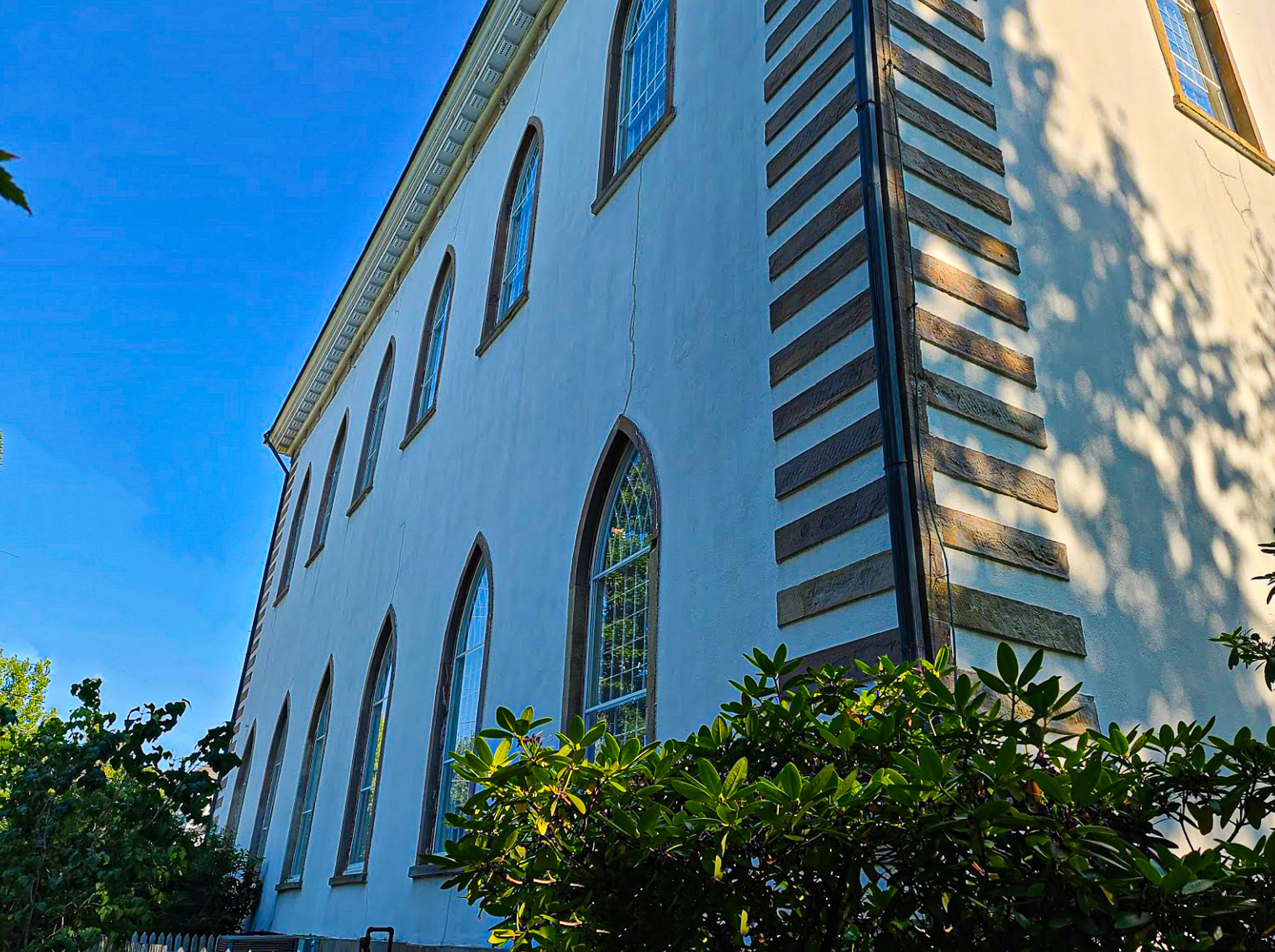
Kirtland Temple spans 15,000 square feet and stands 110.5 feet tall over three stories. Its architectural style incorporates Federal, Greek Revival, and Gothic Revival elements, highlighted by its striking steeple and cupola. A notable feature is the original architectural finial, which is preserved and displayed in the Kirtland Temple Visitor Center.
The exterior, finished with sandstone and stucco, features historically significant olive green twin doors framed by stone quoins and fanlights. Inside, the simplicity of the design allows natural light to illuminate the space, complemented by period-appropriate oil lamps. The absence of traditional art or murals further emphasizes its architectural integrity, featuring large wooden assembly rooms with unique pulpits designed for engagement and participation.
Historical Recognition
Kirtland Temple was added to the National Register of Historic Places in 1969 and recognized as a National Historic Landmark in 1977. The early Saints referred to the structure simply as the “Lord’s House,” underscoring its significance during a time when the term Temple was not widely used.
In summary, Kirtland Temple is not only a building of historical importance but also a testament to the faith and perseverance of the early members of the Church. Its unique architectural features and rich history make it an intriguing site for exploration and understanding of early Latter Day Saint heritage.