
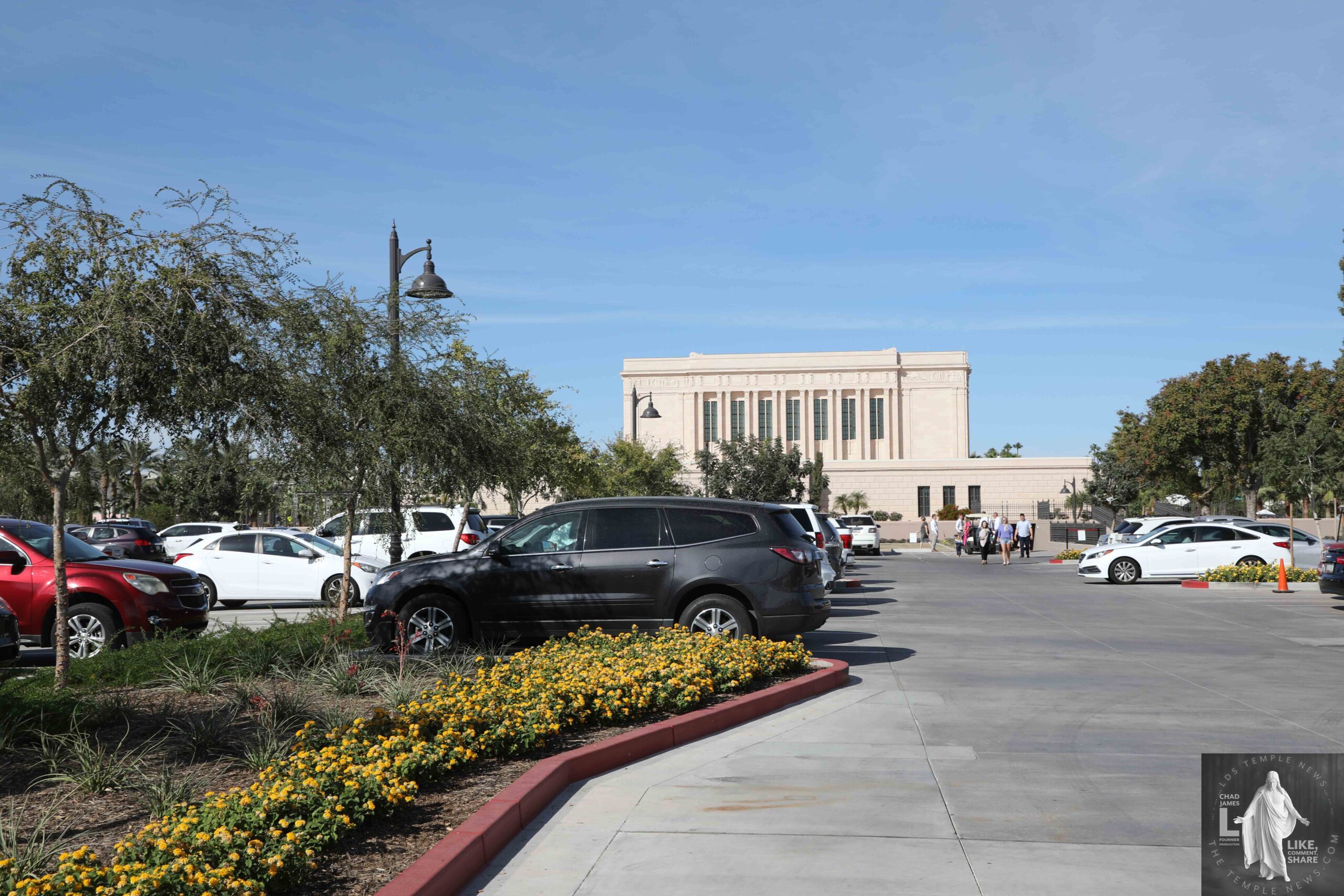
The Mesa Arizona Temple was announced on October 3, 2019. The site was dedicated on November 28, 1921, by Heber J. Grant, with the groundbreaking following on April 25, 1922. The temple was dedicated from October 23 to 26, 1927, and a public open house was held from March 19 to April 3, 1975. The official dedication occurred on April 15 and 16, 1975, by Spencer W. Kimball. Its most recent public open house took place from October 16 to November 20, 2021, with a rededication on December 12, 2021, by Dallin H. Oaks.
The temple’s architecture features a flat roof and sculpted friezes. It includes four instruction rooms, six sealing rooms, and one baptistery, covering a total area of 75,000 square feet. The temple stands 53 feet tall at an elevation of 1,240 feet and is situated on a 20-acre site. Its exterior consists of concrete reinforced with 130 tons of steel and is faced with eggshell-colored terracotta tiles.
Positioned just east of the original Mesa Townsite, the temple anchors a historic district. The grounds feature a public visitors’ center, a cactus garden, and reflection pools. The annual Easter pageant, “Jesus the Christ,” draws thousands of visitors every year, while Christmas transforms the grounds into a Nativity display adorned with lights.
The Mesa Arizona Temple is the first temple built in Arizona and the first to present the endowment in a language other than English. It also was the first to reopen for a public open house prior to a rededication. Originally named the Arizona Temple, the endowment was initially presented through live acting.
Carved friezes depict Isaiah’s prophecy regarding the gathering of people in the last days. The temple closed in February 1974 for extensive renovations that updated several rooms for single-room presentations of the endowment. A new entrance and an additional 17,000 square feet were added during this time, allowing for larger dressing rooms and increased sealing rooms. In 1980, a fourth ordinance room was added. In 1991, preserved sections of the original murals were returned for limited restoration.
On May 19, 2018, the temple closed for a three-and-a-half-year renovation. This included new roofing, updated mechanical systems, and enhancements to the interior. The renovation preserved historic murals, improved the grounds, and built a new visitors’ center and Family Discovery Center.