
LDS Temple News Presents Kirtland Temple a House of the Lord
The Kirtland Temple, situated at 9020 Chillicothe Road in Kirtland, Ohio, stands as a monumental representation of early Latter Day Saint history. Overlooking the picturesque Chagrin Valley, this significant site has been a focal point for spiritual and community activities since its inception.
Early Days of the Kirtland Temple
In December 1832, the Lord instructed the early Saints to establish a house of God, leading to the announcement of the Kirtland Temple. Construction officially began on June 6, 1833, after the Lord revealed its design, signifying a critical moment for the faithful in Kirtland. Notably, its construction faced challenges as it was protected at night from hostile groups wanting to interfere.
Hallowed events unfolded during the cornerstone-laying on July 23, 1833, presided over by Prophet Joseph Smith and Apostles Sidney Rigdon and Frederick G. Williams. By 1836, the Kirtland Temple was completed and dedicated on March 27, marking a landmark moment with around 1,000 in attendance. This occasion was characterized by profound spiritual experiences, including visions, prophecies, and the appearance of angels, demonstrating the temple’s deep significance.
The Dedication Event
Joseph Smith vividly described the dedication day, highlighting a unique atmosphere filled with an unseen power. Many attendees reported experiencing spiritual manifestations as the presence of angels was felt. The extensive record of this day can be found in Section 109 of the Doctrine and Covenants. The dedication lasted an impressive seven hours, underscoring the intensity of the spiritual activities that took place.
Restoration and Ownership Transitions
Despite its initial vibrancy, two years after its dedication, many Saints left Kirtland, leading to varied uses of the Kirtland Temple over the years. It even served as a public school at one point. In 1880, ownership transitioned back to the Community of Christ, who meticulously restored it to its original condition and maintained stewardship for 144 years.
A significant change occurred on March 5, 2024, when ownership moved to The Church of Jesus Christ of Latter-day Saints, marking a new chapter for this historic site. After a brief closure for preparations, it reopened on March 25, 2024, ready to share its story with those interested in its rich history.
Architectural Features
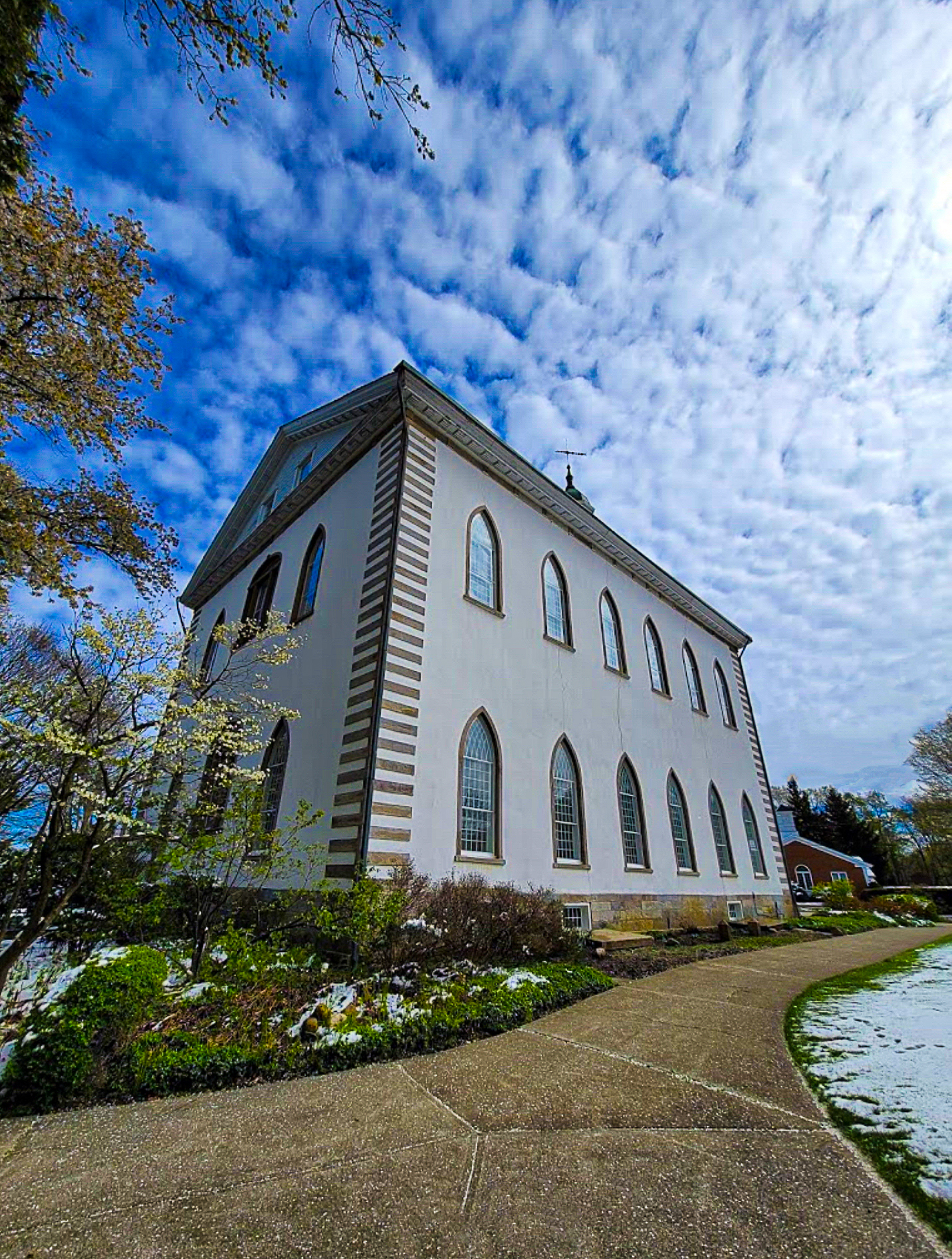
The Kirtland Temple showcases a unique blend of architectural styles, incorporating Federal, Greek Revival, and Gothic Revival elements. It spans 15,000 square feet and stands 110.5 feet high, on a land area of 5.8 acres. The exterior features sandstone stucco finished with plaster and remarkable architectural details, including a large steeple and a cupola crowned with an original finial.
Inside, the temple’s design is unembellished yet purposeful, with two large assembly rooms featuring tiered wooden pulpits. Notably absent are traditional art paintings; instead, the interior reflects functionality with movable pews and natural light, primarily from historically accurate oil lamps. The exterior doors exemplify the building’s elegance, characterized by olive green twin Federal-style entry doors embellished with distinctive stone quoins.
Historical Significance
In addition to its rich history, the Kirtland Temple was added to the National Register of Historic Places in 1969 and named a National Historic Landmark in 1977. It holds the distinction of being the first Temple built in Kirtland, Lake County, and the entire state of Ohio.
Conclusion
The Kirtland Temple stands not just as an architectural achievement but as a cornerstone of early Latter Day Saint history. It tells a story of faith, struggle, and resilience, continuing to inspire those who seek to understand its significance in a broader spiritual narrative. Through careful stewardship and ongoing historical exploration, the legacy of the Kirtland Temple is preserved for future generations.
The Kirtland Temple remains a treasured site that encapsulates foundational moments in the journey of its early followers, each corner whispering stories of devotion and community spirit.