
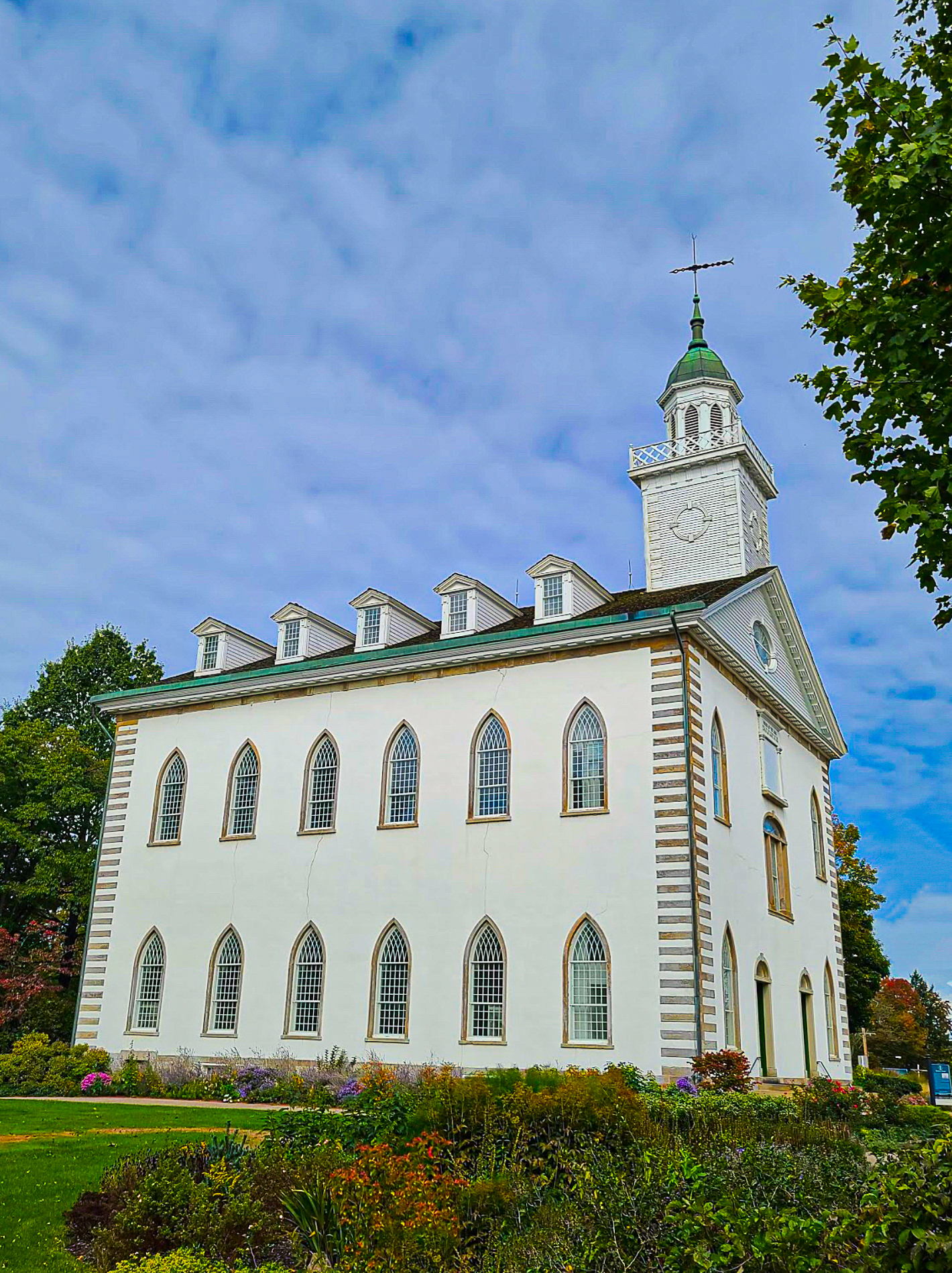
LDS Temple News Presents Kirtland Temple Photography
Genesis of the Kirtland Temple
The Kirtland Temple, located at 9020 Chillicothe Road, Kirtland, Ohio, holds a significant place in the history of the early Saints. The call to establish a house of God was issued on December 27, 1832, and echoed again on June 1, 1833, when the Lord expressed concern over the Saints’ failure to commence the building. Construction officially began on June 6, 1833, amidst challenges that included the need to guard the site from potential threats.
A cornerstone-laying event on July 23, 1833, saw key Church leaders, including Prophet Joseph Smith, Apostle Sidney Rigdon, and Apostle Frederick G. Williams, officiate the proceedings. Throughout the fall of that year, Church members actively contributed to hastening construction by establishing a sawmill on Stoney Brook.
Dedication and Early Significance
On March 27, 1836, the Kirtland Temple was dedicated by Joseph Smith, drawing approximately 1,000 attendees. This momentous occasion culminated in a seven-hour dedication service, during which participants reported astounding manifestations—visions, speaking in tongues, and even the appearance of angels. Joseph Smith noted the commotion created, likening it to a “rushing mighty wind,” as the local community was drawn to the spectacle.
On April 3, 1836, coinciding with the Jewish Passover, a significant event took place. The Lord appeared to Joseph Smith and Oliver Cowdery, formally accepting the house. During this appearance, crucial priesthood keys were restored by ancient prophets, solidifying the Temple’s role in early Church history. Although the ordinances performed were partial, they laid groundwork for future teachings and principles.
Transition of Ownership and Preservation
Following the departure of many Saints from Kirtland two years after the dedication, the Kirtland Temple underwent a shift, serving as a venue for both private reflection and public events. In time, it was leased for many years as a school, reflecting its versatility and relevance.
In 1880, the Reorganized Church of Jesus Christ of Latter Day Saints (now Community of Christ) acquired the Temple and undertook painstaking restoration efforts to maintain its original condition. This stewardship continued for 144 years, until ownership transferred to The Church of Jesus Christ of Latter-day Saints on March 5, 2024. This transition marked a new chapter, as the temple underwent a brief closure for necessary preparations before reopening for tours on March 25, 2024.
Architectural Features and Historical Significance
Standing at an elevation of 765 feet and comprising 15,000 square feet across three stories, the Kirtland Temple is notable not only for its history but also for its architectural design. The exterior, adorned in sandstone and stucco with Federal, Greek Revival, and Gothic Revival elements, features a prominent steeple and cupola. One of the original architectural finials is preserved for display within the Visitor Center.
The windows, handcrafted by Brigham and Joseph Young, exhibit remarkable artistry, with several blue-tinted glass windows being focal points. Inside, the design is simple yet striking, featuring two large assembly rooms with unique two-way pulpits, movable pews, and meaningful historical symbols like the Meander pattern, while avoiding figurative art.
Conclusion
With a rich history shaped by its early foundational events and a commitment to preservation, the Kirtland Temple remains a vital element in the chronicles of early Latter Day Saints. Its architectural features and the experiences it encapsulates contribute to the ongoing story of faith and heritage.