
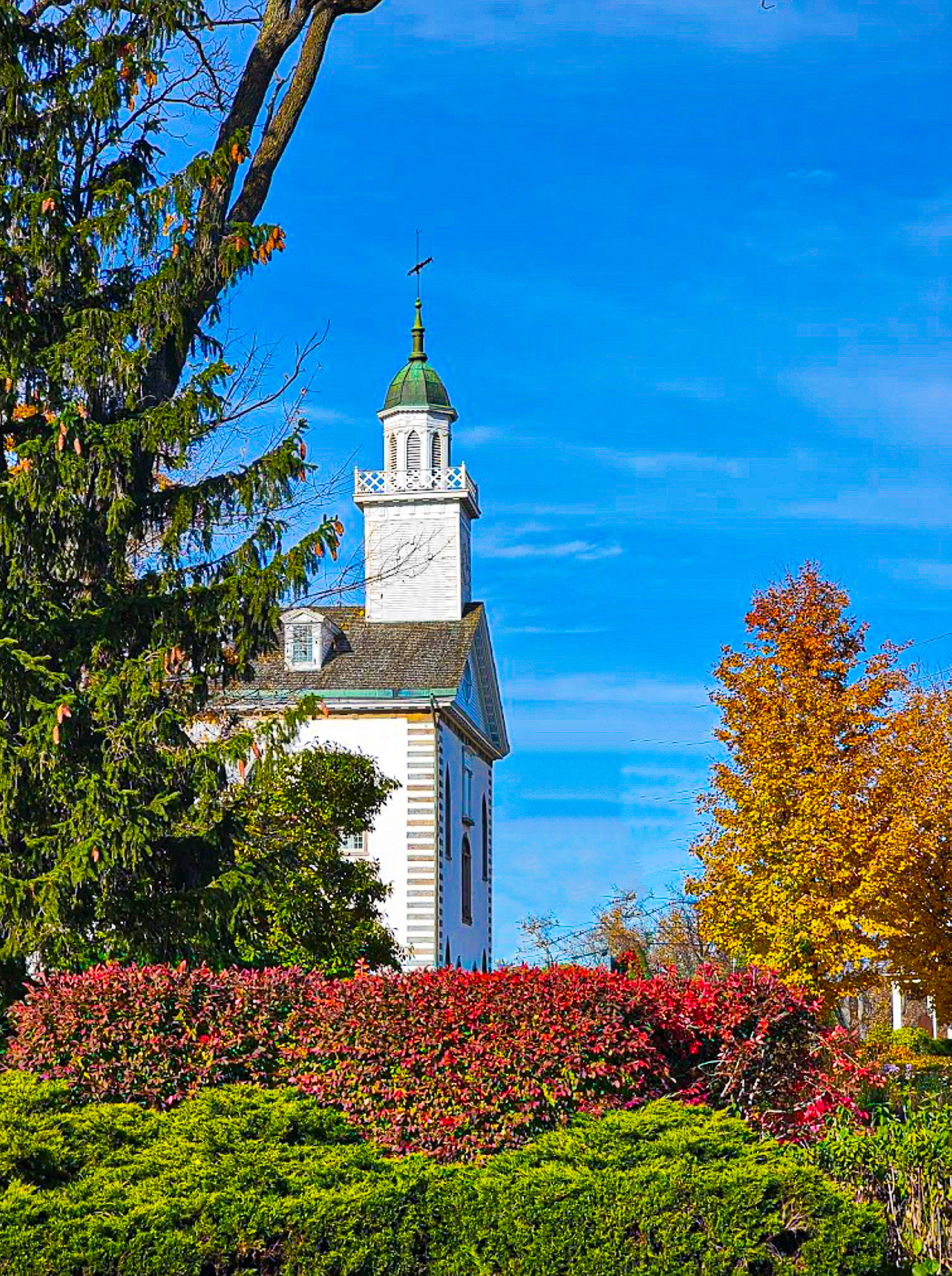
LDS Temple News Presents Kirtland Temple
The Kirtland Temple holds significant historical importance and represents a pivotal moment in the history of the Latter Day Saint movement. This remarkable building is located at 9020 Chillicothe Road, Kirtland, Ohio, perched on a bluff overlooking the picturesque Chagrin Valley, approximately 25 miles east of Cleveland.
The Origins and Construction of Kirtland Temple
On December 27, 1832, the Lord instructed the early Saints to establish a house of God, as outlined in Doctrine and Covenants 88:119. This directive led to the public announcement of the Kirtland Temple just a few months later. Following this revelation, construction officially commenced on June 6, 1833. The project was not without challenges; the building was guarded at night to protect it from potential threats, reflecting the tumultuous times of its creation.
On July 23, 1833, key figures such as Prophet Joseph Smith, Apostle Sidney Rigdon, and Apostle Frederick G. Williams presided over a cornerstone-laying event, marking a significant milestone in the temple’s construction. In the autumn of that same year, members of the early Church constructed a sawmill on Stoney Brook to expedite the building process.
Dedication and Early Significance
The dedication of the Kirtland Temple took place on March 27, 1836, and saw the participation of approximately 1,000 individuals. This monumental occasion featured unique experiences, including heavenly manifestations that Joseph Smith documented: “Brother George A. Smith arose and began to prophesy, when a noise was heard like the sound of a rushing mighty wind… and I beheld the Temple was filled with angels.” This day lasted seven hours and was a turning point that solidified the Kirtland Temple’s place in history.
On April 3, 1836, during Passover, the Lord appeared to Joseph Smith and Oliver Cowdery within the temple, formally accepting it. This event was crucial for the restoration of priesthood keys through ancient prophets, including Moses and Elijah. These foundational moments were integral to the temple’s early functionality, which varied as the community faced challenges and changes over the years.
Evolution Over Time
Two years after its dedication, many early Saints left Kirtland, allowing the temple to serve varied purposes, including private worship and public use. In 1880, the Community of Christ, previously known as the Reorganized Church of Jesus Christ of Latter Day Saints, regained ownership and undertook restoration efforts to preserve its original condition for 144 years.
In 2024, the temple transitioned to ownership under The Church of Jesus Christ of Latter-day Saints, preparing for a reopening marked for March 25, 2024. This beautiful building was recognized on the National Register of Historic Places in 1969 and named a National Historic Landmark in 1977, further attesting to its significance in American history.
Architectural Features and Historical Artistry
Spanning 15,000 square feet and rising to a height of 110.5 feet over three stories, the Kirtland Temple is a blend of Federal, Greek Revival, and Gothic Revival architectural styles. The exterior showcases sandstone stucco finish and a large steeple with a cupola, maintaining an unadorned yet dignified appearance.
Inside, the temple relies primarily on natural light, utilizing historically accurate oil lamps rather than modern fixtures. The interior is architecturally simple; it features two large assembly rooms with unique two-way pulpits and movable pews. Notably devoid of traditional art paintings or murals, the design emphasizes historical symbols without depicting figures.
For those who appreciate intricate craftsmanship, the temple’s exterior includes twin olive green Federal-style doors, framed by stone quoins and recessed fanlights, embodying 19th-century New England aesthetics.
Conclusion
The Kirtland Temple is a testament to the early Saints’ dedication and determination. It continues to serve as a place of historical and spiritual significance, reflecting the stories and experiences of those who contributed to its legacy. Its journey from inception to restoration highlights the enduring nature of faith and the importance of preserving history.