
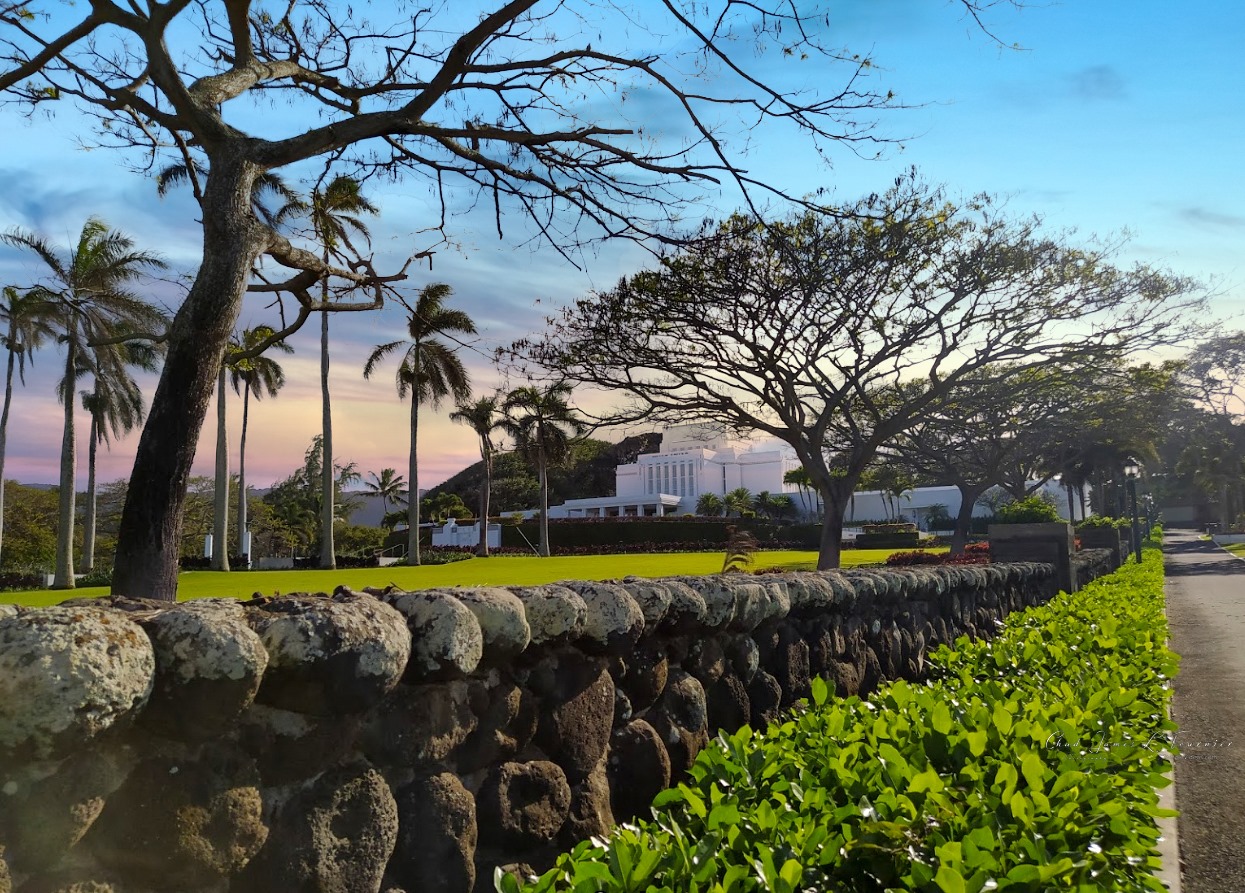
The Laie Hawaii Temple is a cherished spiritual landmark, notable for its history, architecture, and significance to the members of The Church of Jesus Christ of Latter-day Saints.
Historical Background
The announcement of the Laie Hawaii Temple was made on October 3, 1915, and the groundbreaking ceremony took place on February 8, 1916. As the fifth temple in operation for the Church, it holds a distinguished place within its history. The site dedication occurred on June 1, 1915, by President Joseph F. Smith, who felt a spiritual prompting to designate the land—an act sustained by Church leaders during the October 1915 General Conference.
The temple’s construction faced challenges, notably a shortage of lumber that halted progress. However, through prayer and divine intervention, a freighter was found stranded on a nearby reef, willing to donate its cargo of wood, which enabled the project to continue.
The Laie Hawaii Temple was completed and opened for public tours from November 27 to 30, 1919, under the leadership of Heber J. Grant. Throughout its history, the temple has undergone significant renovations, including an extensive remodel from 1976 to 1978, which included adding a new entrance and modernizing patron facilities.
Architectural Features
The temple’s architectural design is both unique and inspiring. It occupies a 11.4-acre site and showcases a beautifully crafted exterior made of concrete blended with crushed lava and coral. This combination is reinforced with steel and results in a stunning white cream finish, harmonizing with the tropical landscape. The temple features a single central tower topped with a flat roof, exemplifying the distinctive architectural style common to early 20th-century temples.
The Laie Hawaii Temple encompasses a total area of 42,100 square feet. Initially, it was designed as the smallest temple at just 10,500 square feet. Inside, its layout includes four progressive instruction rooms, five sealing rooms, and one baptistry, allowing for a variety of sacred ordinances.
Landscaping and Location
Nestled on a gently rising hill, the temple is bordered by lush Hawaiian flora and cascading pools, with a large fountain enhancing its serene atmosphere. Located just half a mile from the Pacific Ocean, it commands a picturesque view and is easily accessible via the striking Hale Laa Boulevard, lined with tropical gardens and gracefully illuminated by decorative lights.
The temple grounds also feature a public visitors’ center that attracts numerous visitors, providing educational resources about the Church’s teachings and the temple itself. Nearby is Brigham Young University–Hawaii and the Polynesian Cultural Center, Hawaii’s top paid attraction, further establishing the area as a significant cultural and educational hub.
Cultural Significance
The Laie Hawaii Temple was historically momentous as the first temple built in the Pacific islands and the first dedicated outside the continental United States. It stands on the Church’s original landholdings in Hawaii, referred to as Laie Plantation, a 6,000-acre parcel purchased in 1865 for $14,000.
The temple also features decorative carved friezes by noted sculptor Avard Fairbanks, which beautifully illustrate the four dispensations of time: the Old Testament (west), New Testament (south), Book of Mormon (north), and Latter-day Dispensation (east), providing both artistic appeal and spiritual meaning.
Renovations and Recent Changes
Significant renovations have taken place in recent years to preserve and enhance the temple’s facilities. The Laie Hawaii Temple closed again in December 2008 for a two-year period dedicated to structural and seismic upgrades. During this time, the ordinance rooms were restored to their original progressive style for endowment presentations, and the baptistry was repaired and revitalized.
The temple was rededicated after these improvements on November 21, 2010, by President Thomas S. Monson, further cementing its status as a vital resource for worship and community gathering.
Conclusion
With its rich history, stunning architectural features, and serene setting, the Laie Hawaii Temple remains an enduring symbol of faith and dedication for the Latter-day Saints and a beautiful centerpiece for the community that surrounds it. Its story intertwines elements of spirituality, community, and remarkable perseverance, making it a sacred space for all who visit.