
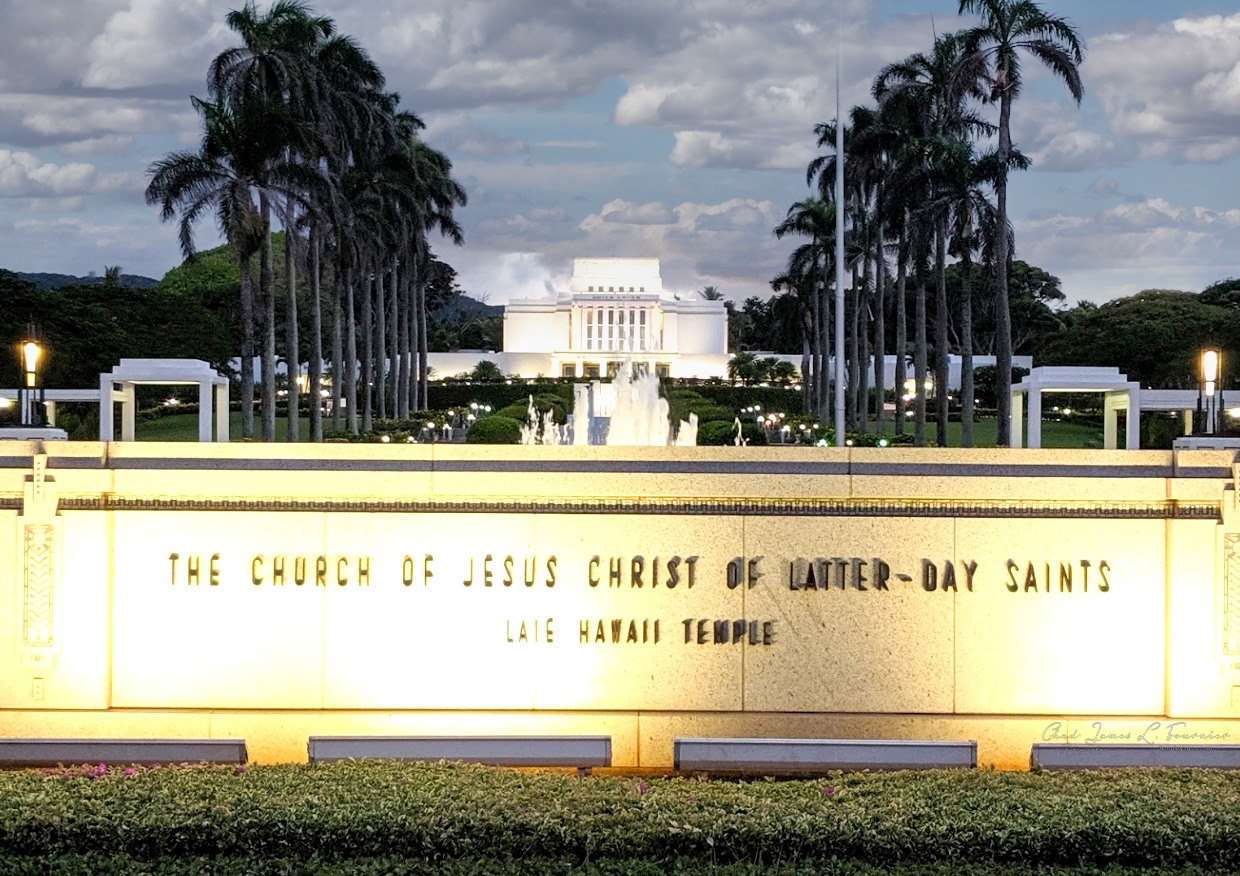
The Laie Hawaii Temple is a remarkable structure, rich in history and spiritual significance. Here’s a detailed overview of its background, architectural features, and surrounding environment.
Historical Background:
- Announcement and Groundbreaking: The temple was announced on October 3, 1915, by Church leaders, and the groundbreaking ceremony took place on February 8, 1916.
- Dedication: The site was dedicated by President Joseph F. Smith on June 1, 1915, marking the beginning of this important project. The temple itself was later dedicated from November 27 to 30, 1919, by President Heber J. Grant.
- Renovations: The temple saw significant renovations and rededications over the years, with an open house held from May 2 to May 27, 1978, leading to its rededication by President Spencer W. Kimball from June 13 to 15, 1978. Another major renovation occurred in December 2008, which involved structural enhancements and an aesthetic restoration to its original design.
Architectural Features:
- Size and Structure: Initially, the Laie Hawaii Temple was the smallest temple built by the Church at just 10,500 square feet, but it has since been expanded to a total area of 42,100 square feet.
- Exterior Finish: The temple’s exterior is made of concrete mixed with crushed lava and coral, reinforced with steel. This unique blend creates a beautiful white cream finish that reflects the sun, complementing the natural beauty of the surrounding landscape.
- Design Elements: The temple features a single, centrally attached tower with a flat roof. Carved friezes by sculptor Avard Fairbanks adorn the top of the temple, depicting significant dispensations of time—Old Testament, New Testament, Book of Mormon, and Latter-day Dispensation—on each side.
Interior Layout:
- Ordinance Rooms: Inside the temple, there are four instruction rooms designed for a progressive format, five sealing rooms, and one baptistry, facilitating various sacred ordinances performed for members of the Church.
- Presentation of the Endowment: Originally, the endowment was presented through live acting within the temple, but over time, it transitioned to video presentation while maintaining a connection to its original format during renovations.
Surrounding Environment:
- Location: The Laie Hawaii Temple is situated on 11.4 acres of well-manicured grounds, elevated at 29 feet above sea level. It overlooks the Pacific Ocean, located just half a mile from the shore.
- Natural Beauty: The temple grounds are surrounded by lush Hawaiian flora, cascading pools, and a central fountain, providing a peaceful and spiritual atmosphere for visitors and worshippers.
- Access and Community: Access to the temple is through Hale Laa Boulevard, an inviting pathway lined with tropical gardens, palm trees, and decorative lights. The temple is also adjacent to Brigham Young University–Hawaii and the popular Polynesian Cultural Center, making it a hub for both spiritual and cultural experiences.
Significance:
- Cultural Importance: The Laie Hawaii Temple was the first temple built in the Pacific islands and the first dedicated outside the continental United States, symbolizing the Church’s outreach to diverse communities.
- Community Connection: The temple sits on land known as Laie Plantation, purchased in 1865, and has become an integral part of the community, serving the spiritual needs of members in the region.
The Laie Hawaii Temple stands as a beautifully crafted building that reflects the Church’s values, the spirit of the Hawaiian culture, and the dedication of its members. Its history, architecture, and scenic location make it a treasured site for locals and visitors alike.