
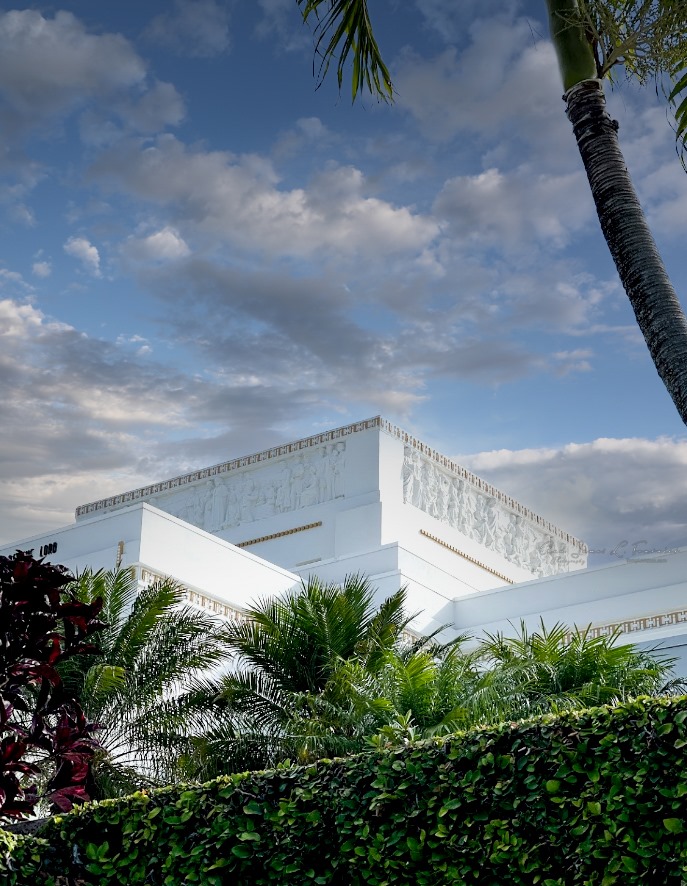
The Laie Hawaii Temple is a cherished landmark on the North Shore of Oahu, Hawaii, signifying the spirit and dedication of the community it serves. It was announced on October 3, 1915, and broke ground just a few months later, on February 8, 1916. As the fifth temple constructed by The Church of Jesus Christ of Latter-day Saints, it holds a special place in the hearts of many.
Historical Significance
The Laie Hawaii Temple was the first temple built in the Pacific islands, making it a pioneering site for the Church and its members in the region. It was also noted for being the first temple dedicated outside of the state where Church headquarters were located, symbolizing a commitment to bring the temple experience closer to the people of Hawaii and the Pacific. Additionally, it sits on the original landholdings known as Laie Plantation, a 6,000-acre parcel purchased by the Church in 1865 for $14,000.
Architectural Features
Occupying 11.4 acres, the temple is designed with striking architectural features. The exterior showcases a white cream finish made from a unique blend of concrete, crushed lava, and coral, reinforced with steel. This combination not only provides durability but also blends harmoniously with the surrounding tropical landscape.
The temple is characterized by its single attached central tower with a flat roof, which is both functional and aesthetically pleasing. The total area of the temple is approximately 42,100 square feet, making it a modest size compared to other temples, yet it is rich in spiritual significance.
Inside, the Laie Hawaii Temple contains four instruction rooms designed for a progressive ordinances format, five sealing rooms, and a baptistry. The design reflects traditional elements of temple worship while incorporating modern needs and facilities for patrons.
Dedication and Renovations
The dedication of the Laie Hawaii Temple took place over multiple decades. It was initially dedicated by President Joseph F. Smith on June 1, 1915. After its open house from November 27 to 30, 1919, President Heber J. Grant presided over the dedication. The temple has undergone significant renovations, including a major remodeling in 1976, enhancing patron experience with a new front entrance and updated facilities.
In the late 1970s, the temple was dedicated again by Spencer W. Kimball from June 13 to 15, further updating its facilities for patrons. Most recently, it closed in December 2008 for structural and seismic upgrades, as well as the restoration of its ordnance rooms to the original progressive-style format, still utilizing video technologies.
Cultural and Community Role
The Laie Hawaii Temple is not only a spiritual center but also a hub for community activities. It is complemented by a public visitors’ center that attracts thousands of visitors each year. Just down the road, Brigham Young University–Hawaii represents a vital educational institution, while the nearby Polynesian Cultural Center is acclaimed as Hawaii’s number one paid attraction.
Surrounded by lush Hawaiian flora, cascading pools, and grand fountains, the temple grounds create a tranquil atmosphere that invites reflection and prayer. Accessed via the stunning Hale Laa Boulevard, visitors are greeted by beautifully landscaped gardens and palm trees, enhancing the experience as they approach the temple.
Art and Symbolism
The exterior of the temple is adorned with intricate carved friezes created by sculptor Avard Fairbanks, which serve as artistic representations of the four dispensations of time. These friezes illustrate themes from the Old Testament (west), New Testament (south), Book of Mormon (north), and Latter-day Dispensation (east).
Miracles During Construction
The temple’s construction faced challenges, notably a halt due to a lumber shortage. The builders’ prayers were answered when they discovered a freighter stranded on a coral reef, whose captain offered his cargo of lumber to help complete the temple. Such instances of divine intervention are cherished stories within the Church community.
Conclusion
Today, the Laie Hawaii Temple stands not just as a structure but as a symbol of faith, resilience, and community spirit. It continues to serve as a place of worship, reflection, and learning for both local inhabitants and visitors from around the world, embodying the values and traditions of the Latter-day Saints in Hawaii and beyond.