
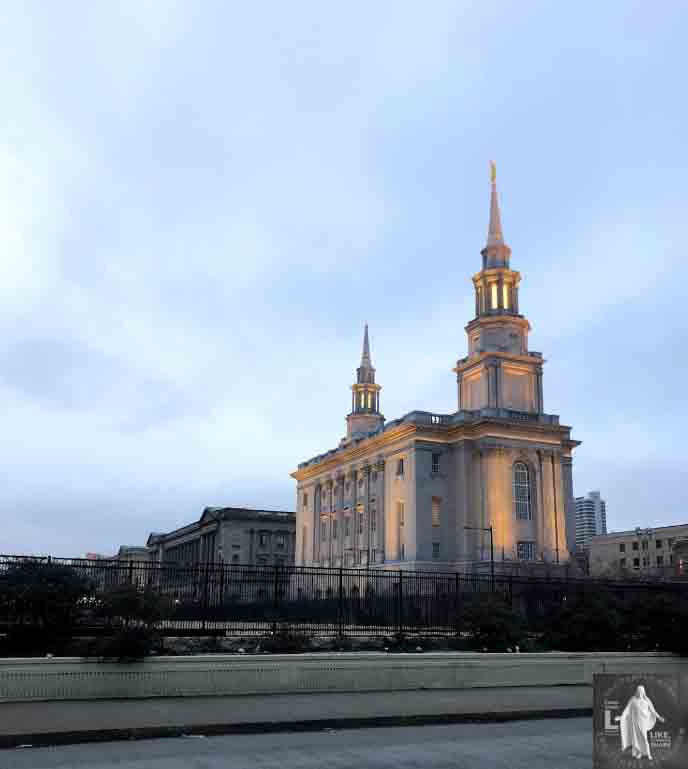
Exploring the Philadelphia Pennsylvania Temple
The Philadelphia Pennsylvania Temple, the 152nd in operation, stands as an architectural reflection of faith and dedication within Philadelphia. Situated at 1739 Vine St, Philadelphia, Pennsylvania 19103, this unique Temple represents an important addition to the area.
LDS Temple News Presents the Philadelphia Pennsylvania Temple House of the Lord Holiness to the Lord
The announcement of the Philadelphia Pennsylvania Temple took place on October 4, 2008, by the Prophet during the General Conference. The groundbreaking and site dedication were conducted by Apostle Henry B. Eyring on September 17, 2011. This significant event coincided with the 224th anniversary of the signing of the U.S. Constitution at Independence Hall. With notable local leaders, including Mayor Michael Nutter, present, President Eyring expressed that “the work done in these sacred buildings becomes the crowning element of our religious worship.”
Following the public open house from August 10 through September 9, 2016, which saw around 140,000 attendees, the Temple was officially dedicated on September 18, 2016. In his dedicatory prayer, President Eyring conveyed gratitude for the Constitution, emphasizing its importance for freedom and liberty.
Architectural Features
The Philadelphia Pennsylvania Temple occupies 1.6 acres and spans an impressive 61,466 square feet, reaching a height of 208 feet and standing four stories tall. The granite exterior, sourced from Maine and crafted in Canada, is complemented by a single attached end spire adorned with a 21-foot, 2-inch Gold-leafed Angel Moroni statue.
The design beautifully incorporates elements of neoclassical architecture that echo the historic aesthetics of Philadelphia. The building includes intricate art glass in opalescent white with beige and blue accents, as well as elegant murals depicting significant moments in American and Church history.
Interior Design and Materials
Inside, the Temple features two instruction rooms, four sealing rooms, and a baptistry. Notable materials include antique brass lighting fixtures fitting the American Georgian period and cherry wood plank flooring enhancing the overall ambiance. The ceilings are adorned with gold leafing, and various spaces utilize classical architectural orders such as Doric, Ionic, and Corinthian styles.
The landscape surrounding the Philadelphia Pennsylvania Temple includes an array of native trees and shrubs, thoughtfully chosen to provide year-round color and enhance the overall aesthetic appeal. Specific details, such as bronze railings in the baptistry inspired by the Franklin Institute, reflect a commitment to both beauty and craftsmanship.
Unique Connections
A striking aspect of the Philadelphia Pennsylvania Temple is the positioning of the Angel Moroni statue, which faces a statue of William Penn, the founder of Pennsylvania, located on City Hall, just half a mile away. This connection intertwines history, geography, and culture, creating a profound narrative for both structures.
The Philadelphia Pennsylvania Temple stands not only as a place of spiritual significance but also as a testament to the rich history and artistry of Philadelphia. The combination of its design, location, and the dedication to detail makes it a noteworthy aspect of the city’s heritage.
Philadelphia Pennsylvania Temple by LDS Temple News