Stunning Provo City Center Temple Must See
Nestled in the heart of Provo, Utah, the Provo City Center Temple narrates a rich and vibrant history that traces back to the city’s founding in September 1849. Under the direction of President Brigham Young and his counselors, a small caravan set out from Fort Utah with the vision of establishing a thriving settlement. The original plan included a central area reserved for a chapel and schoolhouse—known as “Public Square”—currently located at Pioneer Park, on Center Street and 500 West.
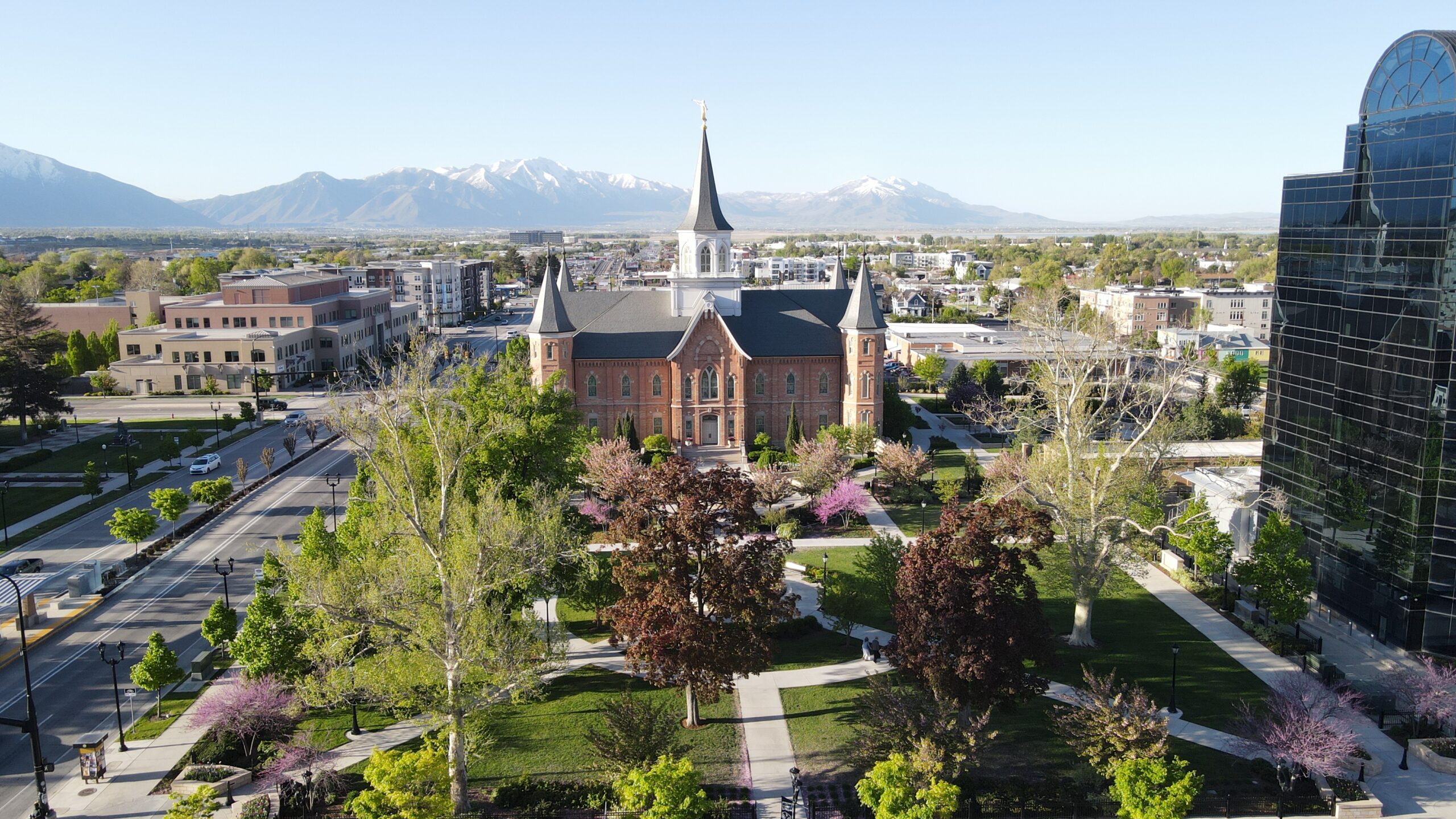
Provo City Center Temple – 4k Aerial View
Despite the ambitious plans, the early efforts faced numerous challenges. Conflicts and shortages of building materials slowed progress significantly. By 1856, a foundation had finally been laid, but the vision for Provo’s center underwent a shift. Brigham Young ultimately decided to move this heart of the city five blocks east, laying the groundwork for the events that would unfold on the current location of the Provo City Center Temple.
The Old Tabernacle: A Historic Milestone
The first building erected on these grounds was “The Old Tabernacle,” constructed in 1861 from timber, adobe, and stone. Dedicated by Brigham Young in 1867, this original edifice soon proved inadequate for the growing congregation. Consequently, in 1883, a decision was made to construct a new tabernacle under the supervision of President John Taylor. By 1885, the new $100,000 facility was operational and notably hosted the 1886 and 1887 general conferences, underscoring its significance.
Architectural Features and Cultural Significance
Designed to seat 1,500 individuals, the Provo tabernacle featured a striking brick exterior complete with octagonal towers at each corner, a high-pitched roof, frosted-glass windows, and intricately crafted woodwork, including a hand-carved rostrum. Over the years, the building underwent various renovations, culminating in a rededication in September 1986. This venue became a notable place for influential visitors, including both Church and U.S. presidents, with William H. Taft being the first presidential guest in 1909.
Musical performances, school ceremonies, and significant events such as interfaith dialogues and patriotic gatherings have all taken place within its walls, making the Provo City Center Temple a cornerstone of civic activity and rich history.
A Transformation: From Tabernacle to Temple
In 2012, a pivotal decision was made to transform the historical tabernacle into the Provo City Center Temple. This initiative prioritized preserving much of its original architecture while adapting it for a new purpose. The renovation thoughtfully honors the past while creating a space for inspiration and growth.
The Provo City Center Temple now stands not just as a reflection of the city’s history but as an area where the stories of countless individuals intertwine. It serves as a reminder of the journeys undertaken and the hopes that continue to flourish, marking both a significant chapter and an ongoing narrative in Provo’s life.
Conclusion
As Provo embraces its historical roots, the Provo City Center Temple narrates that journey, inviting exploration of the rich heritage and profound stories embedded in its foundation. This blend of architectural beauty and localized history makes it a significant aspect of Provo’s evolving identity.