
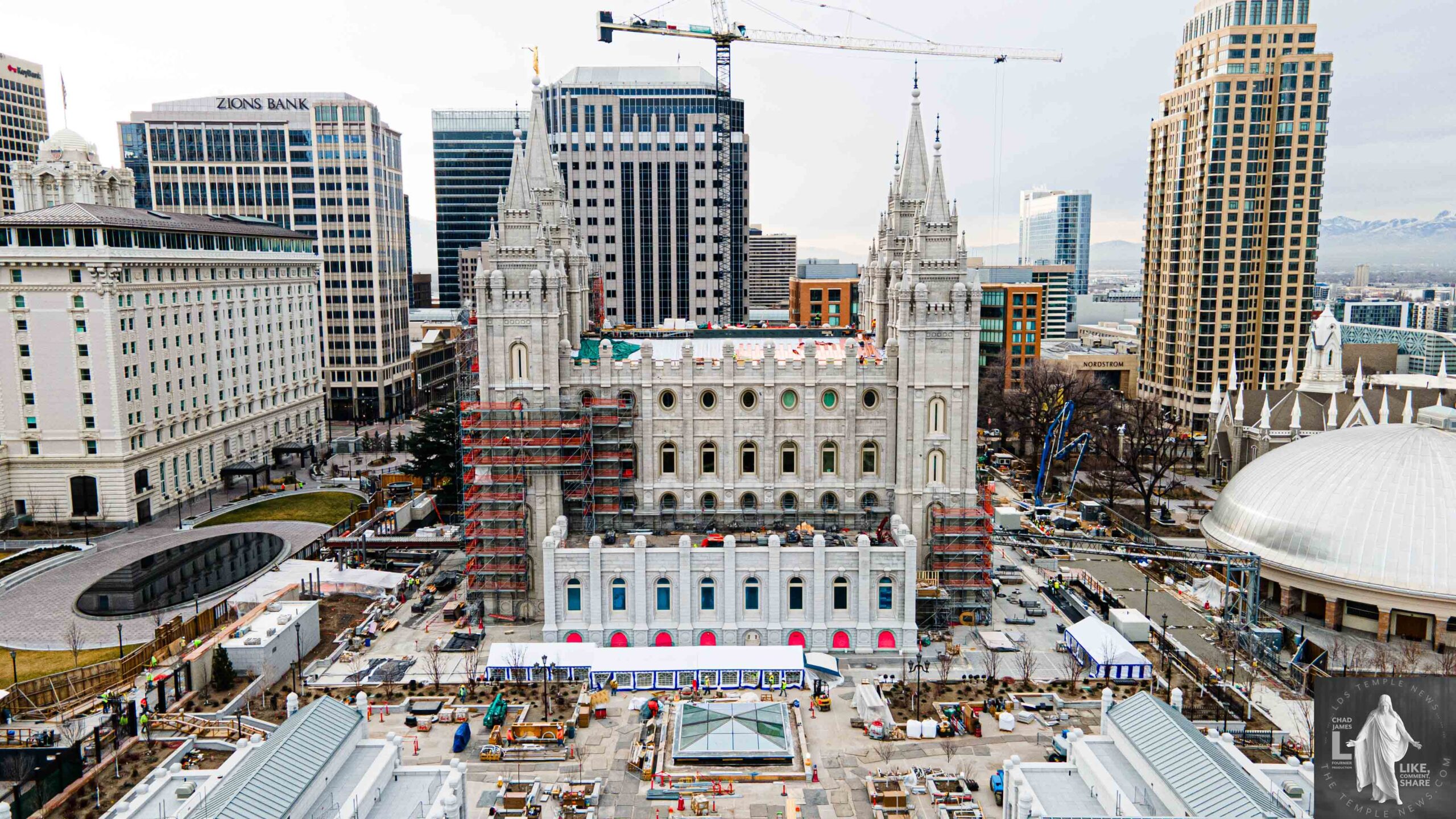
The Salt Lake Temple: A Major Renovation Overview
The Salt Lake Temple stands as an enduring symbol of faith and resilience, with recent renovations marking a substantial commitment to its future. From late 2019 through 2025, approximately $125 million USD was invested into this House of the Lord by the Church of Jesus Christ of Latter-day Saints. This renovation aimed to enhance safety, restore historical elements, and incorporate modern upgrades.
Renovation Focus Areas
Key Improvements
Multiple areas within the House of the Lord underwent significant enhancements. The main sacred interiors, including the celestial room, sealing rooms, and assembly halls, were carefully restored. This meticulous work involved the repair and reinstallation of original murals, stained-glass windows, and ornate woodwork dating back to the late 19th century.
In addition to the interior spaces, the mezzanine levels and connecting corridors received upgrades designed to enhance fire safety, lighting, and accessibility, all while maintaining the historic architectural integrity. The underground levels were expanded, adding approximately nine new sealing rooms—bringing the total from 13 to 22—along with a second baptistry and administrative spaces specifically constructed for this renovation.
Structural Reinforcement
Critical to the integrity of the House of the Lord, the roof and spires were reinforced. This element does not function as a floor but plays a vital role in ensuring the overall stability of the temple.
Preservation of Historical Elements
Original Artwork and Features
One of the core intentions behind the renovation was to preserve the original murals and religious artwork that had been carefully documented and temporarily removed for seismic work. These valuable pieces are set for reinstallation once preservation efforts are complete.
Historic stained-glass windows, moldings, and intricate woodwork from 1893 were also restored and retained. Key fixtures, including the iconic cast-iron oxen at the baptismal font and ornate chandeliers, were meticulously repaired to preserve their unique character. The interior finishes, showcasing Victorian craftsmanship, such as dark woods and period-appropriate fixtures, were also carefully restored to uphold the historic ambiance of the House of the Lord.
Modern Enhancements
Technological Upgrades
The renovation included the integration of modern technology aimed at improving functional safety and efficiency. Advanced seismic resilience features, including nearly 100 modern base isolators, allow the entire structure to sway safely up to five feet during earthquakes, which is critical for protective measures.
Reinforcement work included steel pilings and extensive granite coring, delving 150 feet deep, to stabilize the structure for years to come. Energy-efficient HVAC systems, updated LED lighting with smart controls, and modern electrical wiring significantly enhance energy use efficiency.
Safety enhancements feature modern fire detection systems, alarm mechanisms, surveillance cameras, and access control that meet contemporary safety standards. Furthermore, compliance with ADA requirements was achieved through the installation of new elevators, ramps, and signage.
Finally, upgraded multimedia systems enhance the functionality of the House of the Lord, allowing for sound, projection, and broadcasting capabilities in multiple languages for various gatherings and meetings.
The Workforce Behind the Renovation
While specific figures are not publicly disclosed, major projects like this typically involve between 200 and 400 skilled workers over an extensive period, engaging masons, engineers, electricians, artisans, safety personnel, and managers to ensure quality and adherence to the utmost standards.
Through these comprehensive renovations, the Salt Lake Temple continues to stand as a resilient, beautiful, and spiritually inspiring House of the Lord for future generations. The blend of preservation and modernization illustrates a forward-thinking approach while respecting the building’s rich history.