
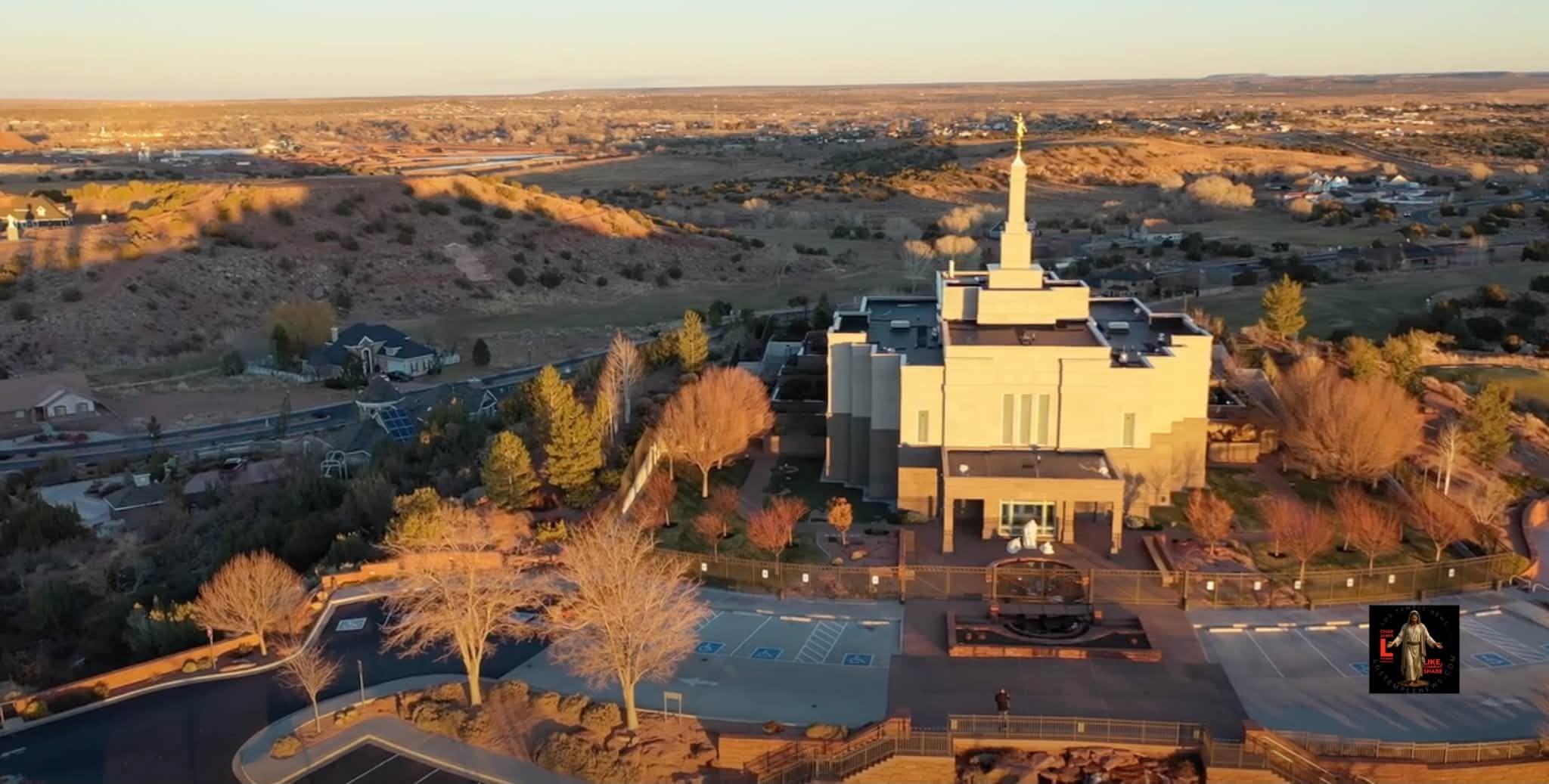
Snowflake Arizona Temple Trees
The Snowflake Arizona Temple stands as the 108th dedicated Temple in operation and is a significant presence in the region. Located at 1875 W Canyon Dr, Snowflake, Arizona, this architectural gem is rich in history and cultural significance.
An Overview of the Temple’s History
The snowflake-shaped town that serves as its namesake was founded by William J. Flake, with the apostle Erastus Snow overseeing Arizona’s colonization. The announcement for the Snowflake Arizona Temple was made on April 2, 2000, by Prophet Gordon B. Hinckley, creating anticipation within the local area and beyond.
Groundbreaking for the Temple occurred on September 23, 2000, led by Elder Rex D. Pinegar of the Seventy. During this event, President Stephen Reidhead of the Snowflake Arizona Stake shared how early pioneers envisioned the construction of a Temple in their community. Elder Pinegar highlighted the importance of unity, urging all to come together in the sacred space.
Dedication and Architecture
The public open house took place from February 2 to February 16, 2002, drawing 94,146 individuals eager to explore its interiors. The dedication ceremony was held on March 3, 2002, where Prophet Hinckley expressed gratitude for the foundations laid by early settlers. His words acknowledged their struggles and the eventual realization of their dreams with the creation of this beautiful Temple.
Built on 7.5 acres, the Snowflake Arizona Temple features two tones of polished granite sourced from China. This magnificent building measures 18,621 square feet and reaches a height of 60 feet. Its architectural design includes a single attached end spire topped with a Gold-leafed Angel Moroni statue. Inside, you’ll find two instruction rooms, two sealing rooms, and one baptistry.
Artistic Elements
The exterior art glass showcases classic geometric beveled designs, featuring layered decorative panes. Distinct dichroic glass adds an enchanting effect, shifting colors naturally based on light and viewing angles. Inside, the decor honors the vibrant history of the area. Notably, a sweeping mural painted by Native American artist Linda Turley-Christensen graces one of the ordinance rooms, illustrating the local landscape.
Photographic depictions of Jacob Hamblin, a pioneer and missionary, resonate throughout the Temple, especially in the form of portraits showcasing his interactions with Native Americans. The interior features light fixtures crafted from brass and crystal, while doors are elegantly made from cherry and maple wood, complete with solid forged brass hardware.
Landscape and Interior Design
The Temple’s landscaping harmonizes with its natural surroundings, showcasing a tranquil water feature at the entrance canopy. Throughout the interior, elements reflect the region’s culture and heritage. Native American designs are intricately carved into several custom-built pieces of furniture, while stencil patterns adorn the walls and carpets.
A console cabinet prominently displays a peach tree branch design, commemorating Jacob Hamblin’s legacy of planting peach trees in the area. An exquisite collection of stained-glass windows, including one depicting Christ with children, enhances the overall ambiance.
Unique Features
Interestingly, in March 2017, the Angel Moroni statue was replaced, now facing west over the Temple entrance—symbolizing a renewed connection to those who enter. This Temple is also uniquely related to other Temples, including being a sister building to the Winter Quarters Nebraska Temple and sharing the same core design as the Quetzaltenango Guatemala Temple, featuring some exterior variations.
The Snowflake Arizona Temple is more than a site; it is a testament to the visionary spirit of its founders and a central place that reflects the history and culture of the surrounding area.