
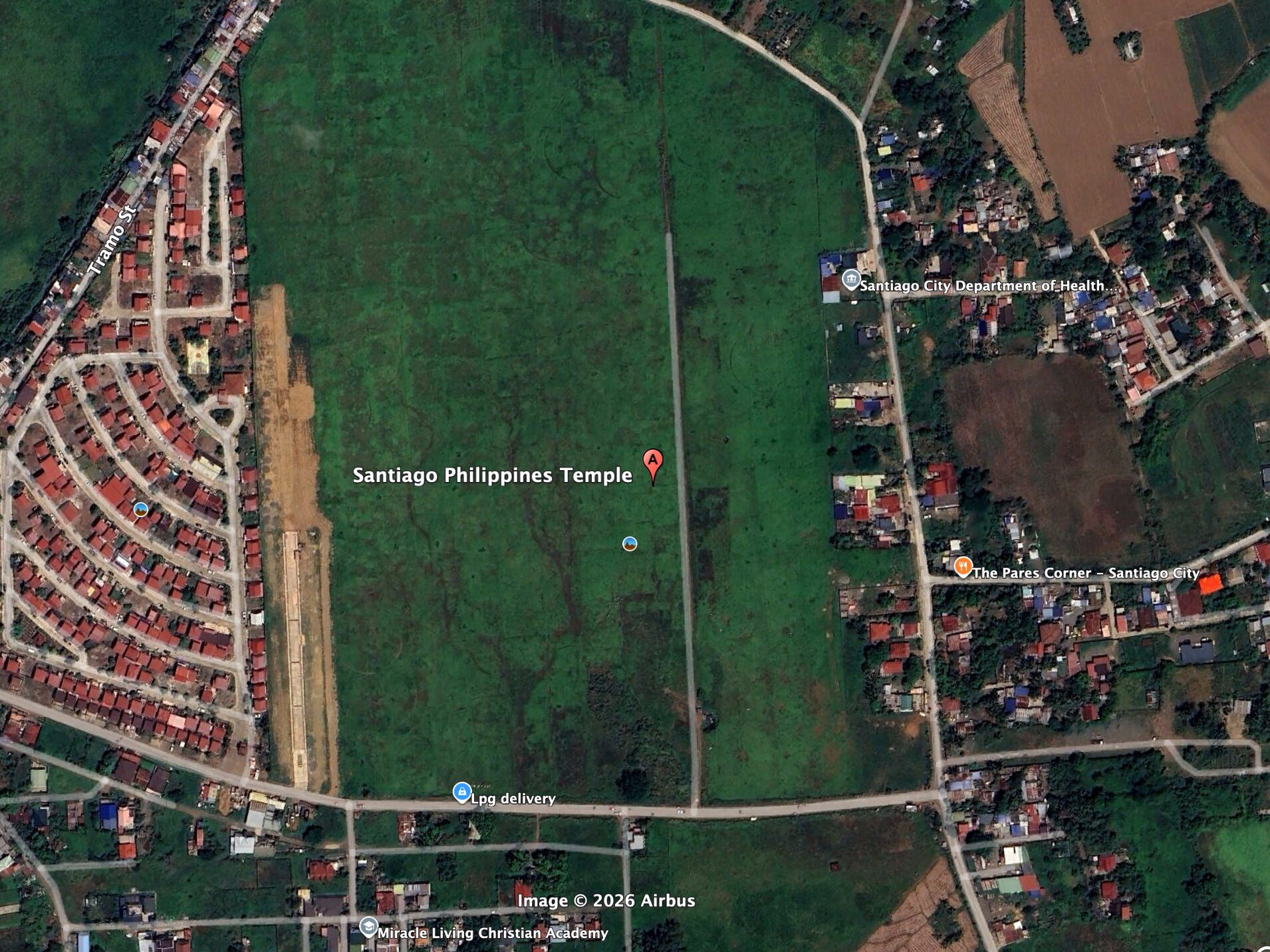
Exciting Developments: Santiago Philippines Temple
Announced during the October 2022 General Conference, the Santiago Philippines Temple is a significant addition to the spiritual landscape of the Philippines. This beautiful facility, the tenth of its kind in the country, will be located about 225 miles northeast of Manila, specifically in Barangay Malvar, Santiago City, Province of Isabela.
Key Features and Design
The Santiago Philippines Temple will cover a spacious 18,850 square feet and will be constructed on a 14.47-acre site. The design includes a single attached central spire, and the exterior will feature elegant beige granite. It is noteworthy that this particular Temple will not have a gold-leafed Angel Moroni.
Sitting at an elevation of 260 feet, the Temple is set to be a prominent feature in the area, designed to serve those in the region. In addition to the Temple, the site will also encompass patron housing, a distribution center, and a meetinghouse, making it a comprehensive site for various activities.
Historical Context
The announcement of the Santiago Philippines Temple came alongside another in Naga, with both locations being unveiled by President Russell M. Nelson. At that time, he emphasized the importance of accessibility to these sacred spaces, stating, “Let us never lose sight of what the Lord is doing for us now. He is making His temples more accessible. He is accelerating the pace at which we are building temples. He is increasing our ability to help gather Israel.”
Current Status
As of now, the Santiago Philippines Temple is still in the planning stages, and an official date for construction has yet to be announced. The public got a glimpse of the design when a rendering was released on February 23, 2026, generating anticipation and excitement among those in the area.
The Temple is part of a larger initiative aimed at fostering spiritual growth and connection among individuals and families in the Philippines. With nine other Temples already in various stages of completion—like the Alabang, Bacolod, and Cebu City Temples—it is clear that the Church is committed to expanding its reach in the region.
The development of the Santiago Philippines Temple promises to enhance the spiritual journey of many, rooted in the vision laid out by Church leaders to make these sacred facilities more accessible to all.