
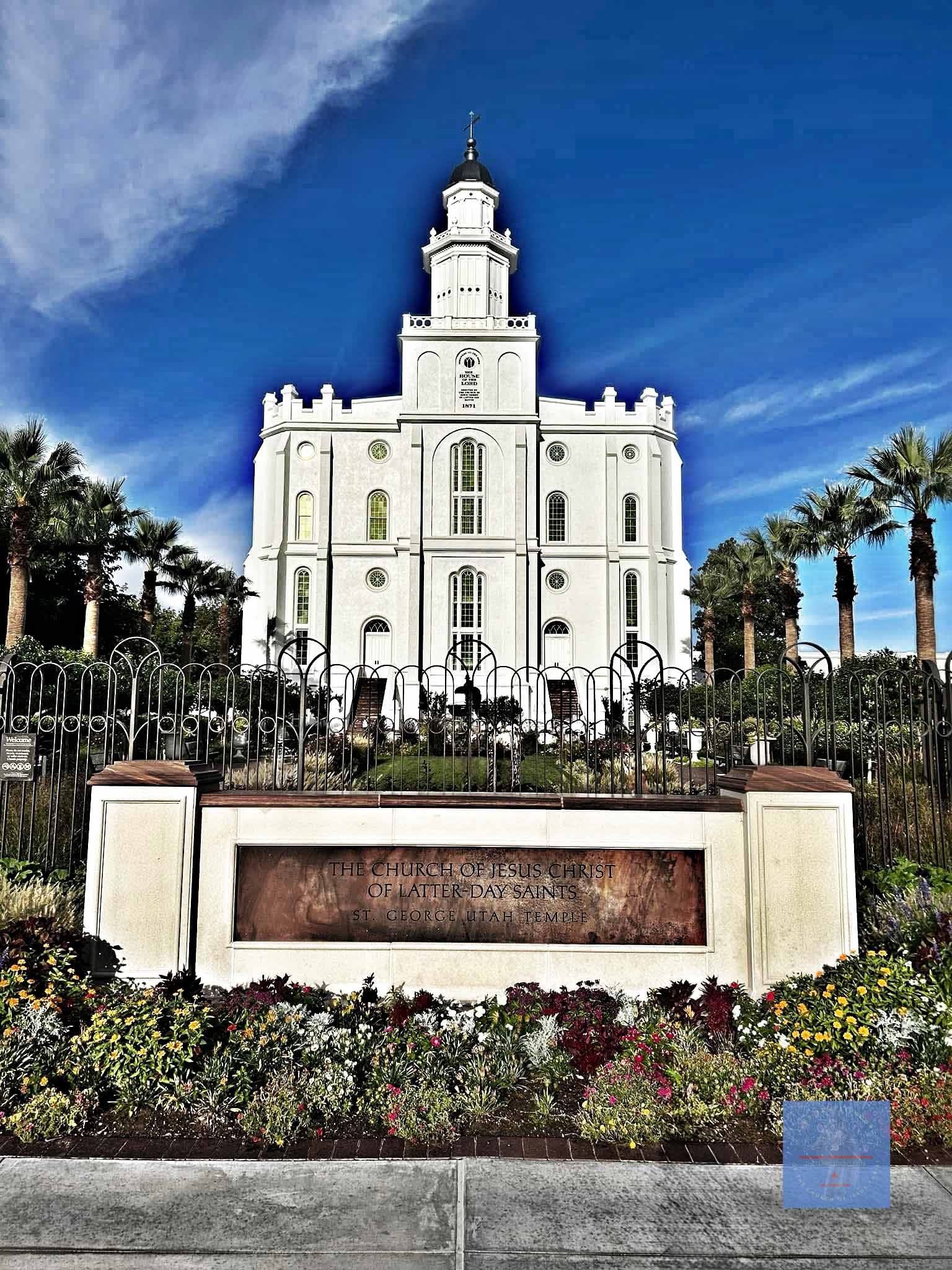
Temple Facts of the St. George Utah Temple grounds has 250 trees
Temple Facts of the St. George Utah Temple grounds has 250 trees
Located at 250 E 400 S, St. George, Utah 84770, the St. George Utah Temple holds a significant place in the history of the region. As the first built Temple in the Utah Territory, its history is rich and layered, reflecting the pioneering spirit of the area.
Discovering the St. George Utah Temple
The St. George Utah Temple was announced on January 31, 1871. Its groundbreaking and site dedication occurred shortly after, on November 9, 1871, officiated by Brigham Young, the Second Prophet of The Church of Jesus Christ of Latter-day Saints.
Architectural Highlights
Covering 6.5 acres, the Temple is constructed primarily from native redstone sandstone quarried north of the city, with a white plaster finish. Additional materials include precast concrete and steel. Standing 175 feet tall, it boasts a single attached end tower and spans 143,969 square feet.
The initial site was challenging, characterized as swampy but filled with volcanic rock. This rock was removed using a cannon, with some displayed at the local visitor center.
Key Features
Inside, the St. George Utah Temple includes three instruction rooms, several sealing rooms, and one baptistry, which plays a crucial role in the Temple’s functions. The dedication occurred on January 1, 1877, through a series of three prayers led by notable leaders, including Wilford Woodruff and Brigham Young, Jr.
Significant Events
Notably, the Temple experienced a series of historical events following its dedication. The original tower succumbed to a lightning storm about a year later, leading to the construction of a new tower in 1883 that was taller and more striking than its predecessor.
Additionally, the Founding Fathers of the United States made two appearances to Wilford Woodruff within the Temple, inquiring about the completion of their temple work. A significant painting depicting this event, titled “That We May Be Redeemed,” hung in the Temple lobby for many years.
In another dramatic turn, a fire devastated the annex built in 1883 in November 1928. Fortunately, all records and furnishings were saved, preserving the Temple’s history.
Recent Developments
The most recent public open house took place from September 15 through November 11, 2023, hosted by Apostle Jeffrey R. Holland, allowing the public a glimpse into a restored interior following extensive renovations.
Conclusion
The St. George Utah Temple stands not only as a testament to its architectural vision but also as a historical repository embodying the pioneering efforts of its builders. Throughout its years, it has seen various events that intertwine spiritual and community history, solidifying its place in the cultural landscape of St. George, Utah.