
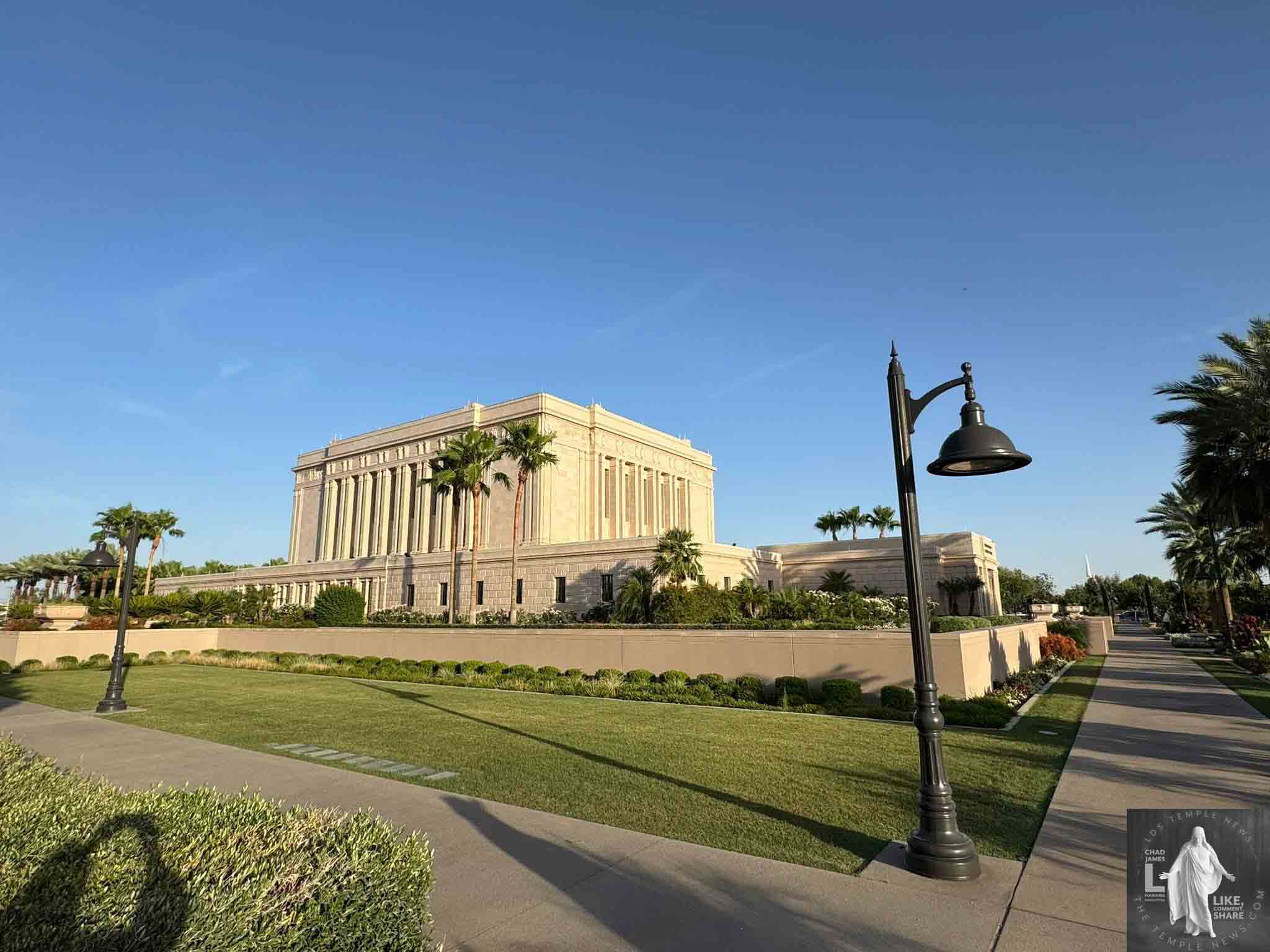
The Mesa Arizona Temple stands as an unequivocal symbol of heritage and spirituality in Arizona. Announced on October 3, 2019, its origins date back to November 28, 1921, when Heber J. Grant dedicated the site. The groundbreaking took place on April 25, 1922, leading to its formal dedication from October 23 to 26, 1927, again under Grant’s authority.
This temple has consistently adapted to meet the needs of its congregation, undergoing significant renovations that enhance both functionality and worship. It was closed in early 1974 for extensive remodeling, which included upgrading the Creation, Garden, and World Rooms for single-room film presentations of the endowment. Crucially, valuable burlap murals were preserved and restored, ensuring that the temple’s rich history is honored for generations to come. This renovation increased capacity by adding necessary dressing rooms and sealing rooms, accommodating a larger number of patrons for sacred ordinances.
A major renovation began on May 19, 2018, and effectively concluded in 2021, solidifying the temple’s status as a crucial spiritual center. This comprehensive update included improvements to mechanical, electrical, plumbing, and HVAC systems, all while maintaining the building’s historical character. The enhancements to the exterior, including the careful preservation of iconic murals and the replacement of windows, reinforced the temple’s architectural integrity. Moreover, the landscaping upgrades on the grounds enabled the hosting of public events, fostering greater community interaction.
The Mesa Arizona Temple was rededicated on April 15 and 16, 1975, by Spencer W. Kimball—an event that underscored its lasting significance. After a highly successful open house from October 16 to November 20, 2021, the temple was rededicated again on December 12, 2021, by Dallin H. Oaks.
Architecturally, the temple makes a strong statement with its flat roof and sculpted friezes. It features four instruction rooms, six sealing rooms, and one baptistery, all spanning an impressive 75,000 square feet. At a height of 53 feet and an elevation of 1,240 feet, it commands respect on its 20-acre site. Constructed with a concrete exterior reinforced by 130 tons of steel and elegantly faced with glazed, egg-shell colored terra cotta tiles, the temple is a significant visual and spiritual landmark.
In terms of significance, the Mesa Arizona Temple is a pioneer—it was the first temple built in Arizona and the first to present the endowment in a language other than English. Formerly called the Arizona Temple, it is now an essential part of the community, anchoring a historic district that retains its residential character. The accompanying visitors’ center, along with beautifully landscaped grounds and large reflection pools, further enhances the overall experience.
The temple also hosts major annual events that draw thousands. Each Easter, it proudly presents the outdoor pageant “Jesus the Christ,” which stands as the largest of its kind in the world. During Christmas, the grounds are transformed into a stunning Nativity display, illuminated by hundreds of thousands of lights, consistently attracting large crowds.
In conclusion, the Mesa Arizona Temple is not just a place of worship; it is a powerful assertion of community strength and cultural heritage. Its architectural grandeur, rich history, and pivotal role in community engagement affirm its status as an essential landmark in Arizona—one that deserves recognition and respect.