Exploring the Provo City Center Temple: A Journey into History and Design
Nestled in the heart of Provo, Utah, the Provo City Center Temple stands as the 150th dedicated Temple in operation. Located at 50 South University Avenue, this remarkable place marks a significant addition to the landscape of Utah’s diverse spiritual heritage.
A Brief History
The journey of the Provo City Center Temple began with an announcement on October 1, 2011, during the Semiannual General Conference. Prophet Thomas S. Monson emphasized the importance of such spaces, stating, “First, may I mention that no Church-built facility is more important than a temple. Temples are places where relationships are sealed together to last through the eternities.”
The groundbreaking and site dedication occurred on May 12, 2012, led by Apostle Jeffrey R. Holland. Previously, this location was the site of a tabernacle, which unfortunately suffered from an accidental fire in 2010, leading to a significant renovation into the Temple we see today.
A Grand Opening
Before the official dedication, a public open house ran from January 15 to March 5, 2016, allowing over 800,000 people to explore its beautiful interior. The Temple was ultimately dedicated on March 20, 2016, by Prophet Dallin H. Oaks. In his dedication prayer, Oaks acknowledged the educational institutions nearby, including Brigham Young University and Utah Valley University, recognizing their contributions to the community.
Architectural Highlights
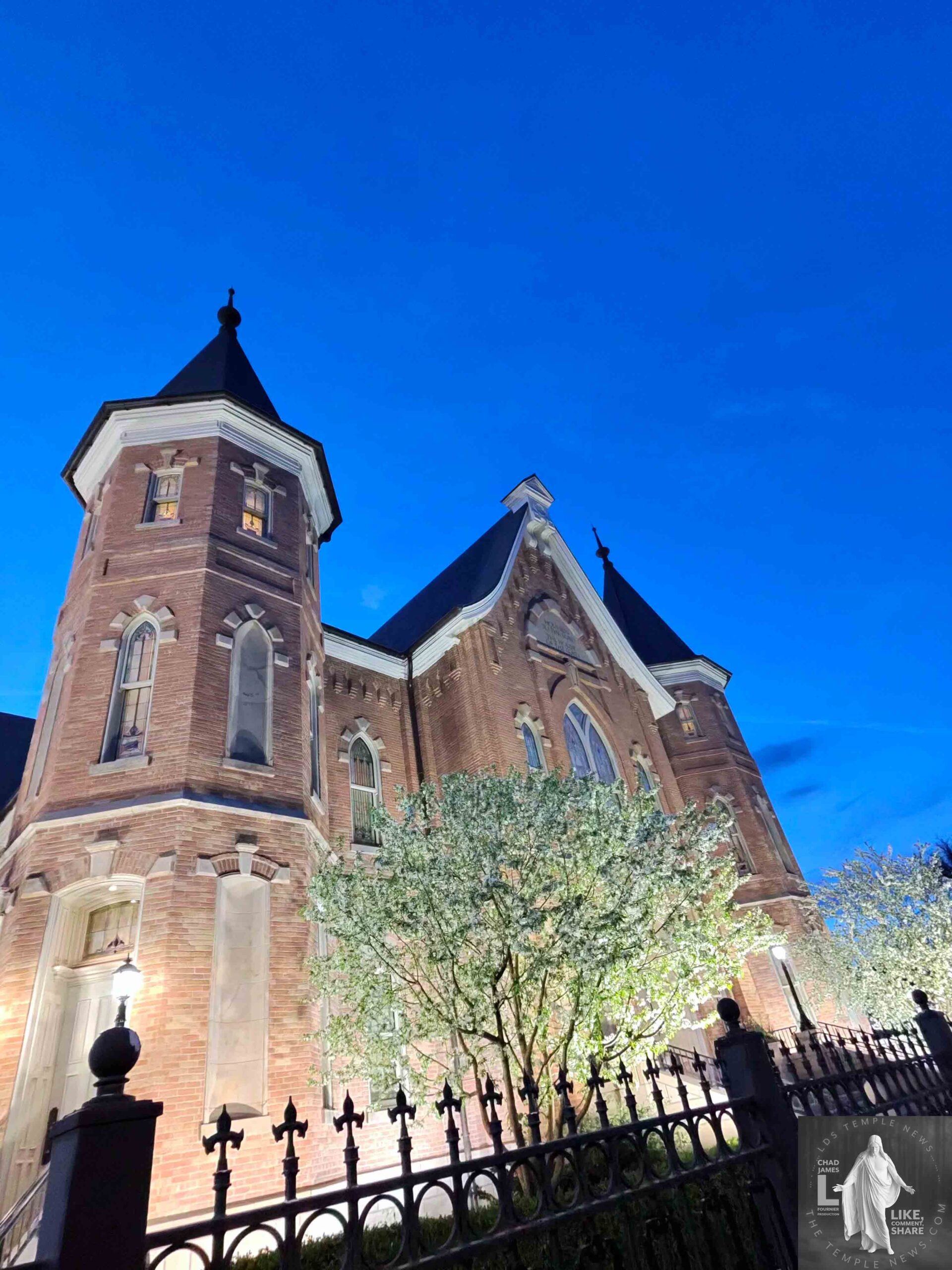
Spanning 85,084 square feet and built to a height of 150 feet, the Provo City Center Temple boasts striking architectural features. Its exterior, made of red brick, is both inviting and classic, while a central spire surrounded by four corner spires enhances its grandeur. Atop the central spire is a stunning 13-foot tall Angel Moroni, installed on March 31, 2014.
The Temple covers an impressive 5.6 acres and sits at an elevation of 4,547 feet, making it a prominent feature in Provo’s business district. The building is designed with four levels—two above ground and two below. The lower levels house the baptistry, dressing rooms, offices, and bridal room, whereas the upper levels accommodate endowment rooms, sealing rooms, lobbies, and additional offices.
Enhancements for Accessibility
Parking at the Provo City Center Temple is also thoughtfully designed, featuring a basement garage with 245 spots, plus an additional 50 spots on the main level. The convenience of this layout ensures that those visiting can focus on their experience rather than logistics.
Opposite the Temple stands a Victorian pavilion with a basement that connects directly to the Temple’s own basement, enhancing functionality and accessibility.
A Legacy of Faith and Community
Before becoming a Temple, this site hosted significant gatherings, including General Conference sessions in April 1897 and October 1886. Its legacy is deeply intertwined with the history of the region, serving not only as a space for spiritual pursuits but also as a reflection of the community’s growth and resilience.
With its beautiful architecture, historical significance, and the importance of the ordinances that take place within, the Provo City Center Temple stands as a testament to dedication and faith in the heart of Utah Valley.