The Provo City Center Temple has a stunning stained glass window depicting the Second Coming of Christ!
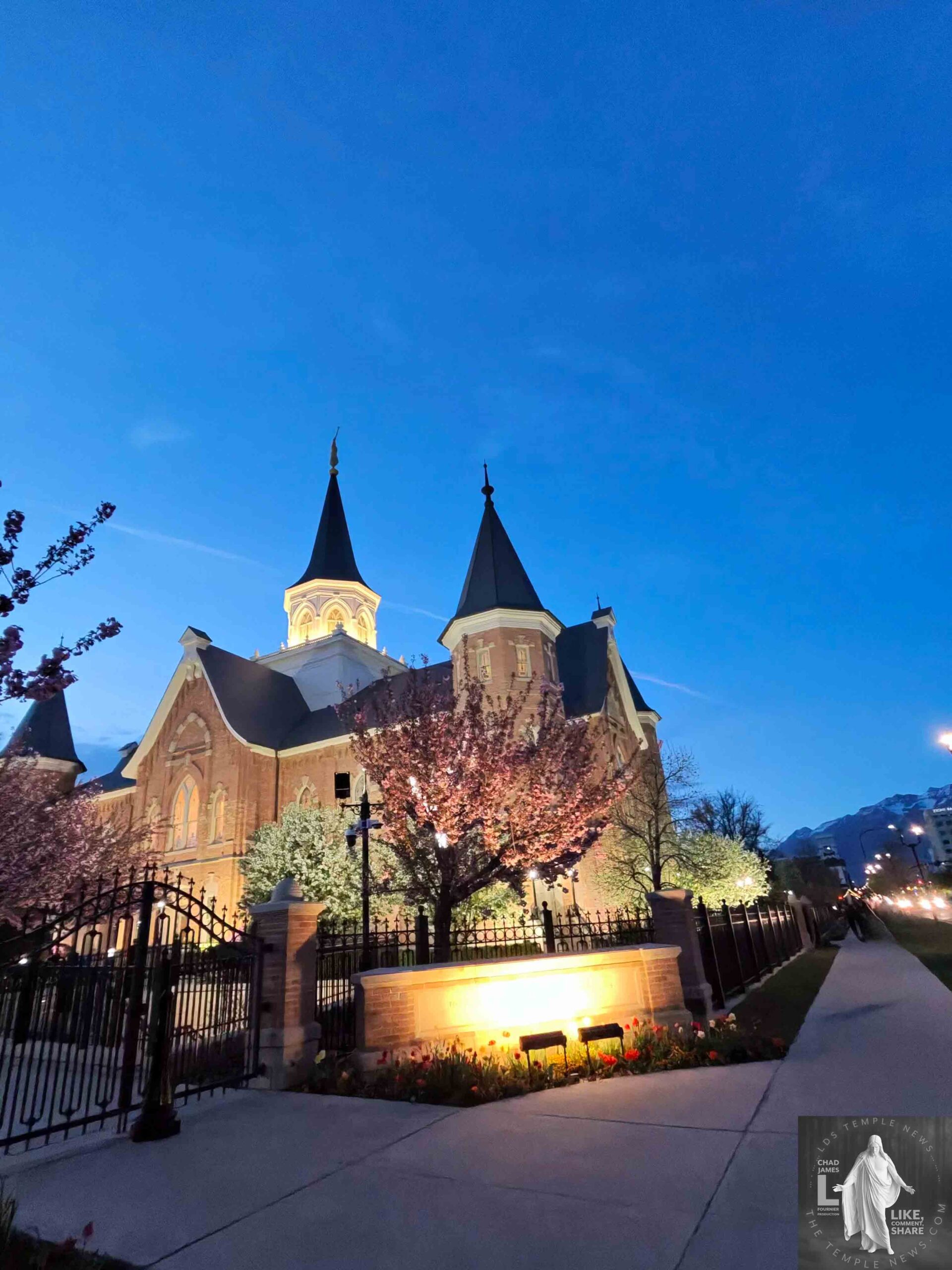
Nestled in the heart of Provo, Utah, the Provo City Center Temple stands as the 150th dedicated Temple in operation. Located at 50 South University Ave, Provo, Utah 84601, this remarkable site has become a focal point of interest and significance for both residents and passersby since its dedication on March 20, 2016.
A Journey Through Time
The inception of the Provo City Center Temple began on October 1, 2011, at the Semiannual General Conference, where it was announced by Prophet Thomas S. Monson. His words highlighted the vital role of such buildings, stating, “First, may I mention that no Church-built facility is more important than a temple. Temples are places where relationships are sealed together to last through the eternities.”
May 12, 2012 marked the groundbreaking and site dedication, officiated by Apostle Jeffrey R. Holland. This ceremony paved the way for transforming a once-cherished tabernacle—tragically lost to an accidental fire in 2010—into a stunning Temple. The original tabernacle not only hosted significant events, including the General Conference of October 1886 and April 1897, but also held a special connection to the Provo community.
Architectural Elegance
Covering 5.6 acres, the Temple features an exterior of red brick adorned with architectural highlights. A central spire towers above, surrounded by four corner spires, with a stunning gold-leafed Angel Moroni standing at an impressive 13 feet tall, installed on March 31, 2014. The total size of the Temple reaches 85,084 square feet, withstanding a height of 150 feet set against Provo’s picturesque backdrop at an elevation of 4,547 feet.
Inside, the Provo City Center Temple spans four levels, including two above ground and two below. The lower levels accommodate the baptistry, dressing rooms, offices, and a bridal room, while the upper levels house the endowment rooms, sealing rooms, lobbies, chapel, and additional offices. Notably, the Temple includes three instruction rooms and five sealing rooms, each designed to enhance the sacred experiences held within.
Community Engagement and Accessibility
Before its transformation, the original tabernacle played a vital role in the fabric of Provo life, and the introduction of the Temple has further solidified that connection. During its public open house from January 15 through March 5, 2016, more than 800,000 individuals toured the interior, highlighting the immense interest in this beautiful facility.
The Temple also features a basement parking garage that can accommodate 245 vehicles, alongside 50 parking spots on the main level. This accessibility caters not just to those involved in the Temple’s work, but also to the broader Provo public.
Across from the Temple lies a Victorian pavilion with a basement that connects seamlessly to both the pavilion and the Temple’s basement, reinforcing the harmonious blend of the historical and the contemporary.
Conclusion
The Provo City Center Temple stands not just as an architectural achievement but as a testament to the enduring legacy of faith and commitment in the Provo area. Its story, from the ashes of a historic tabernacle to its rebirth as a Temple, underscores the importance of resilience and dedication in preserving cultural heritage.