
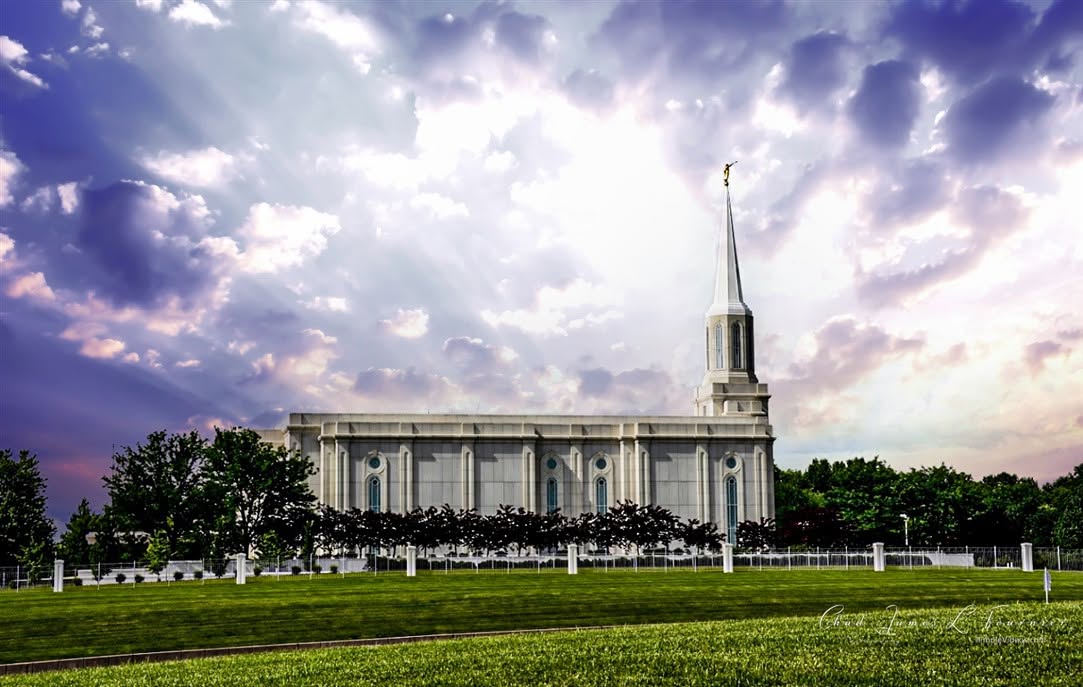
Expert views on St. Louis Missouri Temple Photography by LDS Temple News
The St. Louis Missouri Temple holds a notable place as the 50th dedicated Temple in operation. This breathtaking construction has become a significant location for many, showcasing architectural beauty and historical relevance.
Key Facts About the St. Louis Missouri Temple
Located at 12555 N Outer Forty Dr, St. Louis, Missouri 63141, the St. Louis Missouri Temple has a rich history that began with its public announcement on October 29, 1990, by Prophet Gordon B. Hinckley. Shortly thereafter, the groundbreaking and site dedication occurred on October 30, 1993, an event that drew approximately 5,000 attendees.
The anticipation for this Temple culminated in a public open house held from April 26, 1997, to May 24, 1997, attracting 260,000 attendees. Ultimately, the Temple was dedicated from June 1, 1997, through June 5, 1997, all under the leadership of President Hinckley.
The Temple spans 14 acres and showcases an exterior finished with cast stone and Bethel white granite, featuring a thermal finish. The architectural design includes a single attached end spire, topped with a gold-leafed Angel Moroni statue.
The Layout and Size
The St. Louis Missouri Temple boasts a total area of 58,749 square feet and rises to a height of 150 feet, sitting at an elevation of 581 feet. This three-story building contains four instruction rooms, four sealing rooms, and one baptistry, designed to accommodate various functions and gatherings.
Historical Significance
Notably, this Temple holds the distinction of being the first built in both the city and county of St. Louis, as well as the first Temple constructed in the state of Missouri. While earlier sites were dedicated in the 1830s in locations like Independence and Far West, it marks a new chapter for the Church in Missouri.
The rendering for the Temple was released on December 29, 1990, capturing the community’s imagination long before its completion.
A Message of Reflection
The dedicatory prayer delivered during the dedication highlights the historical context surrounding this remarkable location. It emphasizes the challenges faced by early Church members in Missouri and expresses gratitude for a time of peace and acceptance. An excerpt from this prayer conveys, “We are reminded that this Temple stands on the soil of the state of Missouri, where the Prophet and his associates suffered so much and were finally banished by a cruel and illegal order of extermination. Today Thy Church basks in the sunlight of good will. Hundreds of thousands have come to view this, Thy holy house. They have left with respect and appreciation.”
Conclusion
The St. Louis Missouri Temple serves as a significant addition to the region’s spiritual landscape, reflecting dedication, craftsmanship, and an enduring legacy. Its presence is felt not only through its architecture but also through the stories and histories that accompany it.