
The Celestial Room: Sacred Space in LDS Temples
Introduction
The Celestial Room represents one of the most spiritually significant spaces within temples of The Church of Jesus Christ of Latter-day Saints (LDS Church). These sacred chambers serve as culminating points in the temple experience, offering worshippers moments of profound spiritual reflection and peace.
Historical Background
The concept of the Celestial Room was established early in LDS temple practice. The first temples built by the Church included dedicated spaces meant to represent the highest level of heaven in LDS theology. This tradition continues today across the Church’s network of temples worldwide.
Theological Significance
Connection to Celestial Glory
In LDS theology, the celestial kingdom represents the highest degree of glory in the afterlife. The Celestial Room symbolizes this ultimate spiritual destination, providing a tangible representation of the heavens. It serves as a visual and spatial reminder of the Church’s teachings regarding divine glory and eternal life.
Purpose and Function
The Celestial Room functions as a space for quiet contemplation following the completion of temple ordinances. It allows participants time for:
- Personal prayer and meditation
- Spiritual reflection on covenants made
- Family connection and bonding
- Peaceful communion with God
Physical Characteristics
General Design Elements
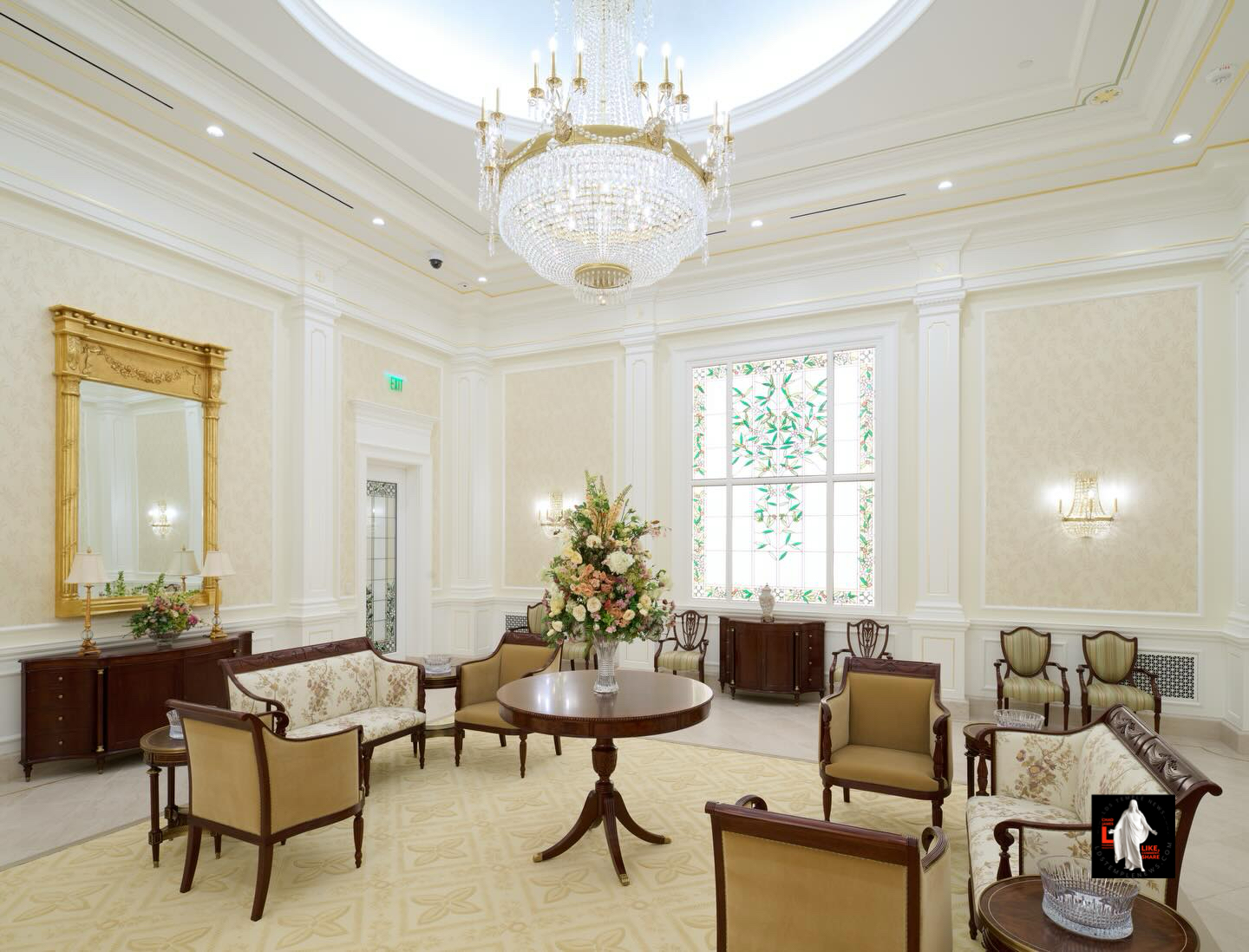
Celestial Rooms typically feature:
- Elegant Furnishings: Often including fine furniture, comfortable seating, and tasteful decor
- Soft Lighting: Usually featuring chandeliers and natural light to create a peaceful atmosphere
- Architectural Grandeur: High ceilings and refined architectural details
- Serene Aesthetics: Neutral, calming color palettes predominantly featuring whites, golds, and soft tones
- Cleanliness and Order: Immaculate maintenance reflecting the sacred nature of the space
Varied Architectural Expressions
Each temple’s Celestial Room reflects unique architectural styles:
- Some incorporate classical and neoclassical elements
- Others feature modern or contemporary designs
- Local architectural traditions and materials are often incorporated
- Despite variations, all maintain a sense of peace and spiritual refinement
Notable Features
Symbolism in Design
Many Celestial Rooms include:
- Mirrors: Symbolizing reflection and self-examination
- Windows: Often featuring views of nature, connecting earthly and heavenly realms
- Chandeliers: Representing divine light and glory
- Fine Art: Sometimes featuring religious or culturally appropriate artwork
- Plants and Flowers: Adding life and natural beauty to the sacred space
Seating and Arrangement
Rooms typically feature:
- Individual seating areas for personal prayer
- Grouped seating for family reflection
- Comfortable, reverent furnishings
- Thoughtful spacing to allow privacy while maintaining community
The Temple Experience Culmination
Spiritual Journey
Participants move through various rooms in the temple, with the Celestial Room representing the final destination. This progression symbolizes:
- Preparation (dressing rooms)
- Learning (instruction rooms)
- Covenanting (ordinance rooms)
- Glory (Celestial Room)
Time for Reflection
Worshippers typically spend time in the Celestial Room:
- After completing temple ordinances
- In quiet personal prayer
- Contemplating spiritual experiences
- Sometimes with family members
Variations Across Temples
Different Designs, Unified Purpose
While each temple’s Celestial Room reflects its unique context:
- The Salt Lake Temple features an ornate, grand design reflecting 19th-century aesthetics
- Modern temples incorporate contemporary design while maintaining sacred atmosphere
- International temples may reflect local architectural traditions
- Smaller temples provide more intimate versions of the Celestial Room experience
Spiritual Atmosphere
Creating Sacred Space
Celestial Rooms maintain their sacred nature through:
- Quiet Reverence: Whispered conversations or silence
- Dedicated Purpose: Exclusively used for temple worship
- Careful Maintenance: Professional upkeep and attention to detail
- Thoughtful Management: Limited capacity and visitor guidelines
- Spiritual Preparation: Participants arrive through a meaningful ritual journey
Access and Use
Who May Enter
Entry to Celestial Rooms is restricted to:
- Members of the LDS Church in good standing
- Those who have received a temple recommend
- Those who have completed temple ordinances
Guidelines for Use
Typical practices include:
- Speaking quietly or not at all
- Dressing in white clothing (temple robes)
- Using the space for prayer and meditation
- Respecting others’ private spiritual experiences
- Following facility guidelines and time limits
Modern Context
Evolution and Consistency
Contemporary Celestial Rooms maintain:
- Traditional spiritual purposes amid modern temple construction
- Balance between architectural innovation and sacred tradition
- Accessibility features for members of all abilities
- Environmental consciousness in design and maintenance
Theological Teaching
Visual Doctrine
The Celestial Room teaches through its very existence:
- Tangible Representation: Making abstract concepts physically present
- Hierarchy and Progression: Spatial arrangement reflecting theological progression
- Divine Order: Organization and beauty reflecting heavenly principles
- Accessibility: Divine glory made available to faithful practitioners
- Eternal Perspective: Reminding worshippers of ultimate spiritual goals
Visitor Experience
Personal Accounts
Members typically describe Celestial Room experiences as:
- Profoundly peaceful and calming
- Spiritually uplifting and confirming
- Opportunities for personal revelation
- Times of emotional and spiritual renewal
- Connections to family and divine purpose
Comparison with Other Sacred Spaces
Unique Among LDS Temples
The Celestial Room stands apart by:
- Serving as the final destination rather than transitional space
- Being primarily contemplative rather than instructional
- Representing abstract theological concepts physically
- Offering unstructured time for personal spiritual experience
- Functioning as a sanctuary for quiet reflection
Challenges and Considerations
Modern Management
LDS temples navigate:
- Maintaining peaceful environments amid growing usage
- Accommodating diverse member needs and backgrounds
- Updating designs while respecting historical precedent
- Ensuring accessibility for all faithful members
- Balancing solitude with family participation
Spiritual Significance Summary
The Celestial Room represents:
- The pinnacle of temple experience
- Tangible connection to LDS theological teachings
- Sacred space designed for spiritual renewal
- Symbolic representation of heavenly glory
- Practical opportunity for personal communion with God
Conclusion
The Celestial Room within LDS temples serves as a remarkable fusion of architecture, theology, and spiritual practice. These sacred spaces represent the Church’s highest aspirations for its members and provide meaningful environments for personal spiritual experience. Through careful design and dedicated use, Celestial Rooms continue to fulfill their purpose: creating tangible representations of heavenly glory and providing faithful members opportunities for profound spiritual renewal and connection.
Whether grand and ornate or intimate and modern, each Celestial Room maintains the essential purpose established in early LDS temple practice—offering a sacred space where individuals can contemplate eternal truths, commune with God, and reflect upon the spiritual journey toward the celestial kingdom.