Temple Square Visitor Center: Architecture, Faith, and the Sacred Baptistry Below
Introduction
Located in the heart of Salt Lake City, the Temple Square Visitor Center stands as one of the most recognizable landmarks in Utah. Operated by The Church of Jesus Christ of Latter-day Saints (LDS Church), this sprawling complex draws millions of visitors annually. While the center’s architectural design and exhibits showcase the church’s history and beliefs, one of its most significant features remains largely hidden from casual observers: an underground baptistry. Understanding this subterranean chamber requires insight into both LDS theology and temple architecture.
The Temple Square Complex
Temple Square spans 10 acres in downtown Salt Lake City and represents the geographical and spiritual center of the LDS Church. The square contains:
- The Salt Lake Temple (completed in 1893)
- The Assembly Hall
- The historic Tabernacle
- Multiple visitor centers and auxiliary buildings
The main Visitor Center, completed in 1968, underwent a major renovation and expansion from 2019 – 2026, making it one of the most modern visitor facilities operated by the church and opening to the public May 18, 2026.
LDS Theology and Baptism
To understand the importance of the baptistry, it’s essential to grasp LDS theology regarding baptism. In LDS doctrine, baptism is considered essential for salvation and is one of the first ordinances individuals receive upon joining the church. Typically performed by immersion in water, baptism represents and why we do it for those who have not yet received the gospel:
- A covenant (promise) between the individual and God
- A symbolic death and rebirth
- A cleansing of sins
- Entry into the church community
The Underground Baptistry: Purpose and Function
The baptistry located beneath the Temple Square Visitor Center serves multiple purposes:
Proxy Baptism for the Deceased
The primary function of the baptistry is to facilitate proxy baptism for the deceased—a unique LDS practice. Unlike most Christian denominations, the LDS Church practices baptism on behalf of people who have died without the opportunity to receive the ordinance during their lifetime.
Core Belief: LDS theology teaches that individuals who did not have the opportunity to receive baptism while living, whether due to living before Christ’s time, lacking access to the true gospel, or other circumstances, deserve an opportunity to accept or reject baptism in the afterlife. Living church members volunteer to be baptized by proxy (in place of) these deceased individuals.
Theological Justification
This practice stems from LDS interpretation of 1 Corinthians 15:29, which mentions “baptism for the dead” in the New Testament, though the interpretation of this passage is debated among Christian scholars.
Architectural Significance
The underground baptistry represents a significant architectural feature for several reasons:
Symbolic Placement
Placing the baptistry underground carries spiritual symbolism:
- Isolation and sacred space: The underground location emphasizes the sacred nature of the ordinance
- Separation from the secular world: The depth provides a physical barrier from everyday life
- Symbolic burial: The underground location mirrors baptismal theology—going down into the water represents symbolic death and burial
Practical Considerations
The underground location also addresses practical needs:
- Climate control: Underground chambers maintain stable temperatures year-round
- Moisture management: The facility can properly manage water and humidity
- Accessibility: Located centrally within the temple square complex
- Security and privacy: The ordinances can be performed in a controlled, private environment away from public view
The Baptistry Design
The LDS baptistry typically features:
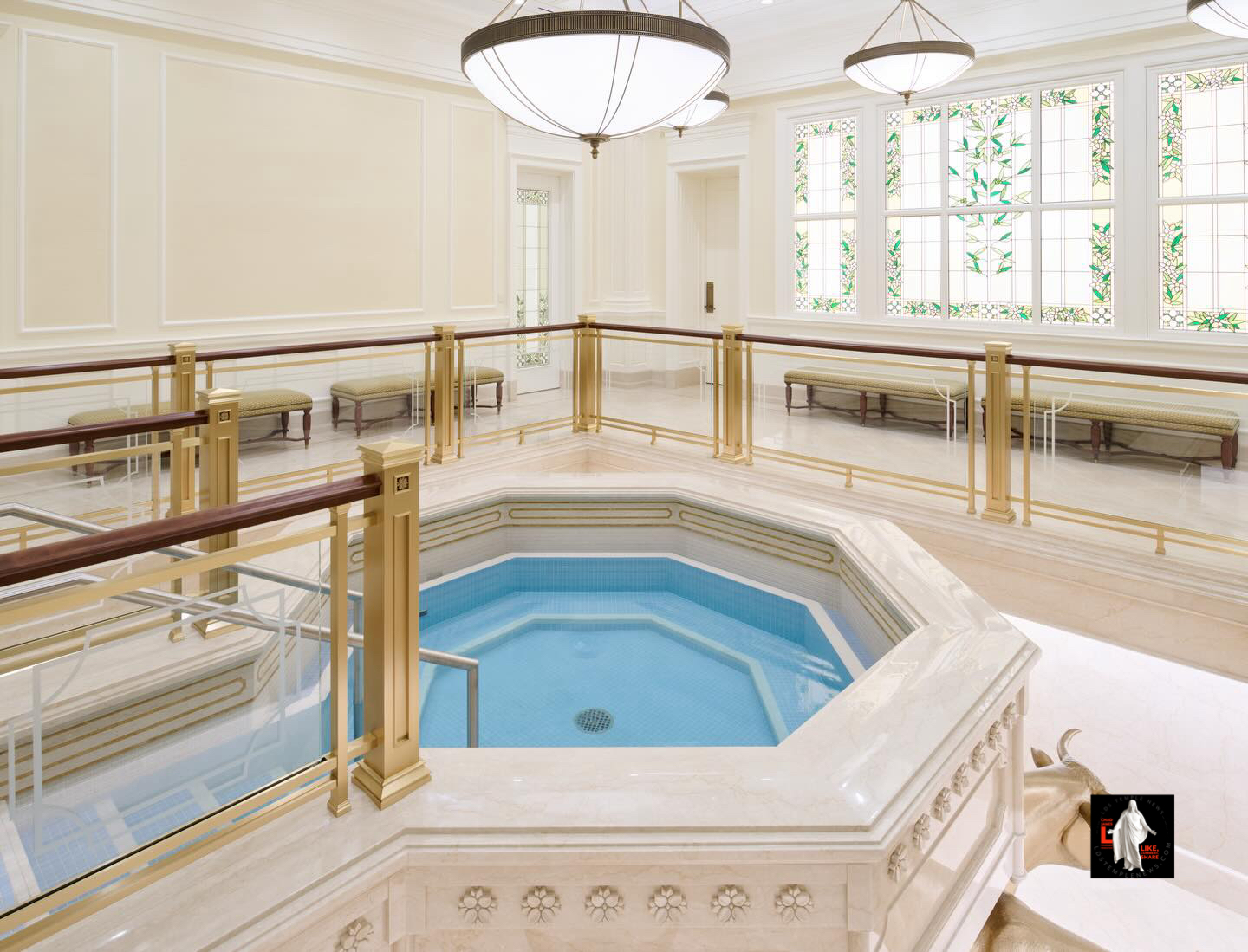
- The baptismal font: A large, elevated pool where immersion baptisms occur
- Multiple immersion pools: Allowing numerous baptisms throughout the day
- Symbolic animals: Traditionally, LDS baptismal fonts rest on the backs of twelve oxen, symbolizing the twelve tribes of Israel
- Dressing rooms: Separate facilities for those being baptized to change into white clothing
- Ceremonial simplicity: Clean, functional design emphasizing the ordinance rather than decoration
Visitor Access and Privacy
While the Temple Square Visitor Center welcomes millions of visitors annually, the baptistry itself is typically restricted to Note this does not open back up until May 18, 2026:
- Active LDS Church members participating in proxy baptisms
- Special guided tours during visitor center hours (limited access)
Changing Access and Modern Renovations
During the 2019-2026 renovation, the visitor center updated its facilities while maintaining the baptistry’s sacred function. Modern visitors can now:
- Watch films about the ordinance
- View exhibits explaining LDS temple practices
- Understand the theological basis for proxy baptism
- Learn about the historical development of LDS temple architecture
However, actual participation in baptisms remains limited to church members.
Historical Context
The practice of proxy baptism has been part of LDS theology since the church’s founding in the 1830s. The construction of baptistries in and around temples became standard practice, with the most famous being:
- The Salt Lake Temple’s baptistry
- Temple square’s visitor center baptistry
- Similar facilities in temples worldwide
This practice distinguishes the LDS Church from most other Christian denominations and represents a unique approach to Christian soteriology (theology of salvation).
Theological Debate and Criticism
The practice of proxy baptism has generated controversy:
LDS Perspective
- Offers salvation opportunity to all souls
- Reflects belief in God’s justice and fairness
- Allows living members to serve deceased ancestors
- Connects members to family history and genealogy
Outside Criticism
- Questions the scriptural basis for the practice
- Raises concerns about baptizing deceased individuals without their consent
- Differs significantly from mainstream Christian practice
- Has caused tension with other religious communities (notably Jewish groups regarding Holocaust victims)
The Visitor Experience
For most visitors to Temple Square, the baptistry remains a hidden element of the complex. However, understanding its presence enhances appreciation for:
- LDS architectural philosophy
- The theological distinctiveness of the faith
- The connection between doctrine and physical space
- The importance of ordinances in LDS practice